
Bhramari
Bhramari is the Hindu goddess of bees and an incarnation of Mahadevi in Shaktism. She is depicted with bees and hornets emanating from her four hands, symbolizing her power over these insects. Her legend describes her defeating the powerful asura Arunasura by unleashing a swarm of insects that tear him apart, thus restoring peace to the celestial realms.
Key Facts
- ›Bhramari is the Hindu goddess of bees.
- ›She is considered an incarnation of Mahadevi in Shaktism.
- ›Her name, Bhramari, translates to 'like a bee' or 'the goddess of bees'.
- ›She is depicted with bees and hornets emanating from her four hands.
- ›Her legend involves defeating the asura Arunasura with a swarm of insects.
- ›She is worshipped as Bhramaramba in conjunction with Shiva at several temples.
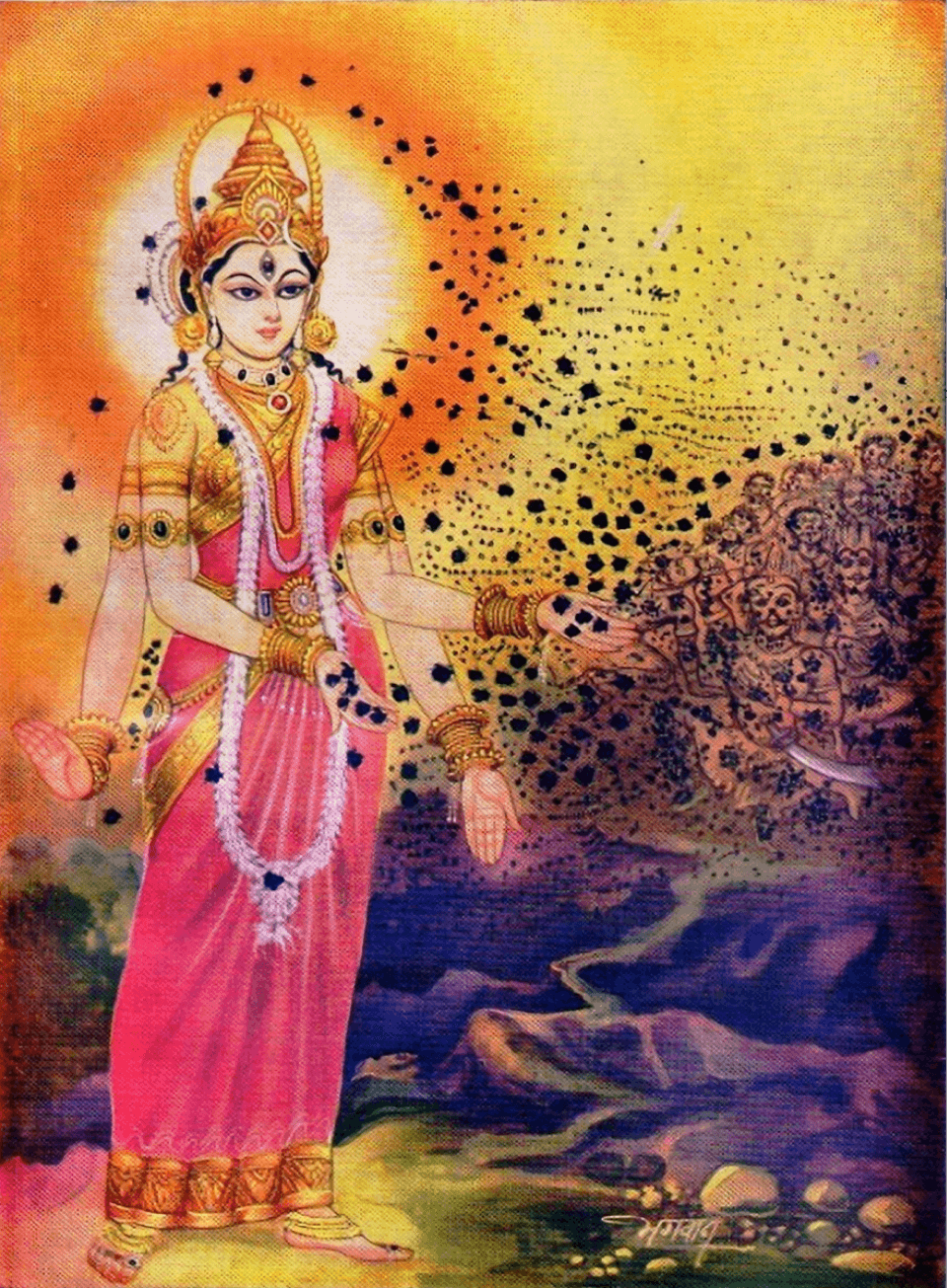
Bhrāmarī
- Emanating Bees and Hornets From Her Four Hands.
- Bees, Hornets, Wasps, Flies, Termites, Mosquitos, and Spiders Clinging To Her Body.
- Three Eyes Shining Like the Sun, the Moon, and Agni.
Devi Bhagavata Purana, Markandeya Purana, Lakshmi Tantra
- Mallikarjuna Temple At Srisailam
- Bhramari Sri Durga Parameshwari Temple At Kateel
- Shri Durga Mata Bhramari Mandir At Banbhori Village
Bees, Hornets, Wasps, Flies, Termites, Mosquitos, Spiders
About Bhramari
Bhramari is a Hindu goddess venerated as the divine patron of bees. Within the Shaktism tradition, she is recognized as an incarnation of the supreme goddess Mahadevi. Her name, derived from Sanskrit, directly translates to 'like a bee' or 'the goddess of bees,' underscoring her profound connection to these insects.
Legend and Iconography
The legend of Bhramari is most extensively detailed in the Devi Bhagavata Purana. It recounts the exploits of a powerful asura named Arunasura, who, blessed by Brahma with formidable boons, threatened the celestial order. Arunasura successfully conquered the deities, seizing control of various cosmic realms. In response to this crisis, Adi Parashakti manifested as Bhramari. She grew to a colossal size, emanating bees, hornets, wasps, and other insects from her four hands. In the ensuing battle, these swarms of insects overwhelmed Arunasura, tearing him apart and restoring peace to the cosmos. Iconographically, Bhramari is depicted as being covered in these insects, with them often shown emerging from her hands, symbolizing her ultimate control and power over them.
Literary References and Worship
Bhramari's significance is further highlighted in other scriptures. The Devi Bhagavata Purana's salutations suggest a connection to Lakshmi, the goddess of prosperity, noting her past victories over various demons. Similarly, the Lakshmi Tantra declares that Lakshmi herself will appear in bee-form as Bhramari to defeat the demon Aruna in a future era. While not a Vedic deity, her worship is established in various temples, often as Bhramaramba, where she is revered alongside Lord Shiva. Notable sites include the Mallikarjuna Temple at Srisailam and temples in Kateel and Banbhori village, where fairs are held and an eternal flame has burned for centuries.
Source: Wikipedia ↗
Frequently Asked Questions
Who is Bhramari?
Bhramari is the Hindu goddess of bees. She is an incarnation of Mahadevi within the Shaktism tradition of Hinduism. Her name signifies her association with bees and their qualities.
What is Bhramari known for?
Bhramari is primarily known for her legend in the Devi Bhagavata Purana, where she defeats the powerful asura Arunasura. She achieves this by transforming into a divine form from which countless bees, hornets, and other insects emanate to destroy the demon.
What does Bhramari's iconography depict?
Bhramari is typically depicted with bees and hornets clinging to her body. These insects are often shown emanating from her four hands, symbolizing her dominion over them and her role as the goddess of bees.
In which scriptures is Bhramari mentioned?
Bhramari is prominently detailed in the tenth book and thirteenth chapter of the Devi Bhagavata Purana. She is also briefly alluded to in the Devi Mahatmya section of the Markandeya Purana and identified with Lakshmi in the Lakshmi Tantra.
Where is Bhramari worshipped?
Bhramari is worshipped as Bhramaramba, often alongside Shiva, at several significant temples. Notable locations include the Mallikarjuna Temple at Srisailam in Andhra Pradesh and the Bhramari Sri Durga Parameshwari temple at Kateel in Karnataka.
Related Hindu deities
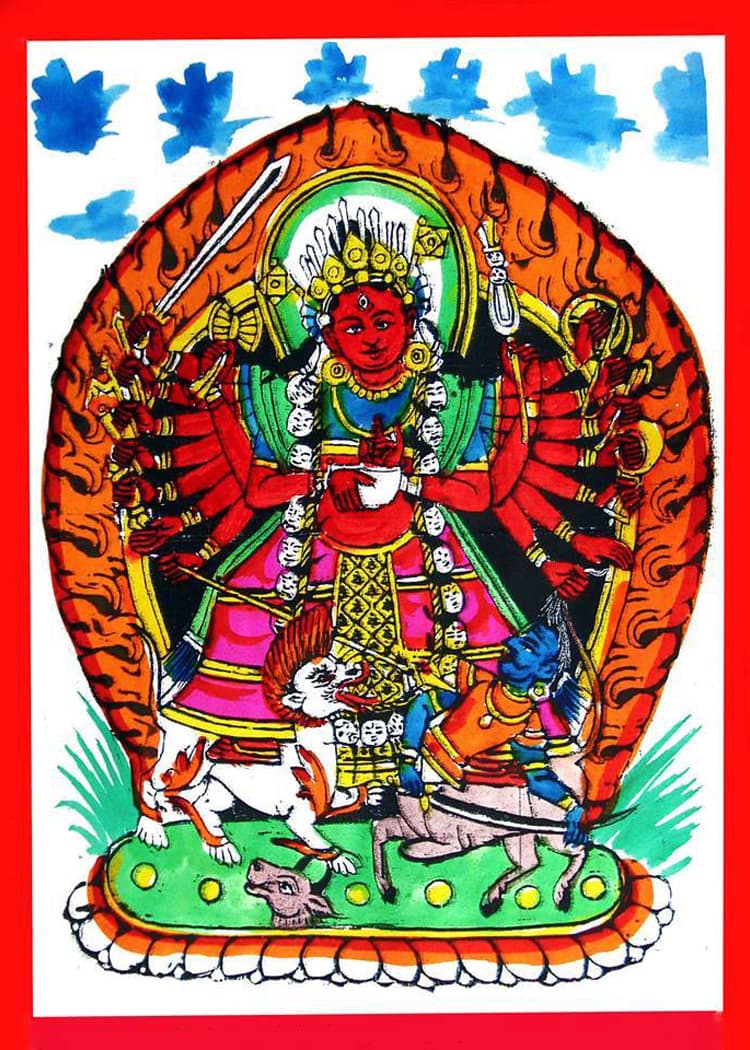
Chandi
Chandi, also known as Chandika, is a fierce Hindu goddess revered as a form of Durga and an incarnation of Chamunda. Derived from the Sanskrit word for "fierce," she is celebrated for vanquishing demons and embodying divine wrath. Chandi is particularly significant in the Shakta tradition and is widely worshipped in West Bengal and Gujarat.
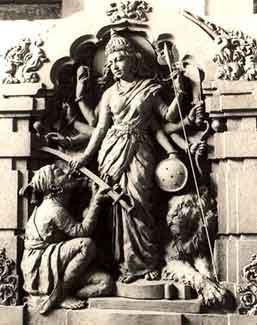
Bhavani
Bhavani is a significant epithet of the Hindu goddess Durga, translating to "giver of life." She is revered as a nurturing mother figure who provides for her devotees and dispenses justice by vanquishing evil forces. Bhavani is considered a manifestation of the primeval energy Shakti and is widely worshipped, particularly in Maharashtra, India.
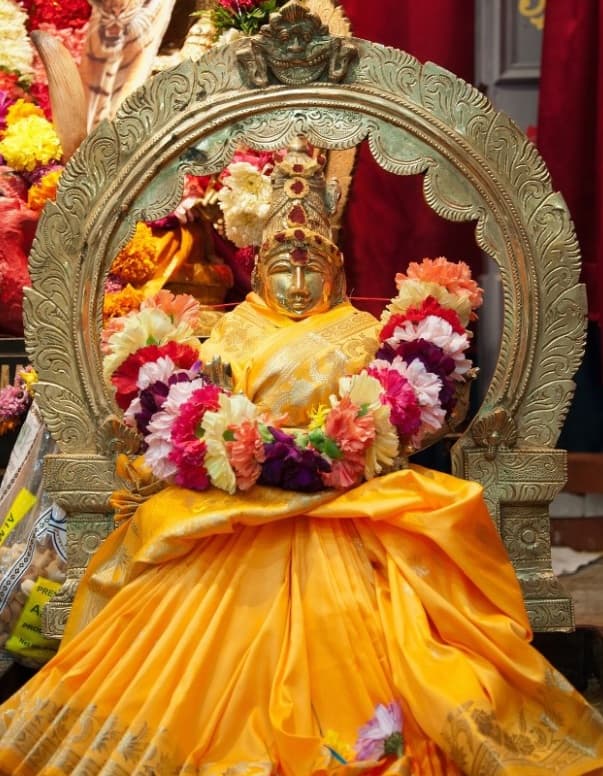
Bhuvaneshvari
Bhuvaneshvari is a prominent Hindu goddess, revered as the "Goddess of the world" or "Queen of the universe." She is the fourth of the ten Mahavidya goddesses and an important aspect of Mahadevi, considered a form of Adi Parashakti. Her name signifies her dominion over the three realms of existence: Earth, atmosphere, and Heavens.