
Bhavani
Bhavani is a significant epithet of the Hindu goddess Durga, translating to "giver of life." She is revered as a nurturing mother figure who provides for her devotees and dispenses justice by vanquishing evil forces. Bhavani is considered a manifestation of the primeval energy Shakti and is widely worshipped, particularly in Maharashtra, India.
Key Facts
- ›Bhavani is an epithet of the goddess Durga, meaning "giver of life."
- ›She is depicted as both a nurturing mother and a fierce dispenser of justice.
- ›Her worship is prominent in Maharashtra, where she is considered a family deity by many.
- ›The Tulja Bhavani temple in Tuljapur, Maharashtra, is a significant Shakta Pitha.
- ›She is often depicted with eight arms holding weapons and one in the abhaya mudra.
- ›Bhavani is associated with the vanquishing of demons like Mahishasura.
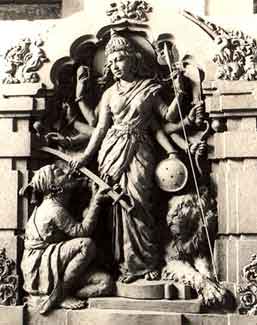
Bhāvya, Tulajā, Turajā, Tvarita, Aṃbā, Jagadambā, Aṃbē, Mahishasura Mardini
Eight Arms Holding Weapons, One Hand In Abhaya Mudra, Depicted As A Granite Image, Long Hair Coming Out of the Crown, Quiver On Her Back, Sun and Moon Present, Lion Standing Near Her
śIva PurāṇA, Durgā SaptaśAtī, Lalitha Sahasranamam
Gudi Padwa, Shriral Sashti, Lalita Panchami, Makara Sankranti, Rathasaptami, Navaratri, Vijaya Dasami
Tuljapur, Chittorgarh, Dewas Tekri, Ambejogai, Aundh, Maharashtra, Periyapalayam
Trident
Lion
Family Deity, Clan Deity, Embodiment of Shakti
About Bhavani
Bhavani: The Giver of Life and Dispenser of Justice
Bhavani is a prominent epithet of the Hindu goddess Durga, signifying her role as the "giver of life" and the embodiment of nature's creative energy. She is revered as a powerful maternal figure who nurtures her devotees while also acting as a fierce dispenser of justice by vanquishing malevolent forces. Her worship is deeply rooted in the Shaktism tradition, which venerates the divine feminine as the supreme power.
Origins and Significance
The name Bhavani translates to "giver of existence" and highlights her fundamental role in creation and sustenance. While an aspect of Durga, she is also perceived as an independent goddess, representing the primal energy (Shakti) of the universe. According to the Shiva Purana, Bhavani is the supreme goddess. She is seen as both the embodiment of ugra (ferocity) and Karunaswaroopini (embodiment of mercy), reflecting her multifaceted nature.
Worship and Iconography
Bhavani is especially revered in Maharashtra, where many communities consider her their family deity (Kuladevata) or clan deity. The Tulja Bhavani temple in Tuljapur, Maharashtra, is a significant pilgrimage site, recognized as one of the 51 Shakta Pithas. This ancient temple, with roots dating back to the 12th century CE, houses a black stone image of the goddess. Bhavani is typically depicted with eight arms, each bearing a weapon, symbolizing her martial prowess, and one hand in the abhaya mudra, offering blessings and protection. Her iconography often includes her lion mount and other symbolic elements.
Mythological Narratives
Legends associated with Bhavani often involve her triumphant battles against powerful demons who threatened the cosmic order. She is particularly known for vanquishing the buffalo-headed demon Mahishasura, earning her the epithet Mahishasura Mardini (slayer of Mahishasura). Another legend recounts her defeating the demon Matang, empowered by the Saptamatrikas, thus restoring peace and balance. These narratives underscore her role as a divine protector and a force against evil.
Source: Wikipedia ↗
Frequently Asked Questions
What does the name Bhavani mean?
The name Bhavani translates to "giver of life" or "giver of existence." It signifies her role as the source of creative energy and the embodiment of the divine feminine principle.
What is Bhavani known for?
Bhavani is known for her dual nature as a nurturing mother who provides for her devotees and a fierce protector who dispenses justice by defeating evil Asuras. She is revered for her power and compassion.
Where is Bhavani primarily worshipped?
Bhavani is widely worshipped in India, with a particularly strong tradition in the state of Maharashtra. The Tulja Bhavani temple in Tuljapur is a major pilgrimage site dedicated to her.
What are some of Bhavani's key attributes or iconography?
Bhavani is often depicted as a powerful goddess with eight arms, each holding a weapon, signifying her prowess in battle. She is also shown with one hand in the abhaya mudra, offering blessings and protection to her devotees.
What is the significance of the Tulja Bhavani temple?
The Tulja Bhavani temple in Tuljapur is considered one of the 51 Shakta Pithas, which are significant pilgrimage sites in Shakti tradition. It is an ancient temple, with historical records indicating its existence from as early as the 12th century CE.
Is Bhavani considered an independent goddess or an aspect of another deity?
While Bhavani is an epithet of Durga, she is often viewed as an independent goddess. However, some traditions, like the Shiva Purana, consider her the supreme goddess and the embodiment of divine energies.
Related Hindu deities
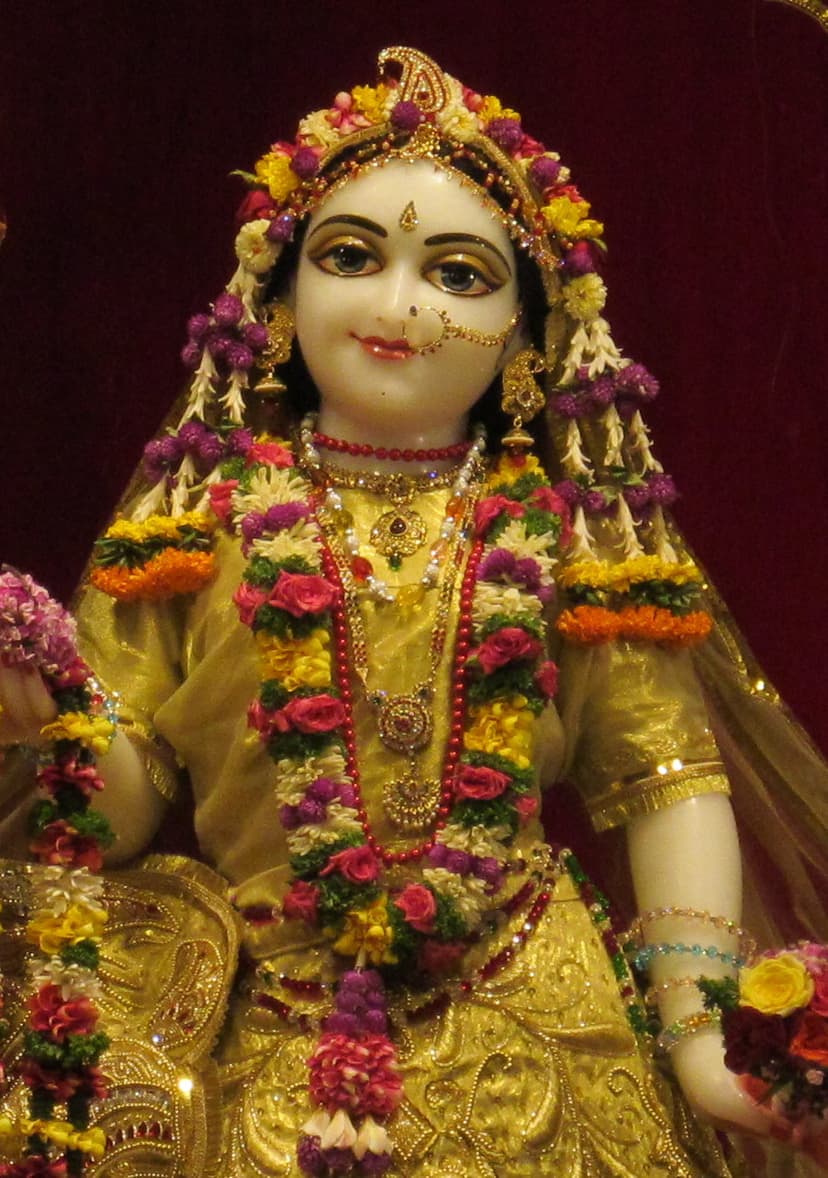
Radha
Radha is a principal Hindu goddess and the chief consort of Krishna. Revered as the goddess of love, compassion, and devotion, she is often depicted as an avatar of Lakshmi or as the supreme feminine energy of Krishna. Her profound love for Krishna has inspired countless devotional traditions, literary works, and artistic expressions.
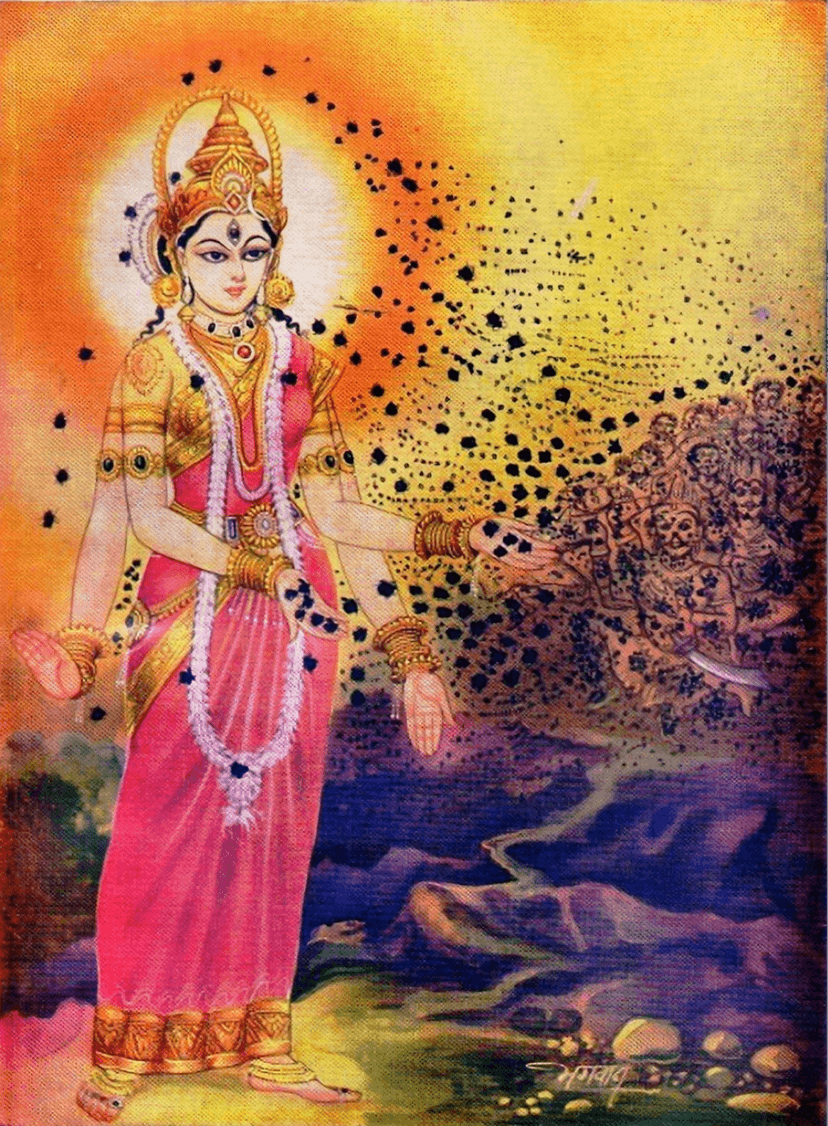
Bhramari
Bhramari is the Hindu goddess of bees and an incarnation of Mahadevi in Shaktism. She is depicted with bees and hornets emanating from her four hands, symbolizing her power over these insects. Her legend describes her defeating the powerful asura Arunasura by unleashing a swarm of insects that tear him apart, thus restoring peace to the celestial realms.
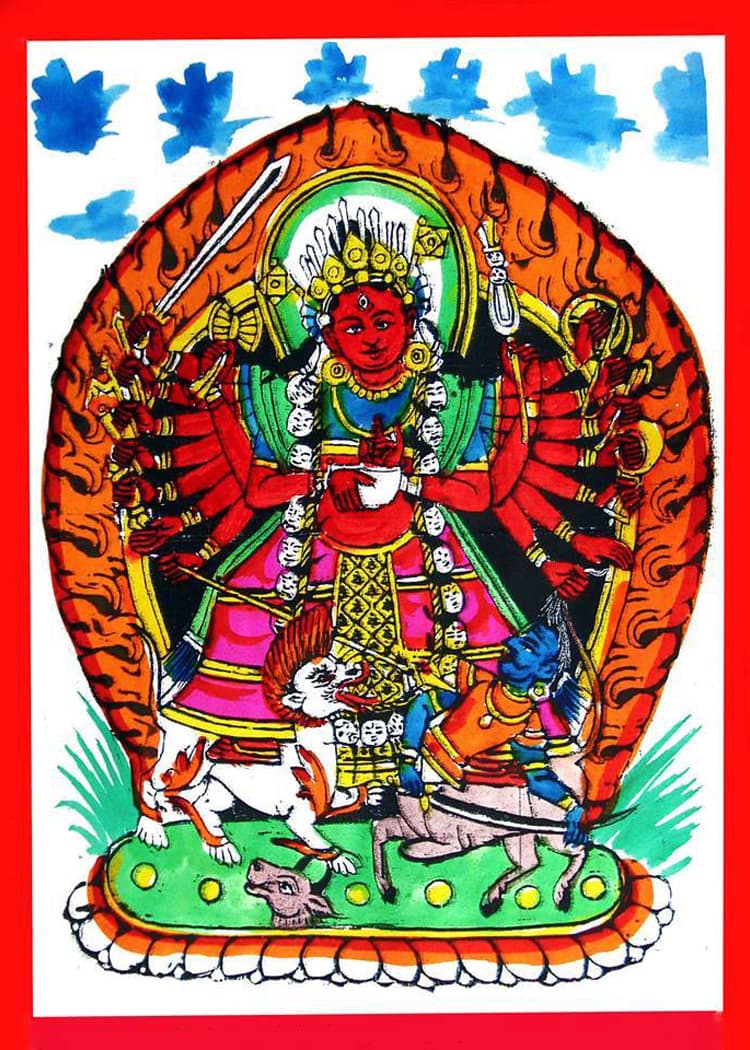
Chandi
Chandi, also known as Chandika, is a fierce Hindu goddess revered as a form of Durga and an incarnation of Chamunda. Derived from the Sanskrit word for "fierce," she is celebrated for vanquishing demons and embodying divine wrath. Chandi is particularly significant in the Shakta tradition and is widely worshipped in West Bengal and Gujarat.