
Chandi
Chandi, also known as Chandika, is a fierce Hindu goddess revered as a form of Durga and an incarnation of Chamunda. Derived from the Sanskrit word for "fierce," she is celebrated for vanquishing demons and embodying divine wrath. Chandi is particularly significant in the Shakta tradition and is widely worshipped in West Bengal and Gujarat.
Key Facts
- ›Chandi is a form of the goddess Durga and an incarnation of Chamunda.
- ›Her name derives from the Sanskrit word 'chanda,' meaning fierce or terrible.
- ›She is known for vanquishing demonic generals like Chanda and Munda.
- ›Chandi is prominently featured in the Devi Mahatmya, a key Shakta text.
- ›She is considered a personification of cosmic energy and divine wrath.
- ›The city of Chandigarh is named after the goddess.
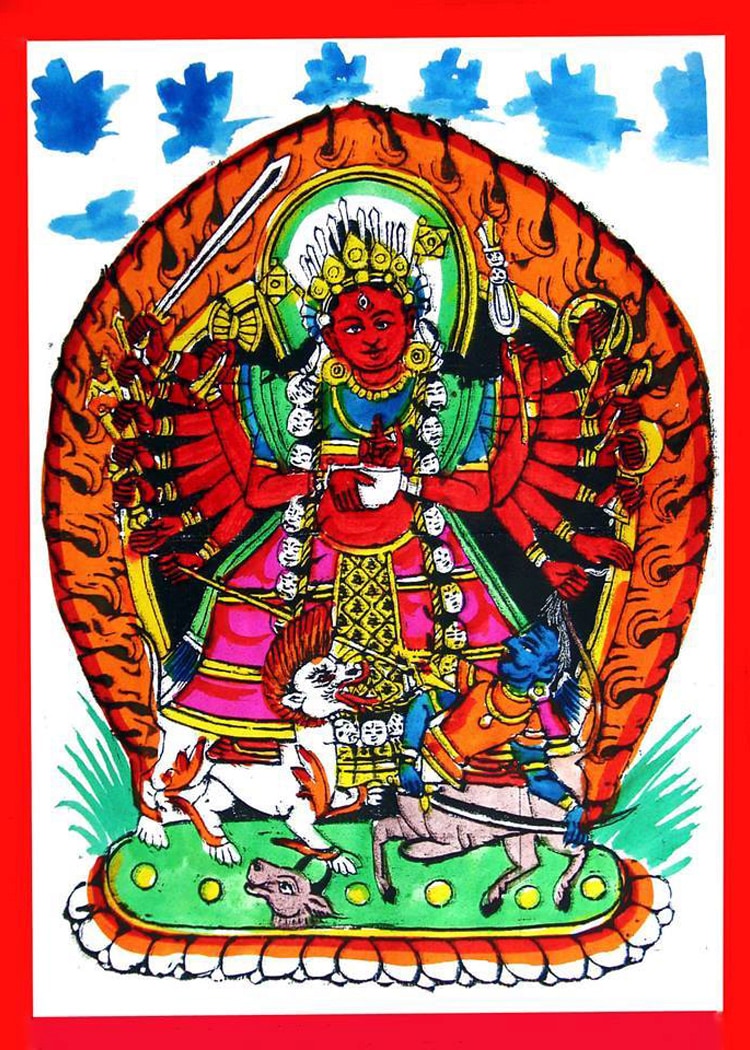
Chandika, Durga, Katyayani, Kali, Kalaratri, Ambika, Vindhyavasini, Kaushiki, Yogmaya, Mangal Chandi, Sankat Mangal Chandi, Rana Chandi, Olai Chandi
- Vermilion Complexion
- Eighteen Arms
- Holding A Rosary, Battle Axe, Mace, Bow, Arrow, Thunderbolt, Lotus, Water-Pot, Pestle, Spear, Sword, Shield, Noose, Bell, Wine-Cup, Trident, Conch, and Discus
- Complexion of Coral
- Seated On A Lotus
- Four Armed Forms Are Also Depicted
Devi Mahatmya, Skanda Purana, Narada Purana
Consort of Shiva, Mother of Ganesha and Kartikeya
Navaratri, Chandi Homa
Chandigarh
Battle Axe, Mace, Bow, Arrow, Thunderbolt, Pestle, Spear, Sword, Shield, Noose, Bell, Trident, Conch, Discus
Deity, Supreme Goddess
About Chandi
Chandi, also known by the epithet Chandika, is a formidable Hindu goddess celebrated for her fierce power and role as a vanquisher of demons. She is considered a form of the goddess Durga and an incarnation of Chamunda. Her name itself is derived from the Sanskrit word 'chanda,' meaning "fierce" or "terrible," accurately reflecting her persona as an embodiment of divine wrath and cosmic energy.
History and Significance
Chandi holds a significant place in Hindu scriptures, particularly in the Shakta tradition, which emphasizes the worship of the Divine Feminine. She is prominently featured in the Devi Mahatmya, a foundational text for Shakta philosophy, where she is often portrayed as the Supreme Goddess. In this text, names like Chandi, Chandika, Ambika, and Durga are frequently used interchangeably to refer to the ultimate divine power.
Historically, Chandi represents the Supreme Divine that combats evil forces. She is particularly revered for slaying the demonic generals Chanda and Munda, and in other narratives, for assisting in the defeat of Mahishasura, Shumbha, Nishumbha, and their armies. Her emergence from the combined energies of the gods during a cosmic battle signifies her supreme omnipotence and her role as a protector of the cosmos.
Iconography and Worship
The iconography of Chandi is striking, often depicting her with a vermilion complexion and multiple arms, each holding various weapons and symbols of power, such as a trident, discus, sword, and lotus. She is frequently shown seated on a lotus or her lion vehicle. While some depictions feature eighteen arms, others show her with four.
Chandi is especially popular in West Bengal and Gujarat. Her worship is often associated with Chandi Homa, a fire ritual performed during festivals like Navaratri, where verses from the Durga Saptashati are recited. Various forms of Chandi, such as Mangal Chandi and Rana Chandi, are worshipped for different blessings, including good fortune, protection, and healing.
Cultural Impact
Chandi's influence extends into folklore and literature, particularly in Bengal, where the "Chandi Mangala Kavyas" from the 13th to 19th centuries CE celebrated her exploits and merged local deities with mainstream Hinduism. The city of Chandigarh, the joint capital of Punjab and Haryana, is named in her honor, underscoring her enduring cultural significance.
Source: Wikipedia ↗
Frequently Asked Questions
Who is Chandi?
Chandi, also known as Chandika, is a Hindu goddess revered as a powerful form of Durga and an incarnation of Chamunda. Her name signifies her fierce nature, and she is known for her role in combating demonic forces.
What is Chandi known for?
Chandi is primarily known as the vanquisher of demons, particularly the generals Chanda and Munda. She represents divine wrath and passion, and is often depicted as a cosmic energy that destroys evil.
Where is Chandi most revered?
Chandi is particularly revered in the Indian states of West Bengal and Gujarat. She is also a significant deity in the Shakta tradition, especially in Eastern India.
What does the name Chandi mean?
The name Chandi is derived from the Sanskrit root 'chanda,' which means 'fierce' or 'terrible.' This reflects her powerful and formidable nature as a divine warrior.
What is the significance of Chandi in the Devi Mahatmya?
In the Devi Mahatmya, Chandi is often used interchangeably with other names for the Supreme Goddess, such as Ambika and Durga. She is portrayed as the slayer of demons and an embodiment of supreme divine power.
What is Chandi Homa?
Chandi Homa is a popular fire ritual in Hinduism, often performed during festivals like Navaratri. It involves reciting verses from the Durga Saptashati and offering oblations into a sacrificial fire, often accompanied by specific mantras.
Related Hindu deities

Chandraghanta
Chandraghanta is a powerful form of the Hindu goddess Mahadevi, revered as the destroyer of demons and the protector of her devotees. She is the third of the Navadurga and is prominently worshipped on the third day of Navaratri. Her name, meaning 'adorned with the moon as her bell,' refers to the crescent moon on her forehead, and she is depicted with ten arms holding various weapons and a bell.

Kaushiki
Kaushiki is a Hindu goddess who emerged from the sheath of Parvati. She is primarily known for her role in defeating the asura brothers Shumbha and Nishumbha, and her emergence also led to the creation of the Matrikas. Kaushiki is considered an incarnation of Mahasaraswati and is also known by epithets such as Ambika and Chandika.
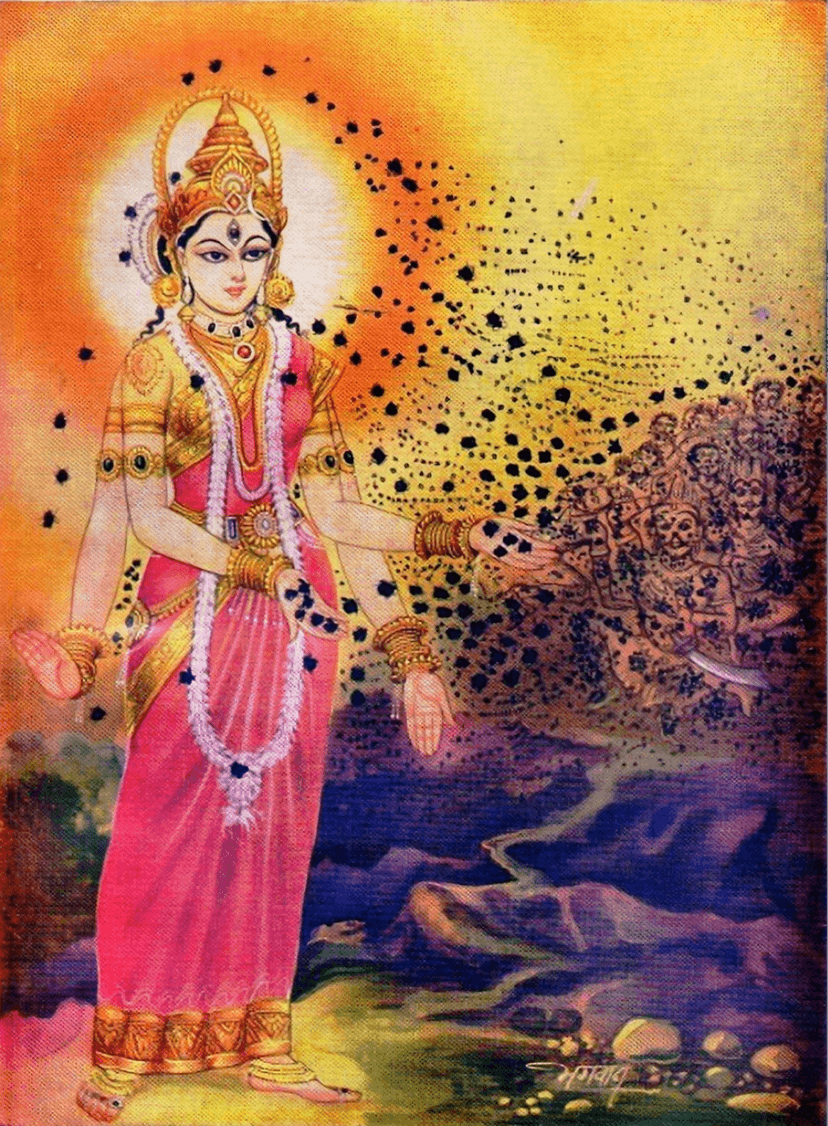
Bhramari
Bhramari is the Hindu goddess of bees and an incarnation of Mahadevi in Shaktism. She is depicted with bees and hornets emanating from her four hands, symbolizing her power over these insects. Her legend describes her defeating the powerful asura Arunasura by unleashing a swarm of insects that tear him apart, thus restoring peace to the celestial realms.