
Radha
Radha is a principal Hindu goddess and the chief consort of Krishna. Revered as the goddess of love, compassion, and devotion, she is often depicted as an avatar of Lakshmi or as the supreme feminine energy of Krishna. Her profound love for Krishna has inspired countless devotional traditions, literary works, and artistic expressions.
Key Facts
- ›Radha is the chief consort and beloved of the Hindu deity Krishna.
- ›She is worshipped as the goddess of love, tenderness, compassion, and devotion.
- ›Radha is considered by some traditions to be an avatar of Lakshmi or the Mūlaprakriti, the supreme goddess and internal potency of Krishna.
- ›Her birthday is celebrated annually on Radhashtami.
- ›Radha is a central figure in numerous devotional movements, particularly within Vaishnavism.
- ›Her romantic and spiritual relationship with Krishna is a major theme in Hindu literature and art.
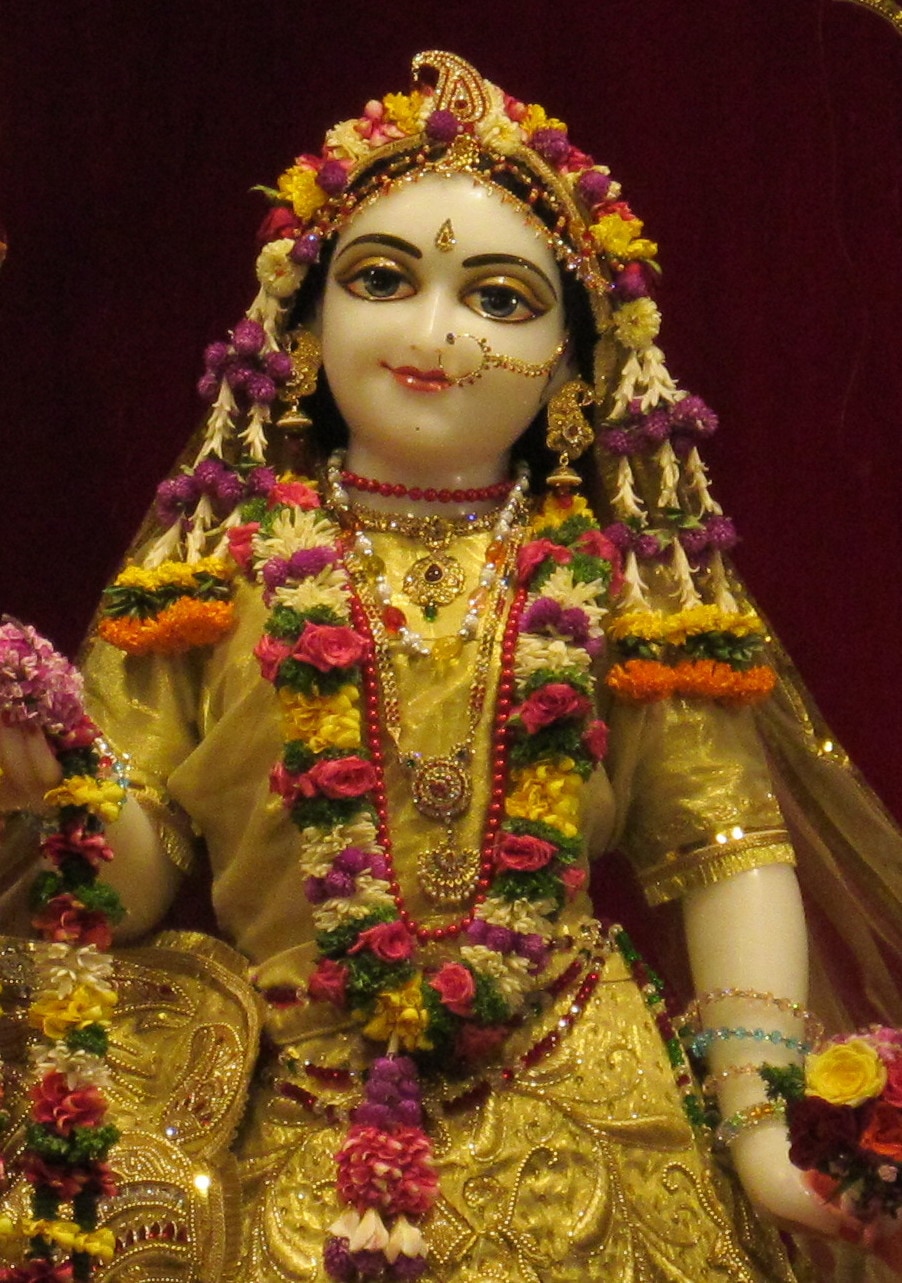
Radhika, Sri, Shreeji, Shriji, Madhavi, Keshavi, Aparajita, Kishori, Nitya, Nitya-gehinī, Gopi, Shyama, Gaurangi, Raseshvari, Rasa-priya, Vrindavaneshvari, Krishneshvari
- Depicted With Krishna Or Gopis In the Land of Braj.
- Often Wears A Traditional Sari Or Ghagra-Choli.
- Adorned With Jewelry Made of Metals, Pearls, Or Flowers.
- In Rajput Paintings, Depicted With Lighter Skin Tone and Emphasized Facial Features.
- In Kishangarh Paintings, Associated With the Bani Thani Portrait Style.
- Appears As Ardhanari With Krishna, Symbolizing Their Union.
- Described As Having A Molten Golden Complexion.
Gita Govinda, Padma Purana, Devi-Bhagavata Purana, Brahma Vaivarta Purana, Narada Purana, Garga Samhita, Narada Pancharatra, Skanda Purana, Shiva Purana, Matsya Purana, Linga Purana, Varaha Purana, RāDhāTantram, Vedanta Kamadhenu Dashashloki, Hita-Caurasi
Wife of Krishna, Daughter of Vrishbhanu, Daughter of Kirtida
Radhashtami
Goloka, Braj, Vrindavan, Barsana, Radha Kund, Bhandirvan
Cow
About Radha
Radha is a prominent Hindu goddess, revered as the chief consort and beloved of Krishna. She is widely worshipped as the goddess of love, tenderness, compassion, and devotion. In various scriptures, Radha is described as an avatar of Lakshmi or as the Mūlaprakriti, the supreme feminine energy and internal potency of Krishna, accompanying him in all his divine incarnations.
Significance and Worship
Radha's profound and often unconventional love for Krishna has made her an inspiration for countless devotional traditions, particularly within Vaishnavism. While some traditions, like Nimbarka Sampradaya, worship her as Krishna's eternal wedded wife, others, such as Gaudiya Vaishnavism, venerate her as his divine lover. In certain traditions, such as Radha Vallabha Sampradaya and Haridasi Sampradaya, Radha herself is worshipped as the Supreme Being.
Her birthday is celebrated annually on Radhashtami, a major festival dedicated to her. Radha is considered the queen of Goloka and Braj, and her romantic and spiritual union with Krishna, particularly their Raslila dance, has inspired a vast array of literary works and performance arts.
Literary and Historical Context
Mentions of Radha in early Indian literature are elusive, with her prominent appearance first occurring in the 12th-century Sanskrit text Gita Govinda by Jayadeva. Prior to this, she was mentioned in texts like Gatha Saptasati (1st-2nd century AD). Radha also features in numerous Puranas, where her divine nature and relationship with Krishna are elaborated upon. During the Bhakti movement in the 16th century, her role as the embodiment of extraordinary love for Krishna gained significant prominence, leading to her elevated status in devotional practices.
Iconography and Symbolism
Radha is often depicted alongside Krishna, adorned in traditional Indian attire and jewelry. She is sometimes represented in an Ardhanari form with Krishna, symbolizing their inseparable union. Her iconography emphasizes beauty, youth, and divine radiance. The name 'Radha' itself signifies prosperity, success, and perfection, reflecting her divine attributes.
Source: Wikipedia ↗
Frequently Asked Questions
Who is Radha in Hinduism?
Radha is a principal Hindu goddess and the chief consort of Krishna. She is revered as the goddess of love, tenderness, compassion, and devotion. Her profound love for Krishna is a central theme in many Hindu traditions.
What is Radha's relationship with Krishna?
Radha is primarily known as Krishna's chief consort and beloved. Their relationship is depicted in various ways, from a passionate, unconventional love affair to a divine, eternal marriage, depending on the specific tradition.
What is Radha known for?
Radha is known for her unconditional love and devotion to Krishna. She is also revered as the goddess of love and is considered the embodiment of Mahabhava, the highest form of divine love.
When is Radha's birthday celebrated?
Radha's birthday is celebrated every year on the occasion of Radhashtami. This festival is dedicated to her and marks her divine appearance.
In which scriptures is Radha mentioned?
Radha is mentioned in various Puranas, including the Padma Purana, Devi-Bhagavata Purana, Brahma Vaivarta Purana, and others. She also features prominently in the 12th-century text Gita Govinda by Jayadeva.
Related Hindu deities

Hanuman
Hanuman is a divine vanara and a devoted companion of Lord Rama in Hinduism, central to the epic Ramayana. Revered for his unwavering devotion, he is considered a chiranjivi (immortal) and is traditionally believed to be the spiritual offspring of the wind-god Vayu. Hanuman embodies a fusion of immense strength, heroic initiative, and loving devotion, and is often depicted as a patron of martial arts and scholarly pursuits.

Gopis
Gopis, also known as Gopikas, are a group of milkmaids from the Braj region of India, revered in Hinduism as devoted consorts of Krishna. They are celebrated in scriptures like the Bhagavata Purana for their unconditional love and devotion (Bhakti) towards Krishna, with Radha being considered the chief among them. The Gopis' devotion and their ecstatic dance with Krishna, known as the Raslila, have significantly inspired art, literature, and performance traditions.
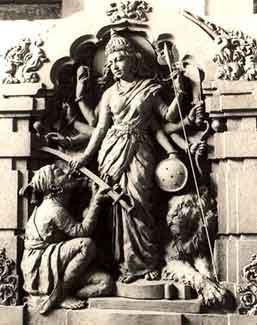
Bhavani
Bhavani is a significant epithet of the Hindu goddess Durga, translating to "giver of life." She is revered as a nurturing mother figure who provides for her devotees and dispenses justice by vanquishing evil forces. Bhavani is considered a manifestation of the primeval energy Shakti and is widely worshipped, particularly in Maharashtra, India.