
Hanuman
Hanuman is a divine vanara and a devoted companion of Lord Rama in Hinduism, central to the epic Ramayana. Revered for his unwavering devotion, he is considered a chiranjivi (immortal) and is traditionally believed to be the spiritual offspring of the wind-god Vayu. Hanuman embodies a fusion of immense strength, heroic initiative, and loving devotion, and is often depicted as a patron of martial arts and scholarly pursuits.
Key Facts
- ›Hanuman is a divine vanara and a devoted companion of Lord Rama.
- ›He is considered a chiranjivi (immortal) and is traditionally believed to be the son of the wind-god Vayu.
- ›Hanuman is celebrated for his unwavering devotion, strength, and heroic deeds recounted in the Ramayana.
- ›In later traditions, he is seen as an embodiment of both Shakti (power) and Bhakti (devotion).
- ›He is revered as an exemplar of self-control, faith, and commitment to a cause.
- ›His veneration significantly increased during the medieval Bhakti movement.

Maruti, Bajrangabali, Anjaneya, Vayuputra, Pavanputra, Sankata Mochana, Kapeeshwara, Rama Doota, Mahakaya, Vira, Mahavira, Mahabala, Mahabali, Vajrang Bali
- Often Depicted As A Monkey Or Vanara.
- Shown Flying, Carrying A Mountain.
- Sometimes Depicted With A Disfigured Jaw.
- May Be Shown With A Tail, Sometimes Lit On Fire.
- In His Fierce Form, He Can Be Five-Faced .
Ramayana, Mahabharata, Puranas, Shiva Purana, Garuda Purana, Hanuman Chalisa
Spiritual Son of Vayu, Son of Anjana, Son of Kesari
- Anjanadri Hill At Tirumala
- Anjaneri In Nasik, Maharashtra
- Anjeneri Anjanadri In Gangavathi Taluk Koppal District, Karnataka
- Kishkindha
Monkey
Chiranjivi, Divine
About Hanuman
Hanuman, also known as Maruti, Bajrangabali, and Anjaneya, is a revered deity in Hinduism, celebrated as a divine vanara and an exceptionally devoted companion of Lord Rama. His exploits are central to the epic Ramayana, where he is lauded for his unwavering loyalty, immense strength, and heroic deeds. Traditionally believed to be the spiritual offspring of the celestial wind-god Vayu, Hanuman is considered a chiranjivi, meaning he is immortal and will live on throughout the ages.
Significance and Attributes
Hanuman embodies a profound fusion of earthly power (shakti) and spiritual devotion (bhakti). He is revered as an exemplar of self-control, unwavering faith, and steadfast commitment to a righteous cause. His abilities, such as his capacity to change size (kama-rupin) and his extraordinary strength, are attributed in part to his lineage from Vayu. In later traditions, Hanuman has also been depicted as a patron deity of martial arts, meditation, and scholarly pursuits, symbolizing cherished virtues and internal values.
Historical and Mythological Development
While mentions of divine monkeys appear in early Vedic texts, Hanuman's prominent role as a central devotional figure emerged significantly later, particularly during the medieval Bhakti movement. The epic Ramayana, estimated to have been composed before or around the 3rd century BCE, portrays him as a crucial helper and messenger for Rama. By the late medieval era, especially with vernacular texts like Tulsidas's Ramcharitmanas, Hanuman's profile evolved into that of an exemplary spiritual devotee, inspiring devotion in his own right.
Key Narratives
Key narratives surrounding Hanuman include his childhood attempt to grasp the sun, which led to divine interventions and the granting of his powers. In his adulthood, his leap across the ocean to Lanka to find Sita, his burning of Lanka as an act of defiance, and his heroic retrieval of the Sanjeevani herb to save Lakshmana during the war are particularly famous. His encounter with Bhima in the Mahabharata further highlights his enduring presence and divine nature.
Source: Wikipedia ↗
Frequently Asked Questions
Who is Hanuman?
Hanuman is a divine vanara, a devoted companion of Lord Rama, and a significant deity in Hinduism. He is revered for his strength, devotion, and heroic deeds, particularly those recounted in the Ramayana.
What is Hanuman known for?
Hanuman is primarily known for his unwavering devotion to Lord Rama, his immense strength, and his role as a messenger and helper in the Ramayana. He is also celebrated as an embodiment of self-control, faith, and commitment.
What is Hanuman's origin?
Hanuman is traditionally believed to be the spiritual offspring of the celestial wind-god Vayu. He is also known as the son of Anjana and Kesari, with Vayu being his divine father.
What are some of Hanuman's other names?
Hanuman is known by numerous names, including Maruti, Bajrangabali, Anjaneya, Vayuputra (son of Vayu), Sankata Mochana (remover of obstacles), and Kapeeshwara (lord of monkeys).
What are Hanuman's key attributes?
Hanuman is described as immortal (chiranjivi), self-controlled (brahmachari), incredibly strong, and capable of changing his size (kama-rupin). He is also revered for his deep devotion (bhakti) and scholarly prowess.
When did Hanuman's veneration become prominent?
While tales of Hanuman appear in early texts like the Ramayana, his theological significance and a devoted following emerged much later, primarily during the medieval era and the Bhakti movement, roughly a millennium after the Ramayana was composed.
Related Hindu deities
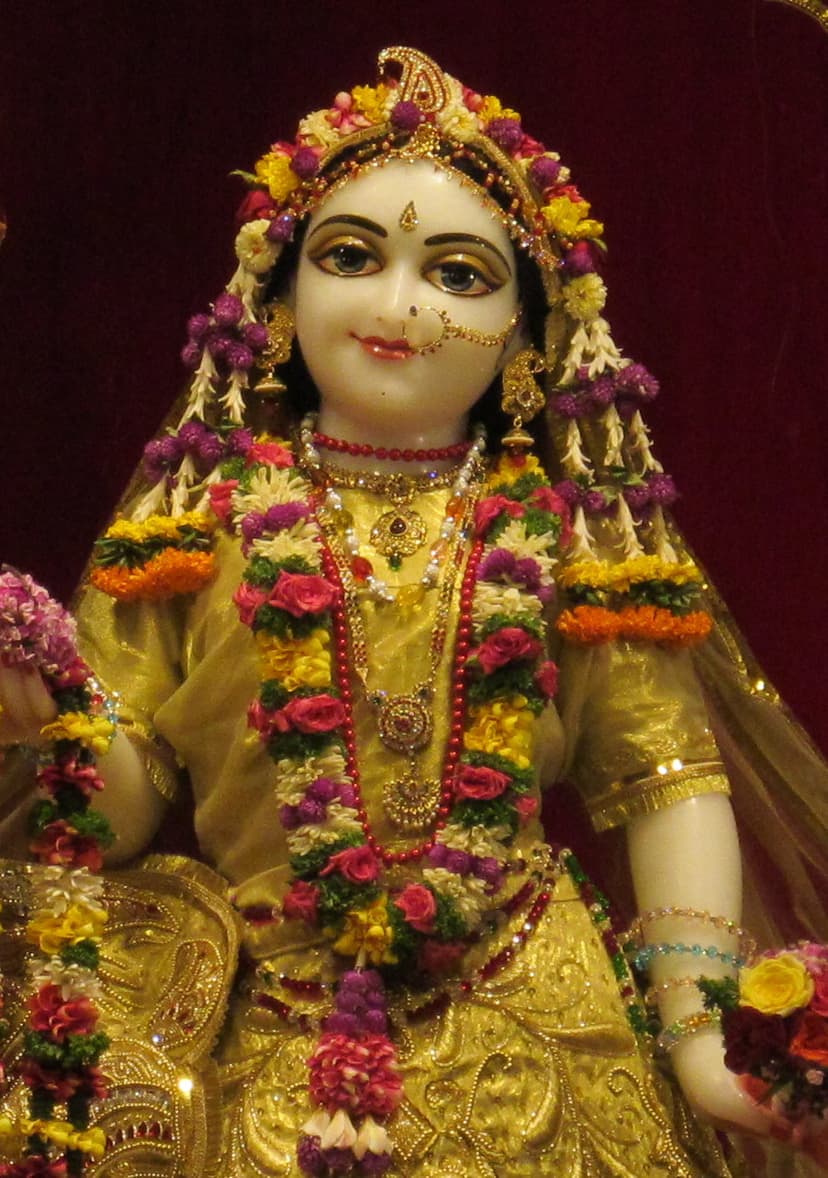
Radha
Radha is a principal Hindu goddess and the chief consort of Krishna. Revered as the goddess of love, compassion, and devotion, she is often depicted as an avatar of Lakshmi or as the supreme feminine energy of Krishna. Her profound love for Krishna has inspired countless devotional traditions, literary works, and artistic expressions.
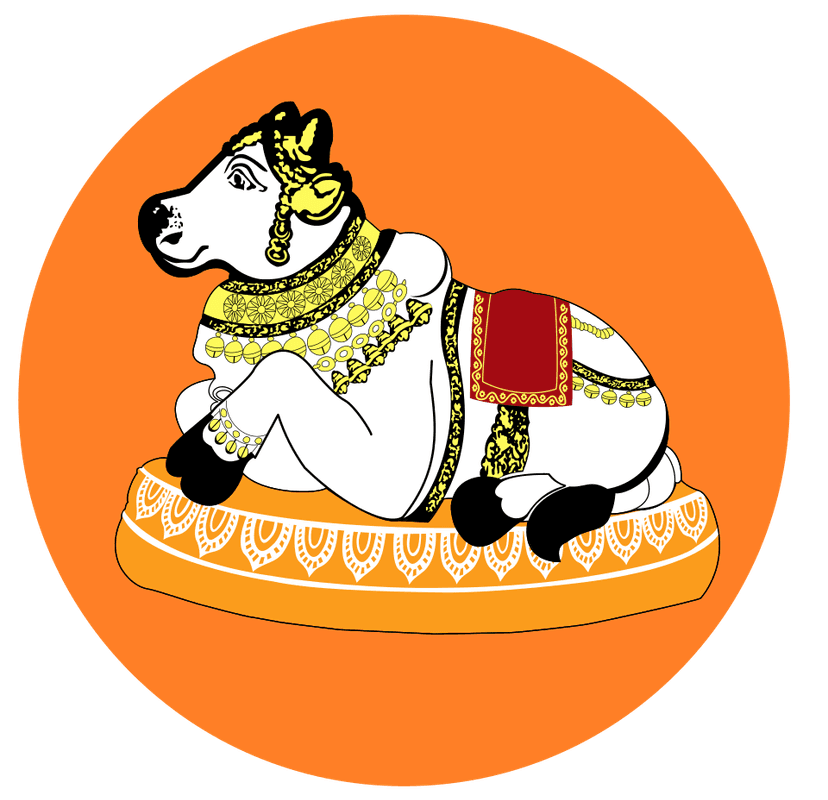
Nandi
Nandi is the sacred bull vahana (mount) of the Hindu god Shiva and the guardian deity of his abode, Kailash. He is widely depicted as a seated bull facing the main shrine in Shiva temples worldwide. Nandi symbolizes devotion and the soul's focus on the divine, and is also revered as a guru in Shaiva Siddhanta.
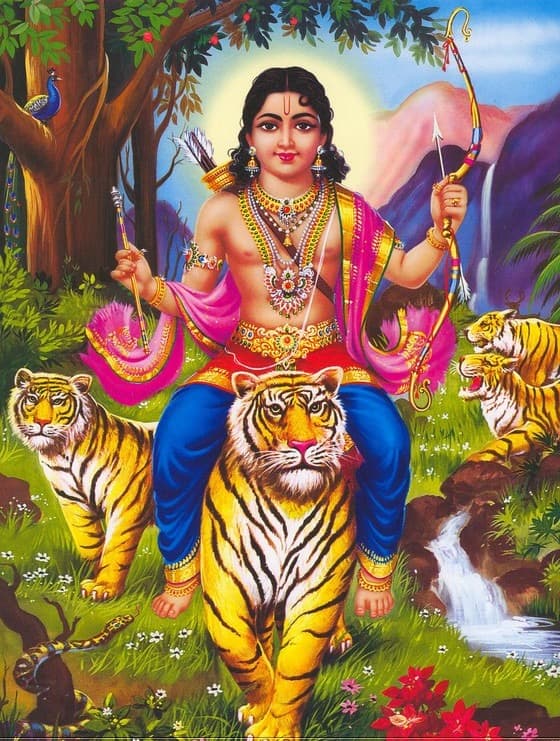
Ayyappan
Ayyappan is a revered Hindu deity embodying truth and righteousness, often depicted as a youthful warrior prince. He is considered the son of Shiva and Mohini (Vishnu's female avatar), symbolizing a union of Shaivism and Vaishnavism. Revered for his ascetic devotion to Dharma and his prowess in combating evil, Ayyappan's popularity, particularly from Kerala, has spread throughout Southern India, with Sabarimala being his most significant pilgrimage site.