
Nandi
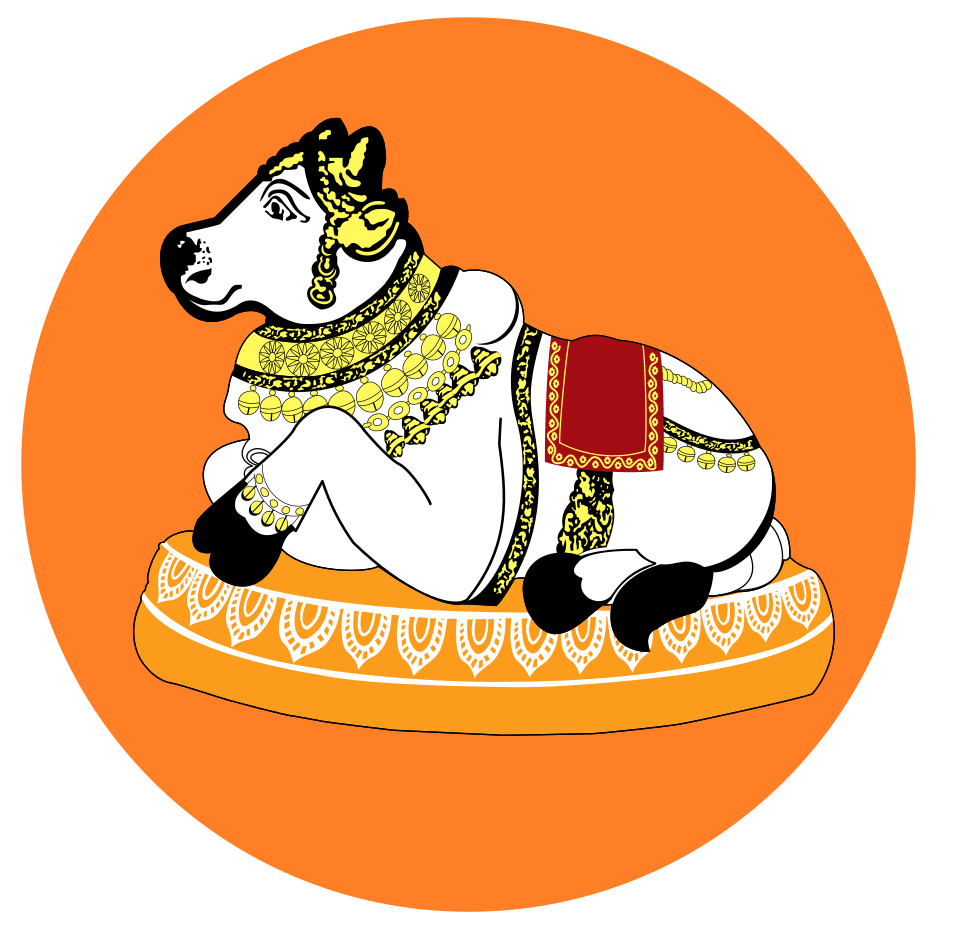
Nandi is the sacred bull vahana (mount) of the Hindu god Shiva and the guardian deity of his abode, Kailash. He is widely depicted as a seated bull facing the main shrine in Shiva temples worldwide. Nandi symbolizes devotion and the soul's focus on the divine, and is also revered as a guru in Shaiva Siddhanta.
Key Facts
- ›Nandi is the bull mount and gatekeeper of Lord Shiva.
- ›He is considered the guardian deity of Kailash, Shiva's celestial abode.
- ›Almost all Shiva temples feature stone images of Nandi, typically facing the main shrine.
- ›Nandi is believed to carry devotees' prayers directly to Shiva.
- ›Symbolically, Nandi represents the individual soul (jiva) focused on the Supreme being (Parameshvara).
- ›The Nandi flag, with the emblem of a seated bull, is recognized as the flag of Shaivism.
Nandiyamperuman, Nandikeshvara, Nandideva
- Seated Bull
- Zoo-Anthropomorphic Form With Bull Head and Four Hands
- Antelope, Axe, Mace, and Abhayamudra
- Recumbent Bull With Well-Proportioned Limbs, Prominent Hump, Dewlap, and Tail, Adorned With Necklaces, Bells, Garlands, and Decorative Cloth
- Matted Hair Crown , Three Eyes, and Four Arms Carrying A Trident , Axe , Mace , and Thunderbolt
Shaiva Agamas, Shiva Purana, Kamikagama, Karanagama, Suprabhedagama, Linga Purana, Tirumantiram
Son of Sage Shilada
Shivaratri
Kailash, Anthanarkuruchi, Tripur Tirth Kshetra
Trident, Axe, Mace, Thunderbolt
Antelope
About Nandi
Nandi, also known by epithets such as Nandikeshvara and Nandideva, is a central figure in Shaivism, most famously recognized as the sacred bull vahana (mount) of the Hindu god Shiva. He also serves as the guardian deity of Kailash, Shiva's celestial abode. The name 'Nandi' itself derives from the Sanskrit word meaning 'happy, joy, and satisfaction,' reflecting his divine nature.
Origins and Legends
According to legend, Nandi was born from a yajna (fire sacrifice) performed by the sage Shilada, who had received a boon from Shiva to have an immortal child. Nandi grew up as an ardent devotee of Shiva, performing severe penance to become his gatekeeper and mount. Shaiva Siddhanta texts consider Nandi to be chief among the Siddhas, initiated by Shiva and Parvati, and he is credited with transmitting divine wisdom to his disciples, forming the basis of the Nandinatha Sampradaya.
Role and Symbolism
In almost all Shiva temples, stone images of a seated Nandi are displayed, invariably facing the main shrine. This positioning symbolizes the individual soul (jiva) and its constant focus on the Supreme Being (Parameshvara). Devotees often whisper their prayers and wishes into Nandi's ear, believing he will carry their messages directly to Shiva. From a yogic perspective, Nandi represents the mind dedicated to Shiva, embodying the absorption of divine light and wisdom.
Historical and Iconographic Significance
The earliest detailed descriptions of Nandi appear in the Shaiva Agamas, dating from the 5th to 12th centuries CE. These texts established Nandi not just as Shiva's mount but as an integral architectural element of temples. By the Chola period, large monolithic Nandi sculptures became prominent. Iconographically, Nandi is depicted as a bull, often in a seated posture. Anthropomorphic depictions also exist, portraying him with a bull's head and four arms, holding various divine attributes like an axe or trident. The Nandi flag, featuring a seated bull emblem, is a significant symbol of Shaivism, particularly for the Tamil community, and has been recognized as the official flag of Shaivism and the Hindu flag of Sri Lanka.
Source: Wikipedia ↗
Frequently Asked Questions
Who is Nandi in Hinduism?
Nandi is the sacred bull vahana of the Hindu god Shiva and the guardian deity of Kailash. He is depicted as a bull and is an integral part of Shiva worship.
What is Nandi's role in Shiva temples?
Nandi is prominently seated in all Shiva temples, generally facing the main shrine. He acts as Shiva's gatekeeper and is believed to carry devotees' prayers to Shiva.
What is the significance of Nandi?
Nandi symbolizes devotion and represents the individual soul's unwavering focus on the divine. He is also considered a guru in Shaiva Siddhanta, having transmitted wisdom to his disciples.
What does Nandi's name mean?
The Sanskrit word 'nandi' means happy, joy, and satisfaction. These qualities are attributed to Nandi as the divine guardian of Shiva.
Are there specific legends about Nandi?
Yes, legends describe Nandi as the son of sage Shilada, who performed penance to have him. Nandi also cursed Ravana for his insolent behavior towards Shiva, foretelling the burning of Lanka.
What is the Nandi flag?
The Nandi flag, featuring the emblem of a seated bull, is recognized as the flag of Shaivism, particularly among the Tamil community. It has been adopted as the official Shaiva flag and even the official Hindu flag of Sri Lanka.
Related Hindu deities

Hanuman
Hanuman is a divine vanara and a devoted companion of Lord Rama in Hinduism, central to the epic Ramayana. Revered for his unwavering devotion, he is considered a chiranjivi (immortal) and is traditionally believed to be the spiritual offspring of the wind-god Vayu. Hanuman embodies a fusion of immense strength, heroic initiative, and loving devotion, and is often depicted as a patron of martial arts and scholarly pursuits.

Bhairava
Bhairava is a fearsome manifestation of the Hindu deity Shiva, often depicted as a protector and punisher of sins. He is also adopted in Buddhist traditions as a wrathful emanation. Bhairava is widely worshipped across India, Nepal, and other parts of Asia, with numerous temples and festivals dedicated to him.
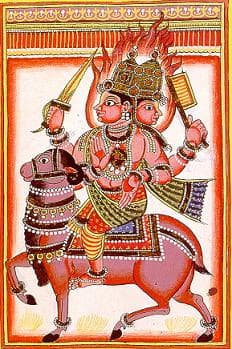
Agni
Agni is the Hindu god of fire, a Vedic deity who serves as the messenger between humans and the gods. He is revered as the guardian of the southeast direction and is integral to many Hindu rituals, including weddings and festivals, symbolizing transformative energy and knowledge.