
Bhairava
dog (shvana)·Male·India·Shaivism, Vajrayāna Buddhism, Kashmir Shaivism, Aghora sect, Gelug school
Bhairava is a fearsome manifestation of the Hindu deity Shiva, often depicted as a protector and punisher of sins. He is also adopted in Buddhist traditions as a wrathful emanation. Bhairava is widely worshipped across India, Nepal, and other parts of Asia, with numerous temples and festivals dedicated to him.
Key Facts
- ›Bhairava is a powerful manifestation or avatar of Shiva in Shaivism.
- ›In Kashmir Shaivism, Bhairava represents the Supreme Reality, Para Brahman.
- ›He is known as Daṇḍapāni for holding a rod to punish sinners and ŚVāśva for having a dog as his vehicle.
- ›In Buddhism, Bhairava is a fierce emanation of a bodhisattva and is known by various names like Heruka and Mahākāla.
- ›Bhairava is worshipped throughout India, Nepal, Indonesia, Sri Lanka, and Japan.
- ›The legend of Bhairava's origin involves Shiva manifesting to punish Brahma's arrogance.

Kāla Bhairava, Daṇḍapāni, Śvāśva, Heruka, Vajrabhairava, Mahākāla, Yamantaka, Bhairavar, Vairavar, Bahirawa, Bhairavnath
- Ornamented With Twisted Serpents
- Wears A Tiger Skin
- Wears A Ritual Apron Composed of Human Bones
- Has A Dog As His Divine Vahana
- Eight Manifestations Called the Ashta Bhairava
Shiva Purana, VijñāNa Bhairava Tantra, Rudrayamala Tantra, Vajrabhairava Tantras
Bhairava Ashtami, Kalashtami, Kaal Ashtami, Shivratri
- Kashi
- Ujjain
- Kashi Vishwanath Temple
- Kal Bhairava Temple
- Patal Bhairava Shrine
- Vikrant Bhairava Shrine
- Thennaga Kasi Bairavar Temple, Erode
- Kathmandu Valley
- Panauti
- Banepa
- Dhulikhel
- Palpa
- Pokhara
- Sri Adichunchanagiri Hills
- 52 Shakta Pithas
- Shri Kala Bhairava Nath Swami Temple, Madhya Pradesh
DaṇḍA
Fierce Deity, Guardian Deity, Meditational Deity
About Bhairava
Bhairava is a fearsome and powerful manifestation of the Hindu deity Shiva, widely worshipped in Shaivism and also adopted into Vajrayāna Buddhism. In Shaivism, he is considered a potent avatar of Shiva and, particularly in Kashmir Shaivism, represents the Supreme Reality, synonymous with Para Brahman. Bhairava is known by epithets such as Daṇḍapāni, signifying his role as the holder of a rod to punish sinners, and Śvāśva, referring to his vehicle being a dog.
Origin and Legend
The legend of Bhairava's origin, as described in the Shiva Purana, stems from a dispute between Brahma and Vishnu regarding their supremacy. Shiva manifested as an infinite pillar of light to settle their argument. When Brahma dishonestly claimed to have found the end of the pillar, Shiva, from between his brows, produced Bhairava. To punish Brahma for his falsehood and arrogance, Bhairava decapitated Brahma's fifth head. This act, however, resulted in Bhairava incurring the sin of brahmahatya (the murder of a Brahmin). To expiate this sin, Bhairava wandered the cosmos, eventually finding liberation and the release of Brahma's skull from his hand upon visiting Kashi.
Iconography and Worship
Iconographically, Bhairava is depicted as being adorned with various serpents, which serve as his ornaments, and he often wears a tiger skin and a ritual apron made of human bones. His divine vehicle is a dog. Bhairava is worshipped throughout India, Nepal, Indonesia, Sri Lanka, and Japan. Temples and shrines dedicated to him are commonly found within or near Jyotirlinga temples. Significant observances include Bhairava Ashtami, commemorating his appearance, celebrated on the eighth day of the waning moon in Margashirsha.
Significance in Buddhism and Other Traditions
In Vajrayāna Buddhism, Bhairava is recognized as a fierce emanation of a bodhisattva, often referred to as Heruka, Vajrabhairava, Mahākāla, or Yamantaka. These Buddhist forms are considered wrathful deities and tantric meditational deities (yidams), with practices focused on transforming negative emotions. Bhairava also holds importance in Newar Buddhism in Nepal and is revered as a guardian deity in various regions, protecting devotees in eight directions and safeguarding treasures.
Source: Wikipedia ↗
Frequently Asked Questions
What is the meaning of the name Bhairava?
Bhairava originates from the Sanskrit word 'bhīru,' meaning 'fearsome.' Therefore, Bhairava translates to 'terribly fearsome form.' It also signifies the one who destroys fear or is beyond it.
What is the origin story of Bhairava in Hinduism?
According to the Shiva Purana, Shiva manifested as a pillar of light to resolve a dispute between Brahma and Vishnu. When Brahma lied about discovering the end of the pillar, Shiva created Bhairava from his brow to punish Brahma by decapitating his fifth head.
What sins did Bhairava commit and how did he expiate them?
Bhairava committed the sin of brahmahatya (the murder of a Brahmin) by decapitating Brahma. To atone for this sin, he roamed the three worlds, and the sin finally left him when he visited Kashi, where Brahma's skull was also released from his hand.
How is Bhairava depicted in iconography?
Bhairava is depicted adorned with serpents as ornaments and wearing a tiger skin. He is often shown holding a ritual apron made of human bones and has a dog as his divine vehicle (vahana).
What is Bhairava's significance in Buddhism?
In Buddhism, Bhairava is adopted as a fierce emanation of a bodhisattva and serves as a dharmapala (protector of the dharma). He is also considered a tantric meditational deity (yidam) in Tibetan Buddhism, with practices focusing on transforming anger and hatred.
Where are Bhairava temples commonly found?
Temples and shrines dedicated to Bhairava are frequently located within or near most Jyotirlinga temples across India. He is also a significant deity in Nepal, with temples in traditional Newar settlements, and is revered in South Karnataka and Maharashtra.
What are the observances related to Bhairava?
Bhairava Ashtami, also known as Kalashtami or Kaal Ashtami, is a significant observance commemorating the appearance of Kala Bhairava on earth. It is celebrated on the eighth day of the waning moon phase in the Hindu month of Margashirsha, and monthly on the Ashtami Tithi of Krishna Paksha.
Related Hindu deities

Mahakala
Mahākāla is a significant deity found in both Hinduism and Buddhism. In Hinduism, he is a fierce manifestation of Shiva and the consort of Mahākālī, particularly prominent in Shaktism. In Buddhism, Mahākāla serves as a Dharmapāla, a wrathful protector of the Dharma, and is often viewed as a manifestation of a Buddha.
Pashupati
Pashupati, meaning 'lord of animals,' is an epithet for the Vedic deity Rudra and later a benevolent form of Shiva. He is revered as the herdsman of all creatures and is considered the guardian deity of Nepal. His iconography features five faces, representing different aspects of Shiva and the five elements.
Nandi
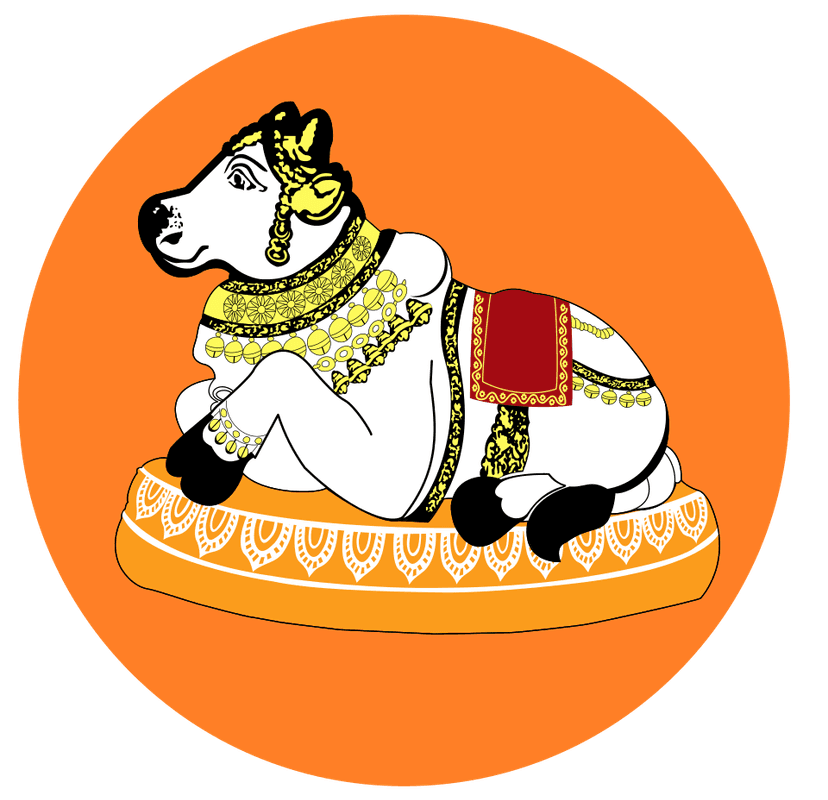
Nandi is the sacred bull vahana (mount) of the Hindu god Shiva and the guardian deity of his abode, Kailash. He is widely depicted as a seated bull facing the main shrine in Shiva temples worldwide. Nandi symbolizes devotion and the soul's focus on the divine, and is also revered as a guru in Shaiva Siddhanta.