
Ayyappan
Ayyappan is a revered Hindu deity embodying truth and righteousness, often depicted as a youthful warrior prince. He is considered the son of Shiva and Mohini (Vishnu's female avatar), symbolizing a union of Shaivism and Vaishnavism. Revered for his ascetic devotion to Dharma and his prowess in combating evil, Ayyappan's popularity, particularly from Kerala, has spread throughout Southern India, with Sabarimala being his most significant pilgrimage site.
Key Facts
- ›Ayyappan is known as the deity of truth and righteousness, embodying Dharma.
- ›He is considered the son of Shiva and Mohini (the female avatar of Vishnu).
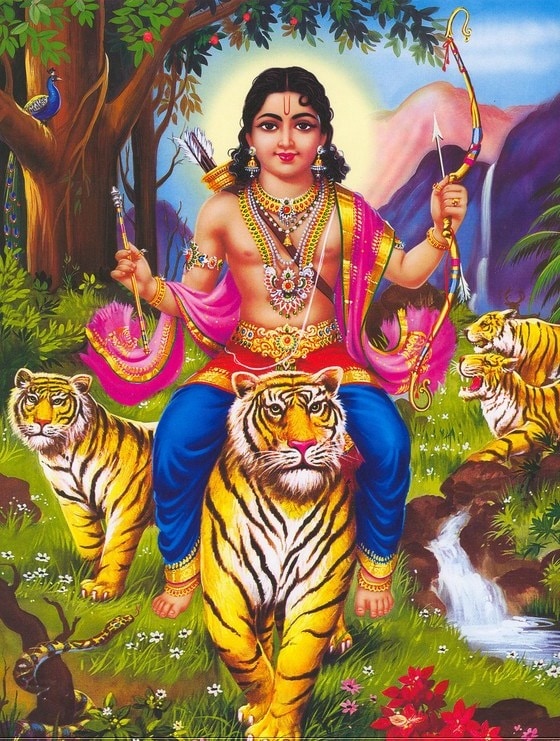
- ›Ayyappan is often depicted as a youthful warrior, sometimes riding a Bengal tiger.
- ›His primary pilgrimage destination is Sabarimala, attracting millions of devotees annually.
- ›He is also referred to as Dharmasastha, Manikandan, and Hariharasuthan.
- ›Worship of Ayyappan spread significantly across Southern India in the 20th century.
Dharmasastha, Manikandan, Hariharasuthan, Sastha
Youthful Man, Warrior Deity, Riding A Bengal Tiger, Holding A Bow and Arrow, Wearing A Bell Around His Neck, Yogic Posture, Holding A Sword, Riding An Indian Elephant Or Horse
Vishnu Purana, Srimad Bhagavatham
Son of Shiva and Mohini
Makaravilakku
Sabarimala, Achankovil Sastha Temple, Aryankavu Sastha Temple, Erumely Sree Dharmasastha Temple, Kulathupuzha Sastha Temple
Bow and Arrow, Sword
Bengal Tiger
About Ayyappan
Ayyappan is a significant Hindu deity revered across Southern India, particularly in Kerala and Tamil Nadu. He is primarily known as the god of truth, righteousness, and Dharma, embodying an ascetic devotion to ethical living. His theology often presents him as the son of Shiva and Mohini, the female avatar of Vishnu, thus symbolizing the harmonious confluence of Shaivism and Vaishnavism.
Iconography and Symbolism
Ayyappan is typically depicted as a youthful, celibate warrior. Common visual attributes include a bow and arrow, and he is frequently shown riding a Bengal tiger, which signifies his immense power and control over formidable forces. Other representations show him in a yogic posture, sometimes wearing a bell around his neck, which is the origin of his epithet Manikandan (wearer of a jeweled bell).
Mythology and Legends
The legends surrounding Ayyappan vary regionally, reflecting a rich tapestry of evolving traditions. A prominent narrative, particularly from Malayalam lore, portrays him as a warrior prince of the Pandalam kingdom. In these stories, he often utilizes his military and yogic prowess to protect people from evil and restore Dharmic practices. Some traditions also link him with the Tamil folk deity Ayyanar, suggesting a fusion of indigenous deities with Puranic narratives.
Worship and Pilgrimage
While worship of Ayyappan has been prevalent for a long time in Kerala, his popularity surged across Southern India in the 20th century. The foremost pilgrimage destination is Sabarimala, a major temple complex nestled in the Western Ghats. Millions of devotees undertake arduous journeys to Sabarimala annually, often involving weeks of rigorous preparation, including fasting, celibacy, and a barefoot trek. The pilgrimage emphasizes equality, with devotees addressing each other as 'swami'.
Syncretic Aspects
Ayyappan's tradition also exhibits syncretic elements, notably his association with the Muslim warrior Vavar. This relationship, where Ayyappan forms an alliance with Vavar against outlaws, is reflected in the practice of pilgrims praying at both Hindu shrines and a nearby mosque dedicated to Vavar before commencing their journey to Sabarimala. This aspect highlights a broader acceptance and integration of diverse figures within the Ayyappan tradition, making him a deity respected by various religious communities.
Source: Wikipedia ↗
Frequently Asked Questions
Who is Ayyappan?
Ayyappan is a Hindu deity revered for embodying truth and righteousness. He is considered the son of Shiva and Mohini, a female avatar of Vishnu, representing a synthesis of Shaivism and Vaishnavism. He is known as a warrior deity devoted to Dharma, the ethical way of life.
What is Ayyappan known for?
Ayyappan is known for his ascetic devotion to Dharma and his role as a protector against evil. He is revered for his military and yogic abilities used to defeat unethical forces. His legends often portray him as a warrior prince who establishes righteousness.
Where is Ayyappan most famously worshipped?
The most prominent pilgrimage site dedicated to Ayyappan is Sabarimala, located in the Western Ghats of Kerala. This site attracts millions of Hindu pilgrims annually who undertake rigorous preparations and a trek to reach the shrine.
What are some of Ayyappan's alternative names?
Ayyappan is known by several other names, including Dharmasthala, Manikandan, and Hariharasuthan, which signifies his parentage as the son of Hari (Vishnu) and Hara (Shiva). He is also referred to as Sastha.
What is the significance of the tiger in Ayyappan's iconography?
Ayyappan is frequently depicted riding or accompanied by a Bengal tiger. This imagery symbolizes his immense power and his ability to control even the most formidable creatures, reflecting his divine authority and prowess.
How did Ayyappan's popularity spread?
While Ayyappan worship was historically prevalent in Kerala, his popularity expanded significantly across most of Southern India during the 20th century. This growth is evidenced by the numerous temples dedicated to him in the region.
Related Hindu deities

Hanuman
Hanuman is a divine vanara and a devoted companion of Lord Rama in Hinduism, central to the epic Ramayana. Revered for his unwavering devotion, he is considered a chiranjivi (immortal) and is traditionally believed to be the spiritual offspring of the wind-god Vayu. Hanuman embodies a fusion of immense strength, heroic initiative, and loving devotion, and is often depicted as a patron of martial arts and scholarly pursuits.
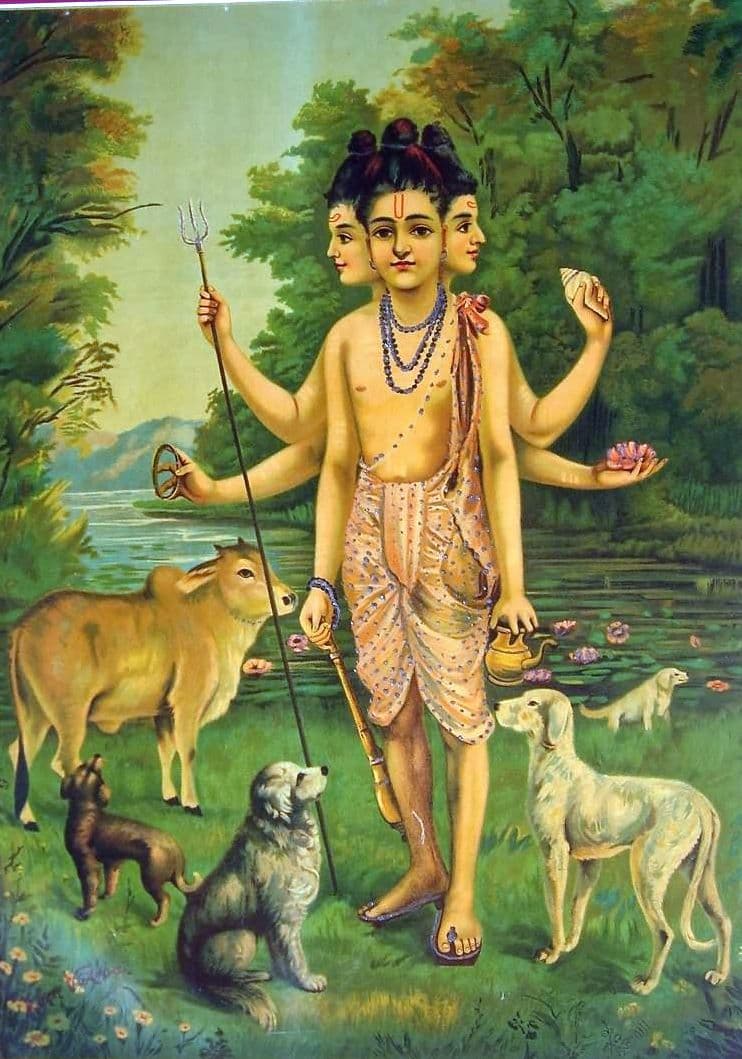
Dattatreya
Dattatreya is a revered Hindu deity, often depicted as a paradigmatic monk and lord of yoga. He is considered a combined avatar of Brahma, Vishnu, and Shiva (the Trimurti), symbolizing the supreme being. Dattatreya is known for his philosophy of renunciation, self-knowledge through observation of nature, and has inspired numerous monastic traditions across India.

Hara
Shiva, also known as Mahadeva and Hara, is a principal deity in Hinduism and the Supreme Being in Shaivism. He is revered as the creator, protector, and transformer of the universe. Shiva embodies both benevolent and fearsome aspects, appearing as an ascetic yogi, a householder, and a slayer of demons, making him the patron god of yoga, meditation, and the arts.