
Hara
Nandi bull·Male·Indian Subcontinent·Hinduism
Shiva, also known as Mahadeva and Hara, is a principal deity in Hinduism and the Supreme Being in Shaivism. He is revered as the creator, protector, and transformer of the universe. Shiva embodies both benevolent and fearsome aspects, appearing as an ascetic yogi, a householder, and a slayer of demons, making him the patron god of yoga, meditation, and the arts.
Key Facts
- ›Revered as the Supreme being in Shaivism, one of Hinduism's major traditions.
- ›Known as 'the Destroyer' within the Trimurti, alongside Brahma and Vishnu.
- ›Has benevolent aspects as a yogi and householder, and fearsome aspects as a demon-slayer.
- ›Considered the patron god of yoga, meditation, and the arts.
- ›Iconographically identified by attributes like a serpent, crescent moon, Ganga, third eye, and trident.
- ›Often worshiped in the aniconic form of a lingam.

Mahadeva, Hara, Rudra, The Destroyer, Adiyogi
Serpent King Vasuki Around His Neck, Adorning Crescent Moon, Holy River Ganga Flowing From His Matted Hair, Third Eye On His Forehead, Trishula, Damaru
Shiva Purana, Linga Purana, Shaiva Upanishads, Shaiva Agamas
Consort of Parvati, Father of Ganesha, Father of Kartikeya
Ganesha, Kartikeya
Trishula
Bull
About Hara
Shiva
Shiva, also widely known as Mahadeva and Hara, stands as one of the principal deities in Hinduism, holding the position of the Supreme Being within Shaivism, a major tradition of the faith. In Shaivism, Shiva is venerated as the divine entity responsible for creating, protecting, and transforming the universe. He is recognized as 'The Destroyer' within the Trimurti, the Hindu trinity that also includes Brahma and Vishnu. Shiva embodies a duality of aspects, appearing in benevolent forms as an omniscient yogi living an ascetic life on Mount Kailasa, and also as a householder with his wife Parvati and their children, Ganesha and Kartikeya. Conversely, in his fierce manifestations, he is often depicted as a powerful slayer of demons.
Shiva is also revered as Adiyogi, the first yogi, and is regarded as the patron god of yoga, meditation, and the arts. His iconographical attributes are distinctive, commonly including the serpent king Vasuki around his neck, the adorning crescent moon, the sacred river Ganga flowing from his matted hair, a third eye on his forehead capable of incinerating anything it beholds when opened, and the trishula, or trident, as his primary weapon. He is frequently worshiped in the aniconic form of a lingam. While associated with the Vedic deity Rudra, Shiva's origins are thought to be a complex amalgamation of various older Vedic and non-Vedic deities, evolving into a singular, major divine figure.
Historical Development and Literature
The tradition surrounding Shiva is a significant part of Hinduism, with worship extending across the Indian subcontinent and into Southeast Asia. The figure of Shiva as known today is believed to be an amalgamation of various older deities, a process facilitated by Sanskritization and the emergence of the Hindu synthesis in post-Vedic times. Evidence suggests potential pre-Vedic roots, with interpretations of prehistoric rock paintings and the Indus Valley Pashupati seal hinting at early proto-Shiva imagery, although these interpretations remain subjects of scholarly debate.
Shiva shares many characteristics with the Vedic god Rudra, the god of the storm. The Rigveda itself mentions Rudra with both fierce and auspicious aspects, and the term 'Shiva' was used as an adjective meaning 'kind' or 'auspicious' for various Vedic deities. The evolution from the Vedic Rudra-Shiva to the noun Shiva as a supreme deity is traced through texts like the Shvetashvatara Upanishad. Early Shaivite devotion and ascetics are mentioned in texts from the 2nd century BCE onwards. The Shaiva Upanishads and Shaiva Puranas, such as the Shiva Purana and Linga Purana, further expound on Shiva's mythology, cosmology, and pilgrimage sites. Shiva-related literature flourished, particularly in Kashmir and Tamil traditions, with monistic interpretations emphasizing Shiva's presence in all beings and all of existence.
Source: Wikipedia ↗
Frequently Asked Questions
What does the name 'Shiva' mean?
The name 'Shiva' (also transliterated as 'Shiva') means 'auspicious, propitious, gracious, benign, kind, benevolent, friendly'. Folk etymology suggests the root words are 'śī' meaning 'in whom all things lie, pervasiveness' and 'va' meaning 'embodiment of grace'.
How is Shiva related to Rudra?
Shiva shares many features with the Vedic god Rudra, and they are often viewed as the same personality in Hindu scriptures, with the names used synonymously. Rudra was a Rigvedic deity associated with the storm, often portrayed as fearsome, while Shiva evolved to encompass both destructive and gentle aspects.
What are Shiva's key iconographical attributes?
Shiva's iconographical attributes include the serpent king Vasuki around his neck, the adorning crescent moon, the holy river Ganga flowing from his matted hair, a third eye on his forehead, and the trishula or trident as his weapon. He is also often depicted with a damaru (drum).
What is the significance of the Pashupati seal in relation to Shiva?
One Indus Valley seal depicts a central figure named Pashupati (Lord of Animals), an epithet of Shiva. While some scholars interpret this figure as a prototype of Shiva, seated in a yoga posture with three faces, these interpretations are speculative and disputed by others who suggest a more bovine or general deity interpretation.
How did Shiva evolve from a Vedic deity?
Shiva's figure evolved as an amalgamation of various older non-Vedic and Vedic deities, including the Rigvedic storm god Rudra. The process involved Sanskritization and the emergence of the Hindu synthesis, where local cults and deities were absorbed into the persona of Shiva.
What are some of Shiva's most significant epithets?
Shiva is known by many names, including Mahadeva ('Great God'), Maheśvara ('Great Lord'), and Parameśvara ('Supreme Lord'), which reflect the highest reverence for him in Shaivism. Other notable names include Rudra, Hara, Shankara, and Maheshvara.
Related Hindu deities

Manjunatha
Shiva, also known as Mahadeva and Hara, is a principal deity in Hinduism and the Supreme Being in Shaivism. He is revered as the creator, protector, and transformer of the universe, and is also known as The Destroyer within the Trimurti. Shiva embodies both benevolent and fearsome aspects, often depicted as an ascetic yogi or a householder, and is considered the patron god of yoga, meditation, and the arts.
Maheshvara
Parameshvara, meaning 'highest supreme ruler,' is an epithet used in Hindu literature to denote the Supreme Being and Supreme Reality. Both Vaishnavas and Shaivas use this term, identifying Vishnu and Shiva respectively as Parameshvara. This ultimate reality is believed to eternally pervade all matter and control the forces of creation, preservation, and destruction.
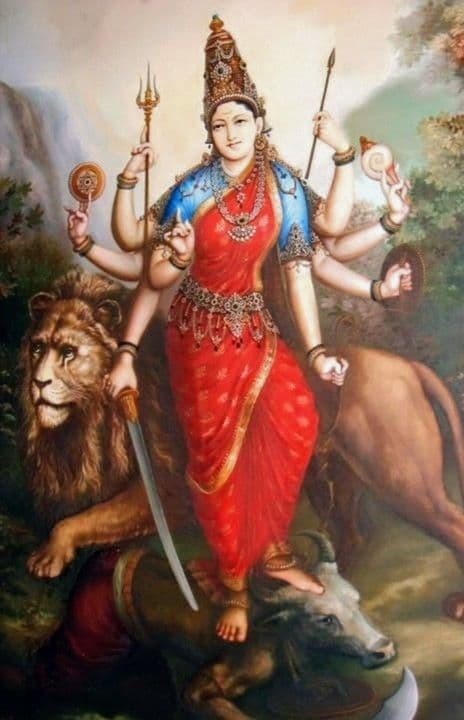
Durga
Durga is a prominent Hindu deity, widely worshipped in Shaktism as the principal aspect of Mahadevi, the Ultimate Reality. She is revered for her protective, motherly, and warrior attributes, symbolizing the triumph of good over evil. Legends often depict her battling demonic forces that threaten cosmic order, and she is a central figure in festivals like Durga Puja and Navaratri.