
Ganga
Ganga is the personification of the sacred river Ganges and is worshipped by Hindus as the goddess of purification and forgiveness. Revered as Ganga Mata (Mother Ganges), she is a central figure in Hindu mythology, known for her descent to Earth to purify the souls of ancestors. Her significance extends to being a mother figure to humanity, with her waters believed to aid in achieving moksha.
Key Facts
- ›Personification of the river Ganges, worshipped as a goddess of purification and forgiveness.
- ›Mythology traces her origin to the feet of Vishnu or as the daughter of Himavat and sister of Parvati.
- ›Her descent to Earth was a boon to King Bhagiratha, facilitated by Shiva who caught her fall.
- ›In the Mahabharata, she is the mother of Bhishma through her union with King Shantanu.
- ›Considered a mother to humanity, her waters are believed to help souls attain moksha.
- ›Associated with festivals like Ganga Dussehra and Ganga Jayanti, and worshipped in sacred places along the Ganges.

Ganga Mata, Bhagirathi, Tripathaga, Jahnavi
- Fair-Complexioned Woman Wearing A White Crown.
- Riding A Divine Crocodile-Like Creature Called the Makara.
- Often Depicted With A Water Lily In Her Right Hand and A Flute In Her Left.
- When Four-Armed, She Carries A Water-Pot, A Lily, A Rosary, and Has One Hand In A Protective Mode.
- May Hold A Jar of Amrita, Rosary, Lotus, and Varada Mudra.
- May Hold Shankha, Chakra, Lotus, and Abhaya Mudra, With A Kalasha Releasing Holy Water.
Ramayana, Mahabharata, Puranas, Rigveda
Daughter of Himavat, Sister of Parvati, Consort of Shantanu, Mother of Bhishma, Mother of the Eight Vasus
Ganga Dussehra, Ganga Jayanti, Navaratri, Loy Krathong, Triyampawai Ceremony
Gangotri, Haridwar, Prayagraj, Varanasi, Kali Ghat In Kolkata, Ganga Talao, Tirta Gangga, Pura Taman Mumbul Sangeh, Kongco Pura Taman Gandasari
Bhishma, Eight Vasus
Makara
Deity, Sacred River Personification
About Ganga
Ganga is the personification of the sacred river Ganges and is worshipped by Hindus as the goddess of purification and forgiveness. She is revered as Ganga Mata, or Mother Ganges, and is considered a benevolent mother figure to humanity. Her mythology and religious significance developed in the post-Vedic era, with her story featuring prominently in texts like the Ramayana, Mahabharata, and the Puranas.
Origins and Descent
According to the Bhagavata Purana, Ganga's origin is traced to the cosmic ocean, entering the universe through a hole pierced by the toenail of Vishnu. Alternatively, scriptures like the Ramayana describe her as the eldest daughter of Himavat, the personification of the Himalayas, and the sister of the goddess Parvati. Her most famous narrative recounts her descent to Earth, a boon granted to the royal sage Bhagiratha, who sought to purify the souls of his sixty thousand ancestors. This descent was a powerful event, so Shiva intervened by catching her in his matted hair to break her fall and prevent destruction to the Earth, before releasing her gently.
Significance and Worship
Ganga is venerated for her capacity to cleanse mankind of sins and is believed to aid in achieving moksha, liberation from the cycle of life and death. Pilgrims immerse the ashes of their kin in her waters with this belief. She is also known for her union with King Shantanu, through which she became the mother of the warrior Bhishma and the eight Vasus. Festivals such as Ganga Dussehra and Ganga Jayanti are celebrated in her honor along the sacred banks of the Ganges River, in places like Gangotri, Haridwar, Prayagraj, and Varanasi.
Iconography and Scriptures
Iconographically, Ganga is depicted as a fair-complexioned woman, often adorned with a white crown and riding a makara, a divine crocodile-like creature. She may hold a water lily and a flute, or in four-armed representations, a water-pot, lily, rosary, and blessings. While mentioned in the Rigveda, more detailed accounts of her mythology are found in the Puranas, Ramayana, and Mahabharata.
Source: Wikipedia ↗
Frequently Asked Questions
Who is Ganga?
Ganga is the personification of the sacred river Ganges and is worshipped as the Hindu goddess of purification and forgiveness. She is revered as Ganga Mata, or Mother Ganges, and is considered a mother figure to humanity.
What is the origin of Ganga?
According to the Bhagavata Purana, Ganga originated from the cosmic ocean that entered the universe through a hole pierced by the toenail of Vishnu. Other scriptures, like the Ramayana, describe her as the eldest daughter of Himavat, the personification of the Himalayas, and the elder sister of Parvati.
Why did Ganga descend to Earth?
Ganga's descent to Earth was granted as a boon to the royal sage Bhagiratha, who sought to purify the souls of his sixty thousand ancestors, who had been reduced to ashes. Shiva helped break her powerful fall to prevent the Earth's destruction, and Bhagiratha then guided her to the sea to liberate the ancestors.
What is Ganga's role in Hindu mythology?
Ganga is central to Hindu mythology, often depicted as a divine being whose waters possess immense purifying powers. She is associated with liberation (moksha) and is seen as a benevolent mother figure. She also appears as the mother of Bhishma in the Mahabharata.
What are the significant festivals dedicated to Ganga?
Key festivals celebrated in her honor include Ganga Dussehra and Ganga Jayanti. Ganga Jayanti specifically commemorates her rebirth or release from Sage Jahnu's ear. She is also invoked in other cultural festivals like Loy Krathong in Thailand.
What are the sacred places associated with Ganga?
Sacred places associated with Ganga lie along the banks of the Ganges River. Prominent among these are Gangotri (her source), Haridwar, Prayagraj, and Varanasi. In other regions, places like Ganga Talao in Mauritius and Tirta Gangga in Bali are considered equivalent.
Related Hindu deities
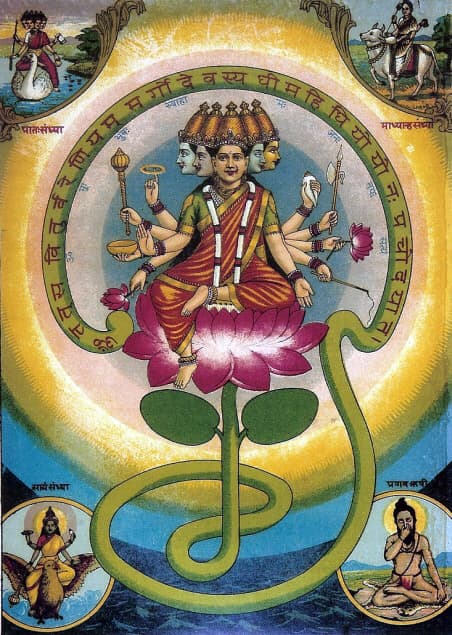
Gayatri
Gayatri is the personified form of the Gayatri Mantra, a significant hymn from Vedic texts, and is also known as Savitri and Vedamata ('mother of the Vedas'). She is considered a manifestation of Saraswati and is often associated with the solar deity Savitṛi, with whom she is sometimes depicted as the consort of the creator god Brahma in Puranic traditions. Gayatri is revered as the Supreme pure consciousness and a powerful goddess.
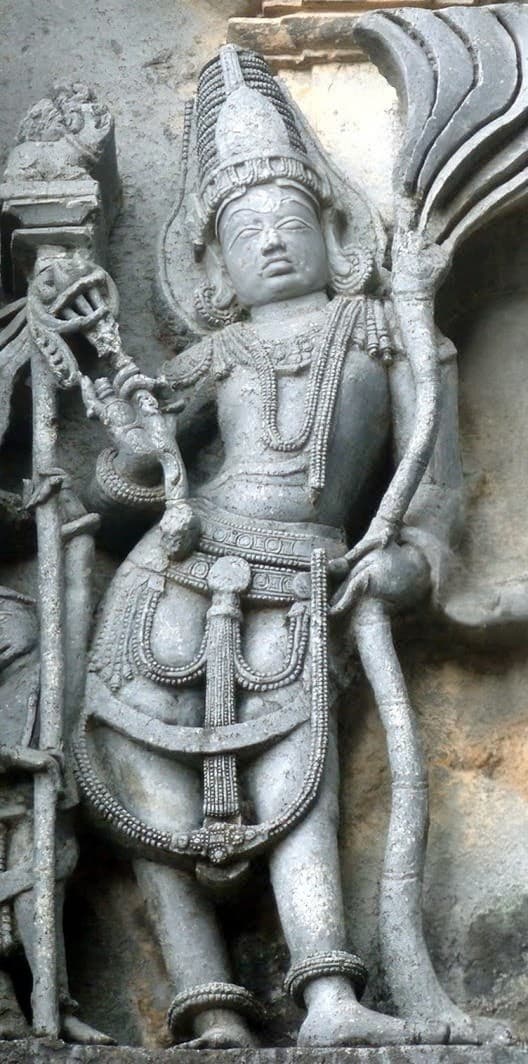
Kamadeva
Kamadeva is the Hindu god of love, attraction, pleasure, and beauty, as well as the personification of kāma (desire). He is depicted as a handsome youth armed with a bow of sugarcane and flower arrows, often accompanied by his consort Rati. Kamadeva's mythology is prominent in the Puranas, where he is known for being incinerated by Shiva's third eye and subsequently reborn as Pradyumna.
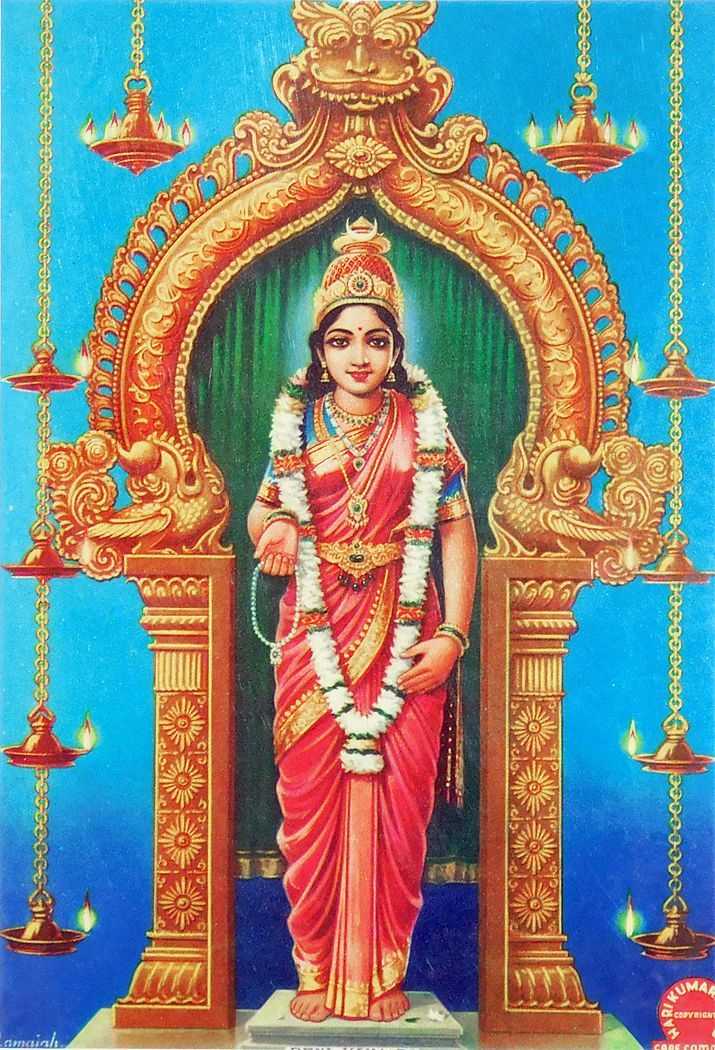
Devi Kanya Kumari
Devi Kanya Kumari is a prominent Hindu goddess, a manifestation of Mahadevi in the form of an adolescent girl. She is revered as a form of Parvati or Lakshmi, and is particularly known for her role in slaying the demon Banasura. Her worship is deeply tied to the town of Kanyakumari at the southernmost tip of India.