
Kamadeva
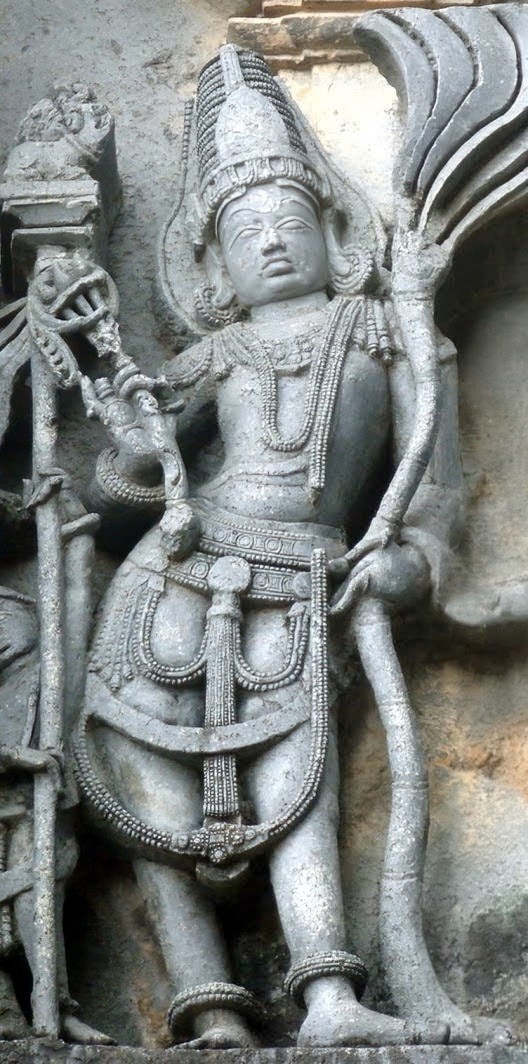
Kamadeva is the Hindu god of love, attraction, pleasure, and beauty, as well as the personification of kāma (desire). He is depicted as a handsome youth armed with a bow of sugarcane and flower arrows, often accompanied by his consort Rati. Kamadeva's mythology is prominent in the Puranas, where he is known for being incinerated by Shiva's third eye and subsequently reborn as Pradyumna.
Key Facts
- ›Kamadeva is the Hindu deity representing love, desire, attraction, and beauty.
- ›He is known for his bow made of sugarcane and arrows tipped with flowers.
- ›Kamadeva's most famous myth involves his incineration by Lord Shiva's third eye.
- ›He is often depicted with his consort Rati, the goddess of pleasure.
- ›Kamadeva is sometimes considered a mind-born son of the creator god Brahma.
- ›He is reborn as Pradyumna, the son of Krishna and Rukmini.
Kama, Manmatha, Madana, Kandarpa, Smara, Ananga
Handsome Young Man, Dressed In Ornaments and Flowers, Armed With A Bow of Sugarcane, Shoots Arrows of Flowers
Rig Veda, Atharva Veda, Mahabharata, Ramayana, Puranas, Harivamsha
- Son of Dharma and Shraddha
- Son of Brahma
- Husband of Rati
- Father of Harsha and Yashas
- Reborn As Pradyumna, Son of Krishna and Rukmini
Harsha, Yashas, Pradyumna
Bow of Sugarcane, Arrows of Flowers
Parrot
About Kamadeva
Kamadeva: The God of Love and Desire
Kamadeva is the revered Hindu deity embodying love, attraction, pleasure, and beauty, serving as the personification of the concept of kama—desire. He is typically depicted as a handsome young man adorned with ornaments and flowers, wielding a bow made of sugarcane and discharging arrows fashioned from blossoms. His primary role is to inspire love and passion, and he is often portrayed alongside his consort, Rati, the goddess of pleasure.
Origins and Evolution
The concept of kama as a primordial force is present in the ancient Vedas, with early references in the Rigveda and Atharvaveda. In these texts, kama is initially an abstract cosmic principle essential for creation. The Atharvaveda begins to personify kama as a divine agent, sometimes described as "mind-born" and superior to other deities. Over time, particularly through the epics and Puranas, Kamadeva evolved into a fully anthropomorphic deity with a rich mythology.
Key Mythologies
Kamadeva's most famous myth is his incineration by the third eye of Lord Shiva, an event known as Madana-bhasma or Kama dahana. This occurred when the gods, desperate for a son of Shiva to defeat the demon Taraka, sent Kamadeva to break Shiva's asceticism and make him fall in love with Parvati. Though Kamadeva succeeded momentarily in disturbing Shiva's meditation with his flower arrows, Shiva, enraged, opened his third eye and reduced Kamadeva to ashes. This event led to Kamadeva acquiring the epithet Ananga, meaning "the bodiless one." He is later reborn as Pradyumna, the son of Krishna and Rukmini, linking him to the divine lineage of Vishnu.
Family and Associations
Kamadeva is widely recognized as the husband of Rati, representing sensual pleasure. They are often described as having two children, Harsha (joy) and Yashas (grace), though some texts mention only Harsha. His chief assistant is Vasanta, the god of spring, and he is also associated with celestial nymphs called Apsaras, who are sometimes sent to disturb the penance of sages. In some traditions, Kamadeva is considered the mind-born son of Brahma, while others trace his lineage to Dharma (righteousness) and Shraddha (faith).
Significance
Kamadeva's influence is deeply ingrained in Hindu culture, symbolizing the universal human experience of love and desire. While his actions can lead to distraction and emotional turmoil, he also represents the generative and sustaining principles of life. His presence in various scriptures highlights the interplay between divine power, asceticism, and the pervasive nature of desire in the cosmos.
Source: Wikipedia ↗
Frequently Asked Questions
Who is Kamadeva?
Kamadeva is the Hindu god of love, attraction, pleasure, and beauty. He is also the personification of the concept of kāma, which signifies desire, especially in a sensual or passionate context.
What are Kamadeva's iconic symbols?
Kamadeva is famously depicted with a bow made of sugarcane and arrows crafted from flowers. These symbols represent his ability to inspire love and desire in all beings.
What is the most famous story about Kamadeva?
The most renowned myth concerning Kamadeva is his incineration by the third eye of Lord Shiva. This event occurred when Kamadeva attempted to disrupt Shiva's intense meditation, leading to his fiery destruction.
Who is Kamadeva's consort?
Kamadeva's consort is Rati, the goddess of pleasure and sensual delight. She is his female counterpart and is often depicted alongside him.
Where does Kamadeva originate from?
References to Kamadeva, or the concept of kāma, can be traced back to the Vedas, specifically the Rigveda and Atharvaveda. However, his fully personified form and detailed myths are more prominent in the Puranas and epics.
What is Kamadeva known for in later mythology?
In later Hindu scriptures like the Puranas, Kamadeva is known for his role in igniting passion and desire. His dramatic incineration by Shiva and subsequent rebirth as Pradyumna are central to his mythology.
Related Hindu deities
Gayatri
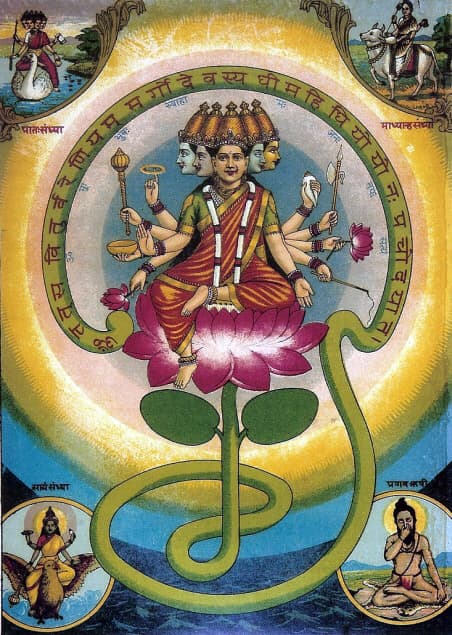
Gayatri is the personified form of the Gayatri Mantra, a significant hymn from Vedic texts, and is also known as Savitri and Vedamata ('mother of the Vedas'). She is considered a manifestation of Saraswati and is often associated with the solar deity Savitṛi, with whom she is sometimes depicted as the consort of the creator god Brahma in Puranic traditions. Gayatri is revered as the Supreme pure consciousness and a powerful goddess.

Ganga
Ganga is the personification of the sacred river Ganges and is worshipped by Hindus as the goddess of purification and forgiveness. Revered as Ganga Mata (Mother Ganges), she is a central figure in Hindu mythology, known for her descent to Earth to purify the souls of ancestors. Her significance extends to being a mother figure to humanity, with her waters believed to aid in achieving moksha.
Rama
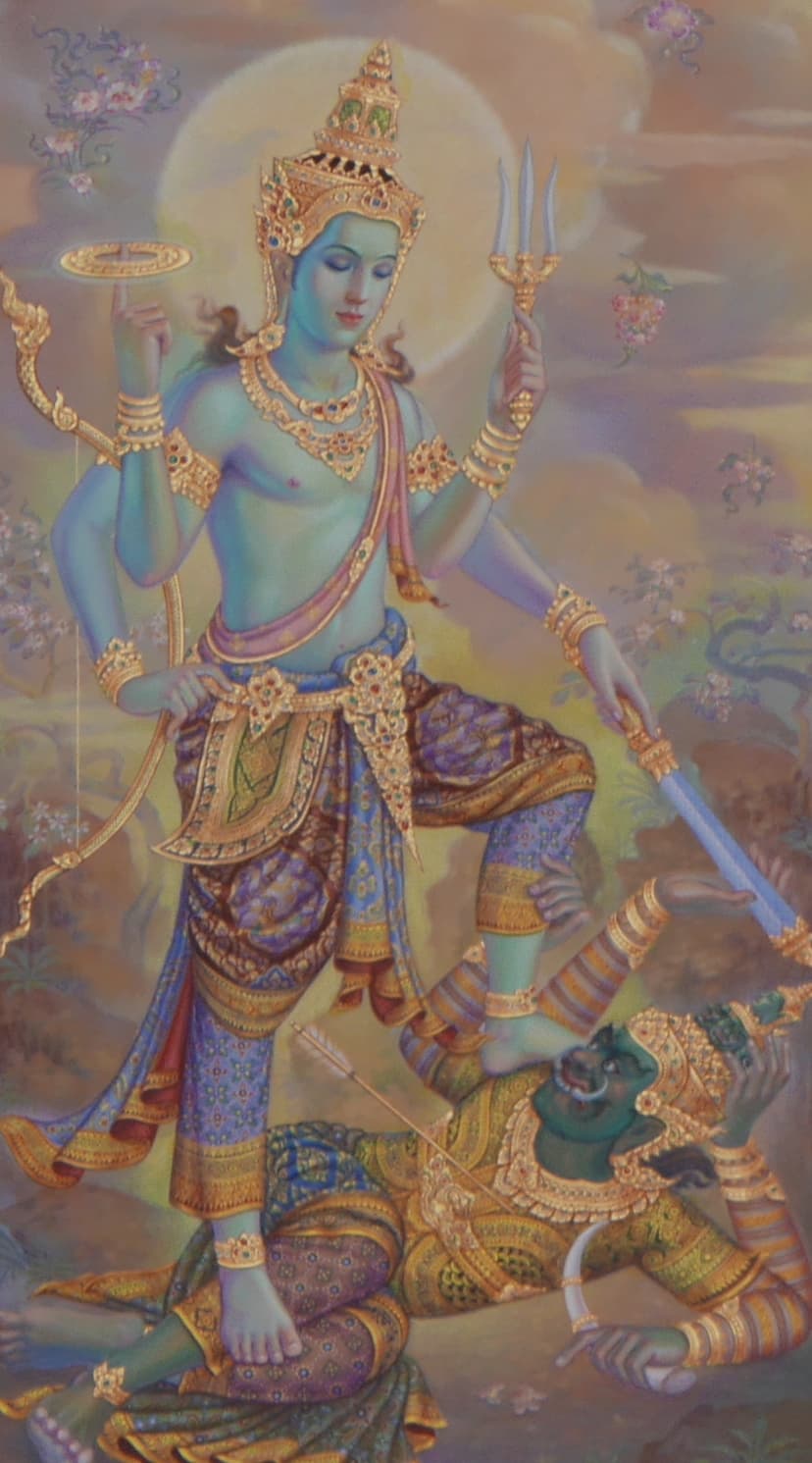
Rama is a major deity in Hinduism, revered as the seventh and one of the most popular avatars of Vishnu. He is considered the ideal man and the central figure of the epic Ramayana, embodying dharma and righteous living. His story, marked by exile, the abduction of his wife Sita, and a subsequent war to rescue her, illustrates duties, rights, and social responsibilities.