
Rama
Rama is a major deity in Hinduism, revered as the seventh and one of the most popular avatars of Vishnu. He is considered the ideal man and the central figure of the epic Ramayana, embodying dharma and righteous living. His story, marked by exile, the abduction of his wife Sita, and a subsequent war to rescue her, illustrates duties, rights, and social responsibilities.
Key Facts
- ›Worshipped as the seventh avatar of Vishnu.
- ›The male protagonist of the Hindu epic Ramayana.
- ›Considered the ideal man (maryāda puruṣottama).
- ›His birth is celebrated annually on Rama Navami.
- ›His life story allegorically discusses duties, rights, and social responsibilities.
- ›Central figure in Vaishnavism and influential in South and Southeast Asian cultures.
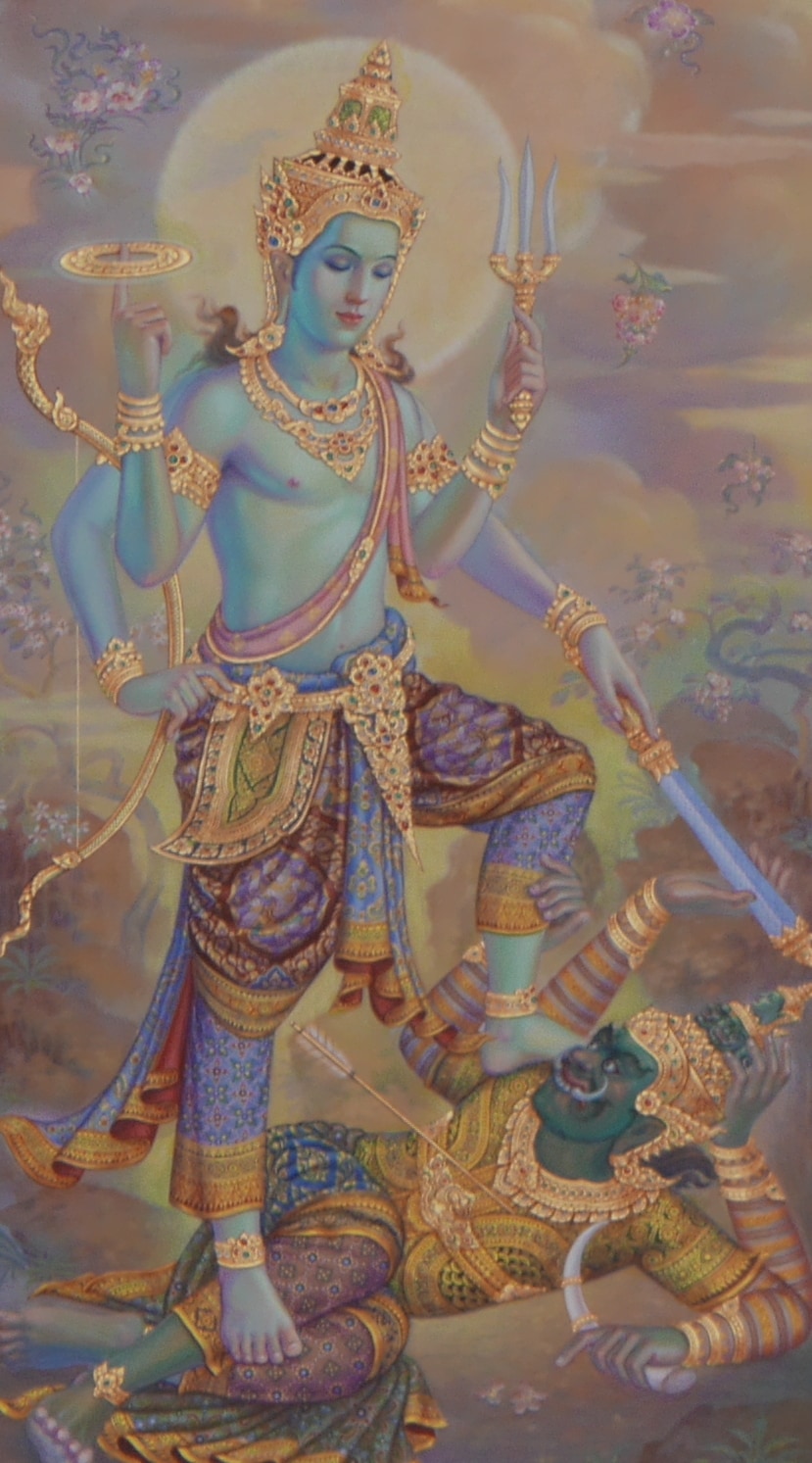
Ram, Raman, Ramar, Ramachandra, Dasarathi, Raghava, Ramavijaya, Phreah Ream, Phra Ram, Megat Seri Rama, Raja Bantugan, Ramudu
Holds A Bana In His Right Hand., Holds A Dhanus In His Left Hand., Often Depicted In Tribhanga Pose ., Shown With Black, Blue, Or Dark Color., Typically Wears Reddish Color Clothes., Accompanied By Lakshmana and Sita., Often Shown With Hanuman.
Ramayana, Adhyatma Ramayana, Ramcharitmanas, Paumacariya, Chaubis Avtar
Son of Dasaratha and Kausalya, Brother of Lakshmana, Bharata, and Shatrughna, Husband of Sita, Father of Kusha and Lava
Rama Navami, Diwali
Ayodhya, Chitrakuta, Panchavati, Lanka, Trikuta Mountain In Jammu
Kusha, Lava
Bow, Arrow
About Rama
Rama is a central deity in Hinduism, widely revered as the seventh and one of the most popular avatars of Vishnu. In traditions centered on Rama, he is considered the Supreme Being and is also known as the "ideal man" (maryāda puruṣottama). He is the principal male protagonist of the ancient Hindu epic, the Ramayana, a narrative that profoundly influences South and Southeast Asian cultures.
Life and Legends
According to the Ramayana, Rama was born in Ayodhya to King Dasaratha and Queen Kausalya. His siblings included Lakshmana, Bharata, and Shatrughna. His life, as depicted in Hindu texts, was marked by significant challenges, including a fourteen-year exile into the forest and the dramatic abduction of his wife, Sita, by the demon-king Ravana. The ensuing journey to rescue Sita and defeat Ravana forms the core of his epic tale, illustrating profound moral and ethical dilemmas.
Significance and Symbolism
Rama's life story is allegorical, offering insights into the duties, rights, and social responsibilities of individuals. He embodies dharma and righteous living, serving as a model character. His legends are a cornerstone of Vaishnavism, inspiring extensive commentaries, literature, and performance arts. The Ramayana, in its various regional and textual forms, continues to shape cultural identity and religious beliefs, highlighting the enduring legacy of Rama's narrative as both a spiritual teaching and a cultural artifact.
Iconography and Worship
Iconographically, Rama is often depicted with two hands, holding a bow and arrow. He is typically shown with a dark complexion, wearing reddish clothes, and is frequently accompanied by his wife Sita and his devoted brother Lakshmana. His birth is celebrated annually on the festival of Rama Navami, and his return to Ayodhya after his victory is associated with the festival of Diwali. The concept of "Rama Rajya," his reign as king, symbolizes an ideal period of just and righteous governance.
Source: Wikipedia ↗
Frequently Asked Questions
Who is Rama in Hinduism?
Rama is a major deity in Hinduism, worshipped as the seventh avatar of Vishnu and considered by many to be the Supreme Being. He is also known as the ideal man and is the central hero of the epic Ramayana.
What is the significance of Rama's story?
The Ramayana, Rama's life story, allegorically discusses duties, rights, and social responsibilities. It illustrates dharma and righteous living through its characters, serving as a moral and spiritual guide.
When is Rama Navami celebrated?
Rama Navami is celebrated annually on the ninth day of the bright half of the lunar cycle of Chaitra, which falls in March or April. This festival marks the birth of Lord Rama.
What are some of Rama's key characteristics and attributes?
Rama is described as charming, well-built, and of dark complexion with long arms. He typically holds a bow and arrow, and is often depicted with his wife Sita and brother Lakshmana. He embodies virtues like righteousness, compassion, and self-control.
What challenges did Rama face in his life?
According to the Ramayana, Rama faced significant challenges including a 14-year exile into the forest, and the abduction of his wife Sita by the demon-king Ravana. He also navigated complex ethical and moral dilemmas.
Are there variations of the Rama story?
Yes, Rama's legends vary significantly by region and across different manuscripts, including those found in Jainism and Buddhism. These variations reflect local cultural traditions and interpretations, though a common core of good versus evil often remains.
Related Hindu deities
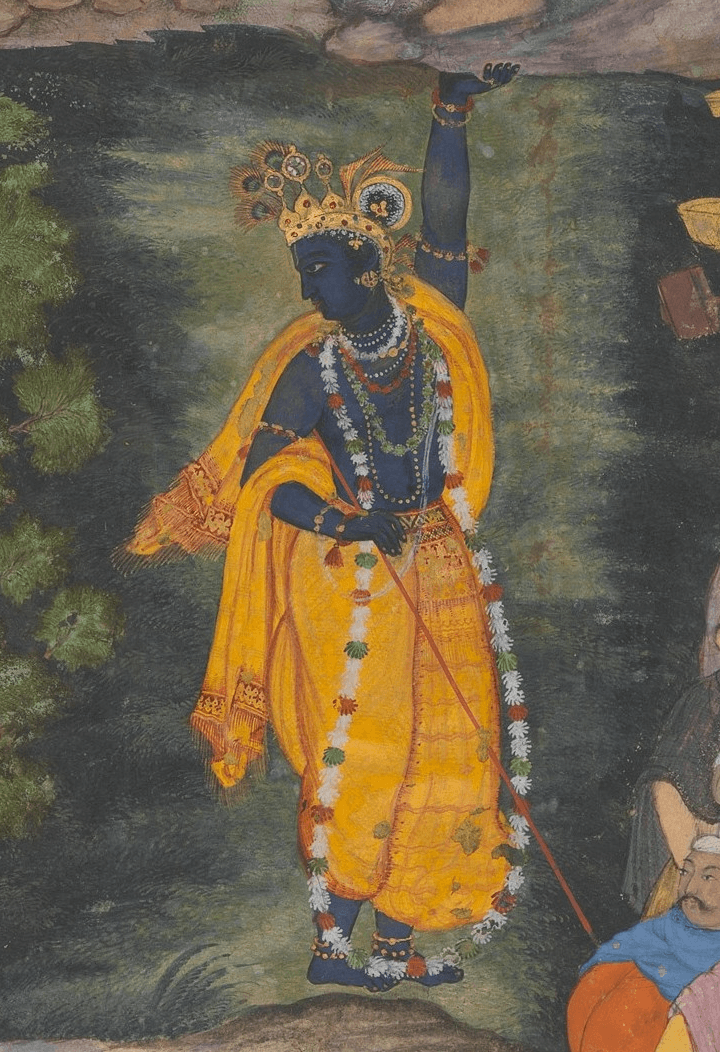
Krishna
Krishna is a major deity in Hinduism, revered as the eighth avatar of Vishnu and also as the Supreme God. He is widely celebrated for his divine qualities of love, compassion, protection, and tenderness. Krishna is a central figure in important scriptures like the Mahabharata and the Bhagavad Gita, where he is depicted as a divine statesman, teacher, and savior of dharma.
Maheshvara
Parameshvara, meaning 'highest supreme ruler,' is an epithet used in Hindu literature to denote the Supreme Being and Supreme Reality. Both Vaishnavas and Shaivas use this term, identifying Vishnu and Shiva respectively as Parameshvara. This ultimate reality is believed to eternally pervade all matter and control the forces of creation, preservation, and destruction.

Madhava
Madhava is a significant epithet primarily associated with the Hindu deities Vishnu and Krishna. The name derives from 'Madhu,' meaning honey, and can refer to Krishna's lineage or his role as the consort of Lakshmi, the mother of the universe. He is invoked in scriptures for protection and is depicted as a powerful deity wielding divine weapons.