
Dattatreya
Dattatreya is a revered Hindu deity, often depicted as a paradigmatic monk and lord of yoga. He is considered a combined avatar of Brahma, Vishnu, and Shiva (the Trimurti), symbolizing the supreme being. Dattatreya is known for his philosophy of renunciation, self-knowledge through observation of nature, and has inspired numerous monastic traditions across India.
Key Facts
- ›Dattatreya is venerated as a combined avatar of the Hindu trinity: Brahma, Vishnu, and Shiva.
- ›He is considered an embodiment of Parabrahma, the supreme being.
- ›Dattatreya is known for his philosophy of self-education through observing nature, treating 24 elements as his teachers.
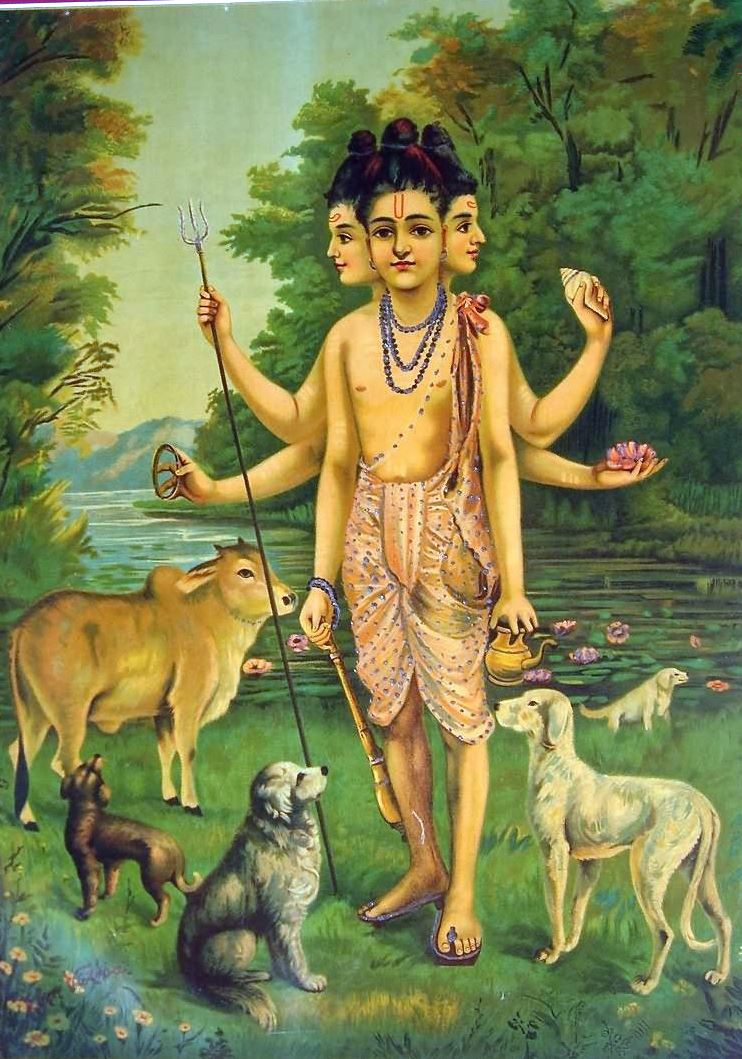
- ›He is often depicted with three heads and six hands, symbolizing the Trimurti and their attributes.
- ›An annual festival, Datta Jayanti, is celebrated in his honor in the Hindu month of Margashirsha (November/December).
- ›Dattatreya has inspired various monastic movements in Shaivism, Vaishnavism, and Shaktism, particularly in western and northern India.
Dattā, Dattaguru, Adi-Guru, Lord of Yoga
- Three Heads, Representing Brahma, Vishnu, and Shiva
- Six Hands, Holding Symbolic Items of the Trimurti
- Dressed As A Simple Monk
- Accompanied By Four Dogs
- Accompanied By A Cow
- Single Head With Two Hands
- Single Head With Four Hands
Avadhuta Gita, Dattatreya Upanishad, Darshana Upanishad, Avadhuta Upanishad, Shandilya Upanishad, Jabala Upanishad, Naradaparivrajaka Upanishad, Bhikshuka Upanishad, Yajnavalkya Upanishad, Tripura Rahasya, Mahabharata, Sattvata Samhita, Ahirbudhnya Samhita, Gurucharitra
Son of Sage Atri and Anasuya
Datta Jayanti
Mahur, Nanded District, Maharashtra, Kashmir, Gandhamadana Mountain, Pithapuram, Andhra Pradesh, Ganagapur, Karnataka, Manik Nagar
Trishula, Sudarshana Chakra
Four Dogs, Cow, Swan, Garuda, Nandi
About Dattatreya
Dattatreya is a highly venerated Hindu deity, recognized as a paradigmatic Sannyasi (monk) and a lord of yoga. He is understood as a combined avatar of the three principal Hindu gods—Brahma, Vishnu, and Shiva—collectively known as the Trimurti, and is seen as a manifestation of Parabrahma, the supreme being. His origins and birth stories vary across different Puranic texts, but he is consistently portrayed as a figure of profound spiritual wisdom.
Life and Teachings
According to Puranic accounts, Dattatreya was born to the Vedic sage Atri and his wife Anasuya. Legends place his birth in various locations, including hermitages in Maharashtra, the jungles of Kashmir, or along with his brothers Durvasa and Chandra. He is described as an exceptional Rishi with extraordinary insights, often revered as an Avatar of Vishnu. Dattatreya is known for renouncing worldly life at an early age to embrace a monastic existence, dedicating himself to meditation and wandering. A significant aspect of his legend is the concept of the '24 Gurus of Dattatreya,' where he attained self-awareness and enlightenment by observing various elements of nature, treating them as his teachers. This narrative underscores the Hindu belief that knowledge and wisdom can be derived from all sources through self-effort.
Iconography and Symbolism
Dattatreya's iconography typically features three heads and six hands, symbolizing the Trimurti and their divine attributes. He often holds the symbolic items associated with Brahma (Japamala, Kamandalu), Vishnu (Shankha, Sudarshana Chakra), and Shiva (Trishula, Damaru). He is usually depicted as a simple monk, often in a wilderness setting, signifying his renunciation. A distinctive element of his iconography includes four dogs and a cow. The dogs are often interpreted as representing the four Vedas, while the cow symbolizes Mother Earth, signifying nourishment and constancy. Some older medieval temples and texts depict him with a single head and two hands, reflecting variations in tradition and regional interpretations.
Philosophical and Traditional Significance
Dattatreya is a central figure in various Hindu philosophical and monastic traditions. Texts such as the Dattatreya Upanishad, Darshana Upanishad, and Avadhuta Upanishad explore his philosophy, which is deeply rooted in Advaita Vedanta and Yoga. He is credited with inspiring numerous monastic movements within Shaivism, Vaishnavism, and Shaktism, particularly in regions like Maharashtra and Gujarat. The Nath tradition reveres him as the Adi-Guru (First Teacher). His emphasis on a simple life, kindness, knowledge sharing, and the pursuit of life's meaning resonated with Bhakti movement saints like Tukaram and Eknath. An annual festival, Datta Jayanti, is celebrated in his honor during the Hindu month of Margashirsha (November/December).
Source: Wikipedia ↗
Frequently Asked Questions
Who is Dattatreya?
Dattatreya is a Hindu deity venerated as a paradigmatic monk and lord of yoga. He is regarded as a combined avatar of the Hindu trinity: Brahma, Vishnu, and Shiva, and as a manifestation of the supreme being, Parabrahma.
What is Dattatreya known for?
He is known for his philosophy of self-education by observing nature, treating 24 elements as his teachers, and for inspiring monastic traditions like the Nath sampradaya. His teachings emphasize renunciation, kindness, and the pursuit of spiritual knowledge.
What is the iconography of Dattatreya?
Typically, Dattatreya is depicted with three heads and six hands, each representing Brahma, Vishnu, and Shiva, and holding their respective symbolic items. He is often shown dressed as a monk, accompanied by four dogs and a cow.
What is Datta Jayanti?
Datta Jayanti is an annual festival celebrated in the Hindu calendar month of Margashirsha (November/December) to honor and revere Dattatreya. It marks the birth anniversary of the deity.
What are the prominent texts associated with Dattatreya?
Key texts associated with Dattatreya include the Avadhuta Gita, which is attributed to him and based on Advaita Vedanta principles. Several Upanishads, such as the Dattatreya Upanishad, Darshana Upanishad, and Avadhuta Upanishad, also present his philosophy.
Related Hindu deities
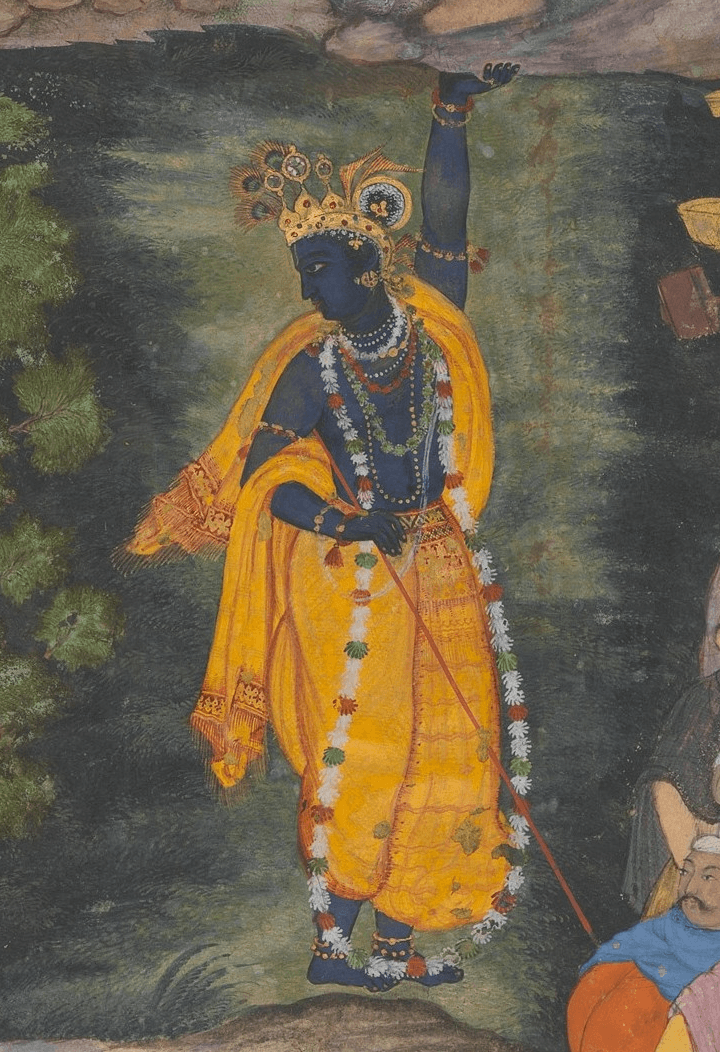
Krishna
Krishna is a major deity in Hinduism, revered as the eighth avatar of Vishnu and also as the Supreme God. He is widely celebrated for his divine qualities of love, compassion, protection, and tenderness. Krishna is a central figure in important scriptures like the Mahabharata and the Bhagavad Gita, where he is depicted as a divine statesman, teacher, and savior of dharma.
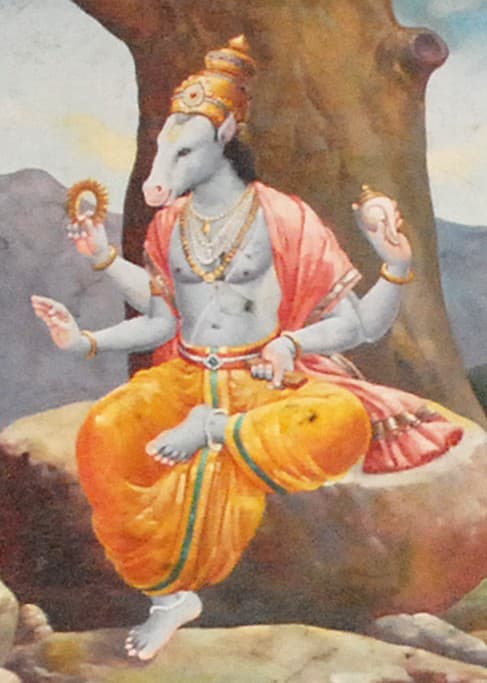
Hayagriva
Hayagriva is a significant Hindu deity, depicted as the horse-headed avatar of Vishnu. He is revered as the god of knowledge, wisdom, and speech, often invoked to overcome ignorance and demonic forces. His form symbolizes the triumph of divine knowledge over darkness and passion.
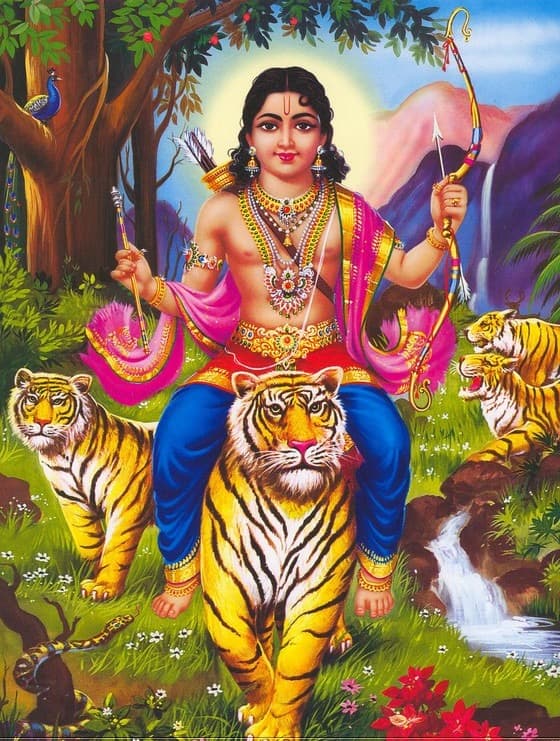
Ayyappan
Ayyappan is a revered Hindu deity embodying truth and righteousness, often depicted as a youthful warrior prince. He is considered the son of Shiva and Mohini (Vishnu's female avatar), symbolizing a union of Shaivism and Vaishnavism. Revered for his ascetic devotion to Dharma and his prowess in combating evil, Ayyappan's popularity, particularly from Kerala, has spread throughout Southern India, with Sabarimala being his most significant pilgrimage site.