
Durvasa
Durvasa is a legendary sage in Hindu scriptures, known for his irascible nature, short temper, and his ability to bestow both curses and boons. He is considered a partial avatar of Shiva and is revered by both humans and deities. His interactions often involve dramatic events, shaping the destinies of many significant figures in Hindu mythology.
Key Facts
- ›Son of sages Atri and Anasuya.
- ›Considered a partial avatar of the deity Shiva.
- ›Known for his extreme irascibility and short temper.
- ›His curses and boons have significantly impacted deities like Indra and Rukmini, and heroes like Kunti and Karna.
- ›His anger triggered the Samudra Manthana (Ocean Churning) event due to a curse upon Indra.
- ›Appeared in the Ramayana demanding an audience with Rama, leading to Lakshmana's sacrifice.

Durvasas
Puranas, Ramayana, Mahabharata
Son of Atri and Anasuya
- Durvasa Rishi Ashram - Kharu Bab, Uttar Pradesh
About Durvasa
Durvasa is a revered, albeit formidable, sage in Hindu scriptures, known for his intense irascibility and short temper. He is identified as the son of the great sages Atri and Anasuya. According to various Puranic accounts, Durvasa is considered a partial avatar of the deity Shiva, embodying his fierce and wrathful aspects. His presence is met with great reverence by both humans and celestial beings, despite his volatile disposition.
Curses and Boons
The sage Durvasa is famously depicted as wielding the power to bestow both severe curses and significant boons upon deities and mortals. His temper often dictates the outcome of his interactions. Notable examples include cursing Indra to lose his powers, Saraswati to be born human, and Rukmini to be separated from Krishna for perceived slights. Conversely, he blessed Kunti with mantras for progeny, leading to the birth of Karna and the Pandavas, and granted Krishna partial invulnerability. His interaction with King Ambarisha, where Vishnu's Sudarshana Chakra intervened to protect the king from Durvasa's wrath, is a well-known narrative.
Mythological Significance
Durvasa's actions have had far-reaching consequences in Hindu mythology. His curse upon Indra, stemming from the disrespect shown to a garland, is cited as an indirect cause for the Samudra Manthana, the epic churning of the ocean for the nectar of immortality. In the Ramayana, Durvasa's demand for an audience with Rama led to the tragic sacrifice of Lakshmana to uphold Rama's word. In the Mahabharata, his boons to Kunti and his timely intervention through Krishna's satisfaction of his hunger during the Pandavas' exile highlight his complex role. Within Swaminarayan Hinduism, Durvasa is believed to be the source of a curse that led to the incarnation of Narayana as Swaminarayan.
Source: Wikipedia ↗
Frequently Asked Questions
Who is Durvasa?
Durvasa is a legendary sage in Hindu scriptures, renowned for his volatile temper and his powerful ability to deliver curses and blessings. He is believed to be a partial incarnation of Lord Shiva.
Why is Durvasa known for being short-tempered?
Durvasa's irascible nature is attributed to his birth from Shiva's anger, which was deposited into his mother, Anasuya. This inherent trait causes him to react strongly and often impulsively to perceived slights or disrespect.
What are some famous stories involving Durvasa's curses?
Durvasa cursed Indra to lose his powers after his elephant damaged a garland. He also cursed Saraswati for laughing at his recitation, Rukmini to be separated from Krishna for not seeking permission before drinking water, and Shakuntala for neglecting hospitality.
What are some notable boons granted by Durvasa?
Durvasa blessed Kunti with mantras to conceive children, which led to the birth of Karna and the Pandavas. He also blessed Krishna with partial invulnerability by having him smear leftover food on his body, and blessed Draupadi with the assurance that she would never lack clothes.
What role did Durvasa play in the Samudra Manthana?
Durvasa's curse on Indra, after Indra's elephant disrespected a garland given by the sage, led to the gods losing their luster and strength. This diminished state prompted Vishnu to advise the gods to churn the ocean for immortality, indirectly causing the Samudra Manthana.
How did Durvasa appear in the Ramayana?
In the Ramayana, Durvasa appeared at Rama's palace demanding an immediate audience. When Lakshmana, guarding the door, hesitated to disturb Rama's confidential meeting with Yama, Durvasa threatened to curse Ayodhya, forcing Lakshmana to sacrifice himself to save the kingdom.
What is Durvasa's significance in Swaminarayan Hinduism?
In Swaminarayan Hinduism, it is believed that Narayana was born as Swaminarayan due to a curse by Durvasa. Durvasa cursed the assembly of sages listening to Nara-Narayana, decreeing they would be born as humans to suffer, but later modified it so that Narayana himself would be born to relieve them.
Related Hindu deities
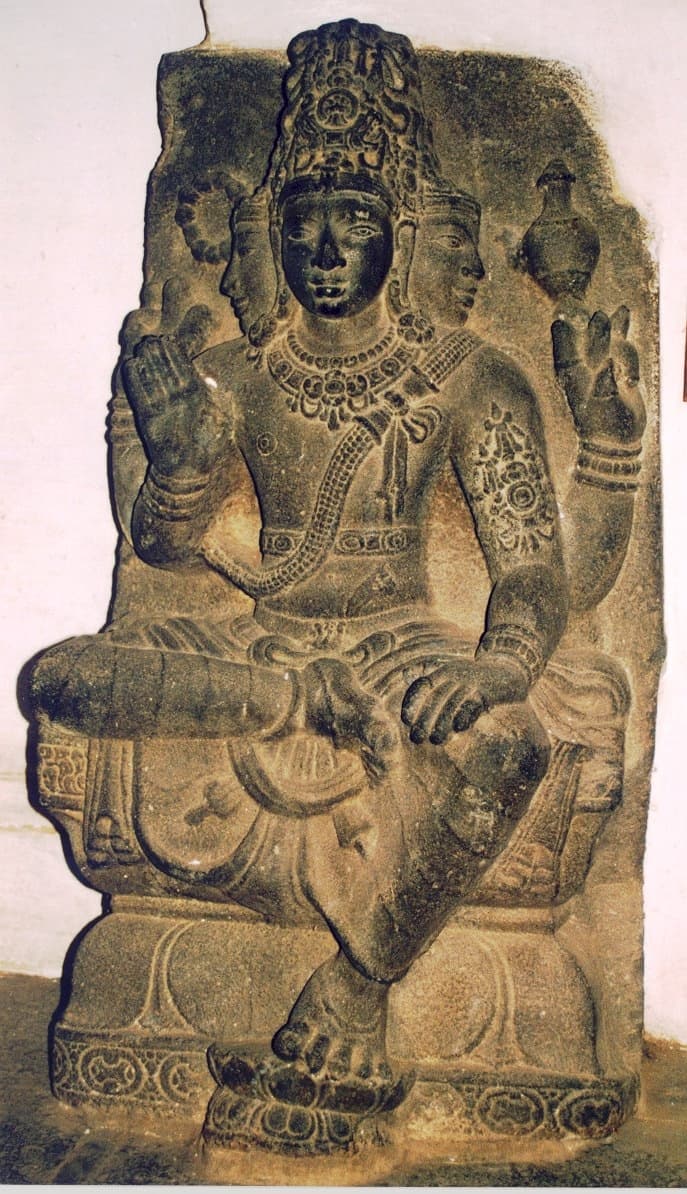
Prajapati
Prajapati is a significant deity in ancient Vedic religion, primarily known as a creator god and often identified with Brahma. The name "Prajapati" translates to "Lord of the people" or "lord of all born beings" and was applied to various figures in Hindu creation myths, including deities like Agni, Indra, and Vishwakarma, as well as celestial sages. In later traditions, Prajapati also represents the metaphysical concept of Brahman as the primordial matter from which creation arises.
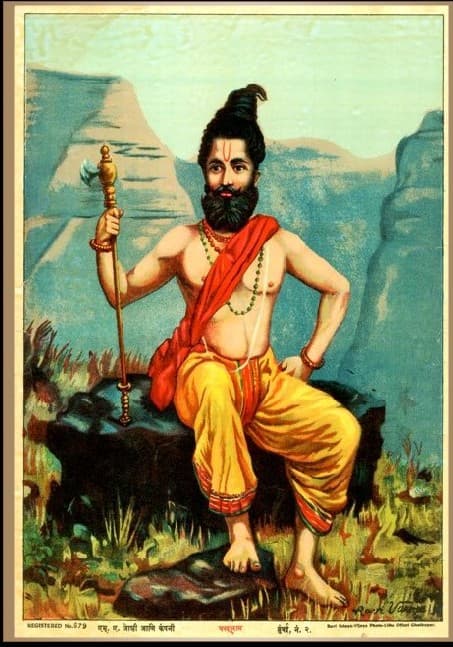
Parashurama
Parashurama is revered as the sixth avatar of Vishnu, known for his righteous fury and role as a warrior-sage. He is considered one of the Chiranjivi (immortals) and is destined to become the guru of Kalki, Vishnu's final incarnation. Parashurama is celebrated for correcting cosmic imbalance by eradicating corrupt Kshatriyas and is associated with the reclamation of land from the sea.
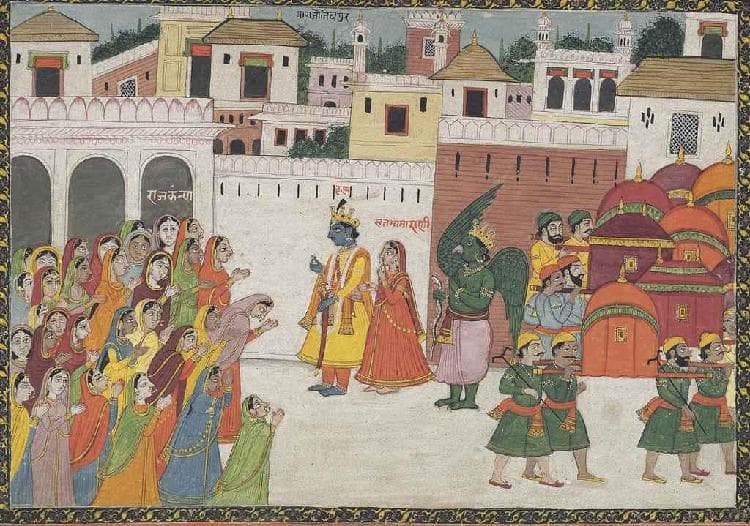
Junior wives of Krishna
The junior wives of Krishna refer to the approximately 16,000 women Krishna married after rescuing them from the demon Narakasura. These women are often identified as manifestations of Lakshmi, Krishna's eternal consort. Their story highlights Krishna's divine power and compassion in saving and providing for them.