
Parashurama
Parashurama is revered as the sixth avatar of Vishnu, known for his righteous fury and role as a warrior-sage. He is considered one of the Chiranjivi (immortals) and is destined to become the guru of Kalki, Vishnu's final incarnation. Parashurama is celebrated for correcting cosmic imbalance by eradicating corrupt Kshatriyas and is associated with the reclamation of land from the sea.
Key Facts
- ›He is the sixth avatar of Vishnu among the Dashavatara.
- ›Born to sage Jamadagni and Renuka, he was a Brahmin with Kshatriya qualities.
- ›He is known for destroying oppressive Kshatriyas who abused their power.
- ›Parashurama is considered one of the Chiranjivi, or immortals.
- ›He is credited with reclaiming the land of Kerala from the sea by throwing his axe.
- ›He served as the guru to prominent Mahabharata figures like Bhishma, Drona, and Karna.
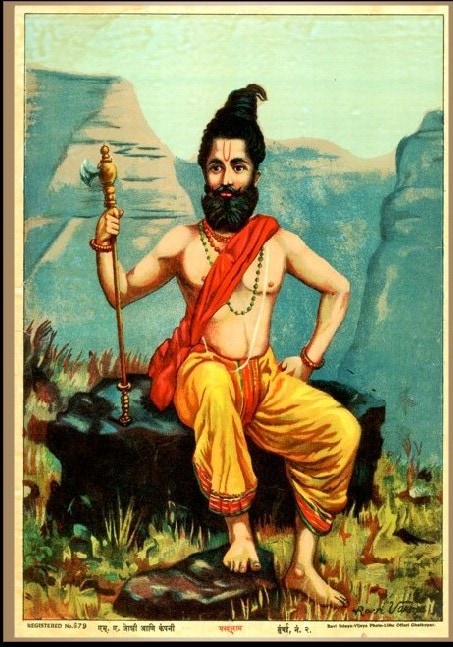
Rama Jamadagnya, Bhargava Rama, Virarama, Rama Bhargava
- A Man With Matted Locks.
- Typically Depicted With Two Hands.
- Carries An Axe In His Right Hand.
- Sometimes Shown With Four Hands Holding An Axe, Bow, Arrow, and Shield.
Ramayana, Mahabharata, Devi Bhagavata Purana, Bhagavata Purana, Vishnu Purana, Vayu Purana, Padma Purana, Sangam Classic Purananuru, Keralolpathi
Son of Sage Jamadagni and Renuka, Husband of Dharani
Janapav, Mahendragiri, Salher Fort, Gokarna, Kanyakumari, Kerala, Konkan, Tirthahalli, Ramakunda, Panth Pakar
Axe, Bow, Arrow, Sword
Immortal, Avatar
About Parashurama
Parashurama, meaning 'Rama with an axe,' is a significant figure in Hinduism, revered as the sixth avatar of Vishnu. He is also known by epithets such as Rama Jamadagnya and Bhargava Rama. Parashurama is counted among the Chiranjivi, the immortal beings destined to live until the end of the current cosmic age. He is prophesied to reappear at the conclusion of the Kali Yuga to serve as the guru for Kalki, Vishnu's tenth and final incarnation, thus playing a crucial role in the cyclical nature of cosmic time.
Legend and Significance
Born to the sage Jamadagni and his Kshatriya wife Renuka, Parashurama's birth was foretold to occur during a period of widespread evil. His legend is deeply intertwined with the correction of cosmic equilibrium, particularly when the Kshatriya class began to abuse their power. In his most prominent act of retribution, Parashurama is said to have destroyed a vast number of corrupt Kshatriyas, thereby restoring balance to the world. This act, while violent, is understood within the context of dharma and the necessity of eradicating unrighteousness. He is also associated with the legendary reclamation of land from the sea, particularly the western coast of India, which is often referred to as 'Parashurama Kshetra' or 'The Land of Parashurama'.
Role in Epics and Scriptures
Parashurama features prominently in both the Ramayana and the Mahabharata. In the Ramayana, he challenges Rama, the protagonist, after Rama's marriage to Sita. Although initially confrontational, Parashurama eventually acknowledges Rama as an avatar of Vishnu and retires to perform penance. In the Mahabharata, he serves as a revered guru to important characters such as Bhishma, Drona, and Karna, imparting his knowledge of warfare and strategy. His legends are recounted in various Puranas, including the Devi Bhagavata Purana, Vishnu Purana, and Vayu Purana, each offering slightly different accounts of his birth and deeds. His iconography typically depicts him with an axe, symbolizing his warrior nature, though sometimes with additional weapons like a bow and arrows.
Source: Wikipedia ↗
Frequently Asked Questions
Who is Parashurama?
Parashurama is the sixth avatar of the preserver god Vishnu in Hinduism. He is a warrior-sage known for his righteous anger and his role in correcting cosmic imbalances by eliminating oppressive rulers.
What is Parashurama known for?
He is primarily known for his vow to rid the earth of corrupt Kshatriyas who were abusing their power. He is also credited with reclaiming the land of Kerala from the sea and is considered an immortal figure.
What is Parashurama's significance in Hindu mythology?
Parashurama is significant as one of the Chiranjivi (immortals) and is prophesied to appear at the end of the Kali Yuga to guide Kalki, Vishnu's final avatar. His actions are seen as a means to restore cosmic order.
What are the major stories associated with Parashurama?
Key stories include his battle with King Kartavirya Arjuna, his challenge to Rama in the Ramayana, and his role as guru to Bhishma and Karna in the Mahabharata. Legends also describe him reclaiming land from the sea.
Is Parashurama a Brahmin or a Kshatriya?
Parashurama is traditionally born to a Brahmin sage, Jamadagni, and his wife Renuka. However, he possesses formidable warrior skills and is often described as a Brahmin who acted with Kshatriya prowess, embodying qualities of both varnas.
Related Hindu deities

Durvasa
Durvasa is a legendary sage in Hindu scriptures, known for his irascible nature, short temper, and his ability to bestow both curses and boons. He is considered a partial avatar of Shiva and is revered by both humans and deities. His interactions often involve dramatic events, shaping the destinies of many significant figures in Hindu mythology.
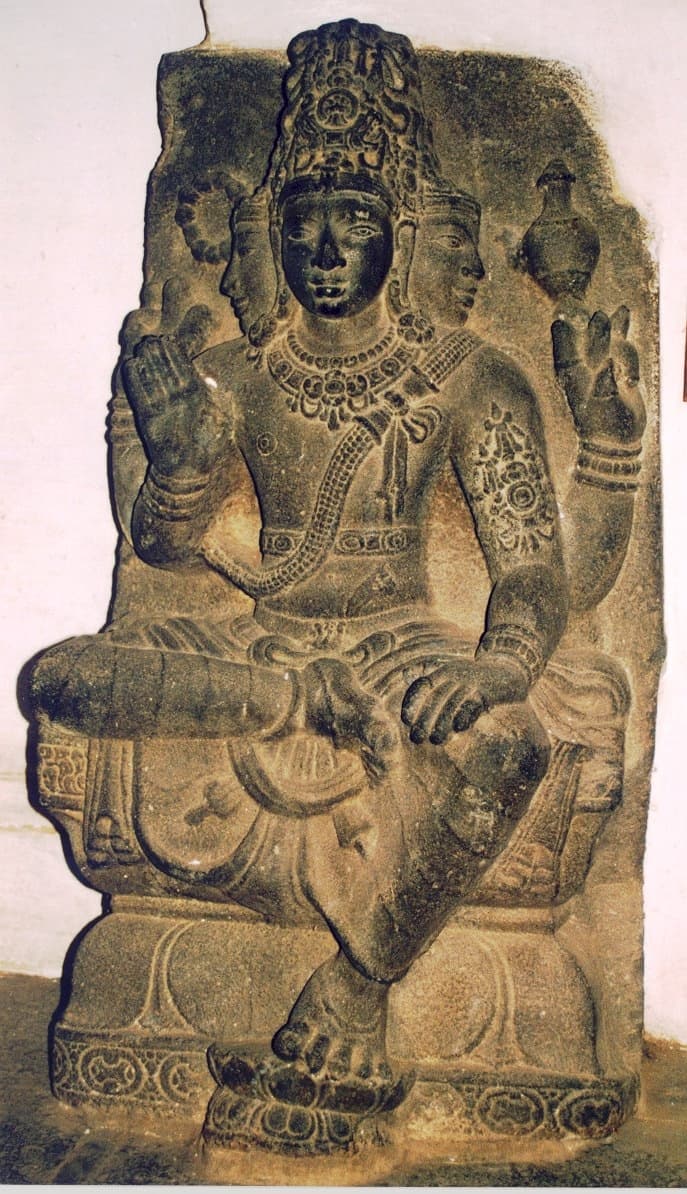
Prajapati
Prajapati is a significant deity in ancient Vedic religion, primarily known as a creator god and often identified with Brahma. The name "Prajapati" translates to "Lord of the people" or "lord of all born beings" and was applied to various figures in Hindu creation myths, including deities like Agni, Indra, and Vishwakarma, as well as celestial sages. In later traditions, Prajapati also represents the metaphysical concept of Brahman as the primordial matter from which creation arises.
Dakshinamurti
Dakshinamurti is a South-facing aspect of the Hindu god Shiva, embodying him as the ultimate guru, the personification of supreme awareness, understanding, and knowledge. He is revered as the god of wisdom and meditation, teaching yoga, music, and the Shastras, and is depicted as the destroyer of ignorance. His iconography often features four arms, seated under a banyan tree, with a mudra signifying knowledge, and his presence is a significant element in Shiva temples.