
Kalki
Kalki is the prophesied tenth and final avatar of the Hindu god Vishnu, destined to appear at the end of the Kali Yuga. His arrival signifies the destruction of unrighteousness and the dawn of the Satya Yuga, initiating a new cycle of existence. Kalki is typically depicted as a warrior riding a white horse and wielding a fiery sword.
Key Facts
- ›Kalki is the prophesied tenth and final incarnation of Vishnu.
- ›He is destined to appear at the end of the Kali Yuga to restore dharma.
- ›Kalki is described as riding a white horse named Devadatta.
- ›He wields a fiery sword and is often portrayed as a Brahmin warrior.
- ›His arrival marks the end of the Kali Yuga and the beginning of the Satya Yuga.
- ›The concept of Kalki is found in Puranic texts, Buddhist traditions, and Sikh scriptures.

Kalkin
Riding A White Horse, Wielding A Fiery Sword, Warrior Attire
Garuda Purana, Kalki Purana, Agni Purana, Devi Bhagavata Purana, Mahabharata, Vishnu Purana, Matsya Purana, Bhagavata Purana, Kalachakra Tantra, Dasam Granth
Shambala
Fiery Sword
Garuda
Warrior, Restorer
Prophesied Figure, Avatar
About Kalki
Kalki: The Final Avatar of Vishnu
Kalki, also known as Kalkin, is the prophesied tenth and final avatar of the Hindu god Vishnu. According to Vaishnava cosmology, Kalki is destined to appear at the very end of the Kali Yuga, the current age characterized by unrighteousness and moral decline. His arrival is foretold to mark the conclusion of this dark epoch and herald the dawn of the Satya Yuga, a golden age of virtue and righteousness, before the ultimate dissolution of the universe.
Description and Significance
Kalki is described as a divine warrior who will rejuvenate existence by eradicating adharma (unrighteousness) and re-establishing dharma (righteousness). He is typically depicted riding a white horse named Devadatta and wielding a fiery sword. The Puranas describe him as a Brahmin warrior who will end the chaos and wickedness of the Kali Yuga, thereby restarting the cycle of time and ushering in a new era. While his portrayal varies across different scriptures, his core role remains that of a divine agent of cosmic renewal.
Development and Texts
While Kalki is not mentioned in the earliest Vedic literature, his concept emerges in later Hindu texts, notably appearing for the first time in the epic Mahabharata. He is prominently featured in various Maha Puranas, including the Vishnu Purana, Matsya Purana, and Bhagavata Purana, although the details of his mythology can differ. The Kalki Purana, a more recent text, provides a detailed narrative of his birth, upbringing, and divine mission. The concept of Kalki has also been adopted and adapted in Buddhist traditions, particularly in the Kalachakra Tantra, and is mentioned in Sikh scriptures like the Dasam Granth as a destroyer of evil.
Interpretations and Claims
The name Kalki is derived from the Sanskrit word 'kalka,' meaning 'dirt' or 'sin,' interpreted as 'He who destroys sin.' The development of Kalki mythology is thought by some scholars to be a response to historical foreign invasions and the suffering they caused, with Kalki's role being to defeat invaders and heretics. Over time, several individuals have claimed to be the Kalki Avatar, including Mirza Ghulam Ahmad, founder of the Ahmadiyya movement, and Kalki Bhagawan. The figure of Kalki represents a powerful eschatological hope for the restoration of cosmic order and righteousness.
Source: Wikipedia ↗
Frequently Asked Questions
What is the meaning of the name Kalki?
The name Kalki is derived from the Sanskrit word 'kalka,' meaning 'dirt,' 'filth,' or 'sin.' Theological interpretations suggest it means 'He for whom the filth (of the world) is to be destroyed.' It can also be linked to the root 'kal,' meaning 'to destroy,' characterizing him as the 'destroyer of wickedness.'
When is Kalki prophesied to appear?
Kalki is prophesied to appear at the end of the Kali Yuga, the last of the four ages in the Hindu cosmological cycle. His arrival signifies the end of an era of unrighteousness and the commencement of a new, virtuous age.
What is Kalki known for in Hindu mythology?
Kalki is known as the avatar who will rejuvenate existence by ending the darkest period of adharma (unrighteousness) and restoring dharma (righteousness). He is seen as the one who will restart the cycle of time, ushering in a new era of virtue.
What are the key visual attributes of Kalki?
Kalki is most famously depicted as riding a white horse named Devadatta. He is also described as wielding a fiery sword. He is portrayed as a warrior, often of Brahminical lineage.
Is Kalki mentioned in texts outside of Hinduism?
Yes, the concept of Kalki or a similar figure appears in Buddhist texts, such as the Kalachakra Tantra, where a righteous king named Kalki fights barbarism. The Kalki incarnation is also mentioned in Sikh texts, notably the Dasam Granth.
Related Hindu deities
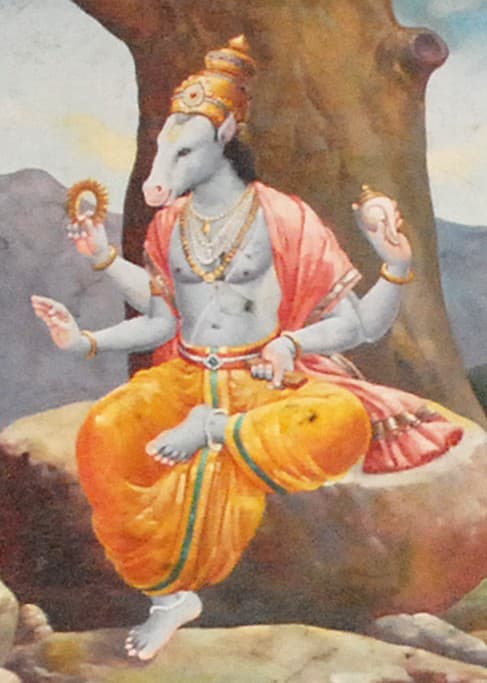
Hayagriva
Hayagriva is a significant Hindu deity, depicted as the horse-headed avatar of Vishnu. He is revered as the god of knowledge, wisdom, and speech, often invoked to overcome ignorance and demonic forces. His form symbolizes the triumph of divine knowledge over darkness and passion.
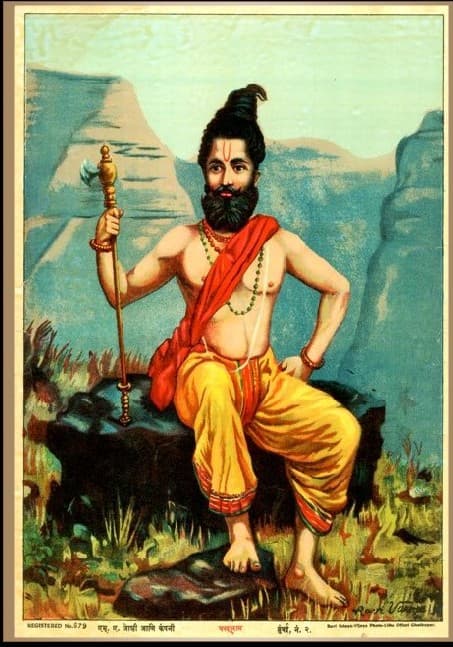
Parashurama
Parashurama is revered as the sixth avatar of Vishnu, known for his righteous fury and role as a warrior-sage. He is considered one of the Chiranjivi (immortals) and is destined to become the guru of Kalki, Vishnu's final incarnation. Parashurama is celebrated for correcting cosmic imbalance by eradicating corrupt Kshatriyas and is associated with the reclamation of land from the sea.
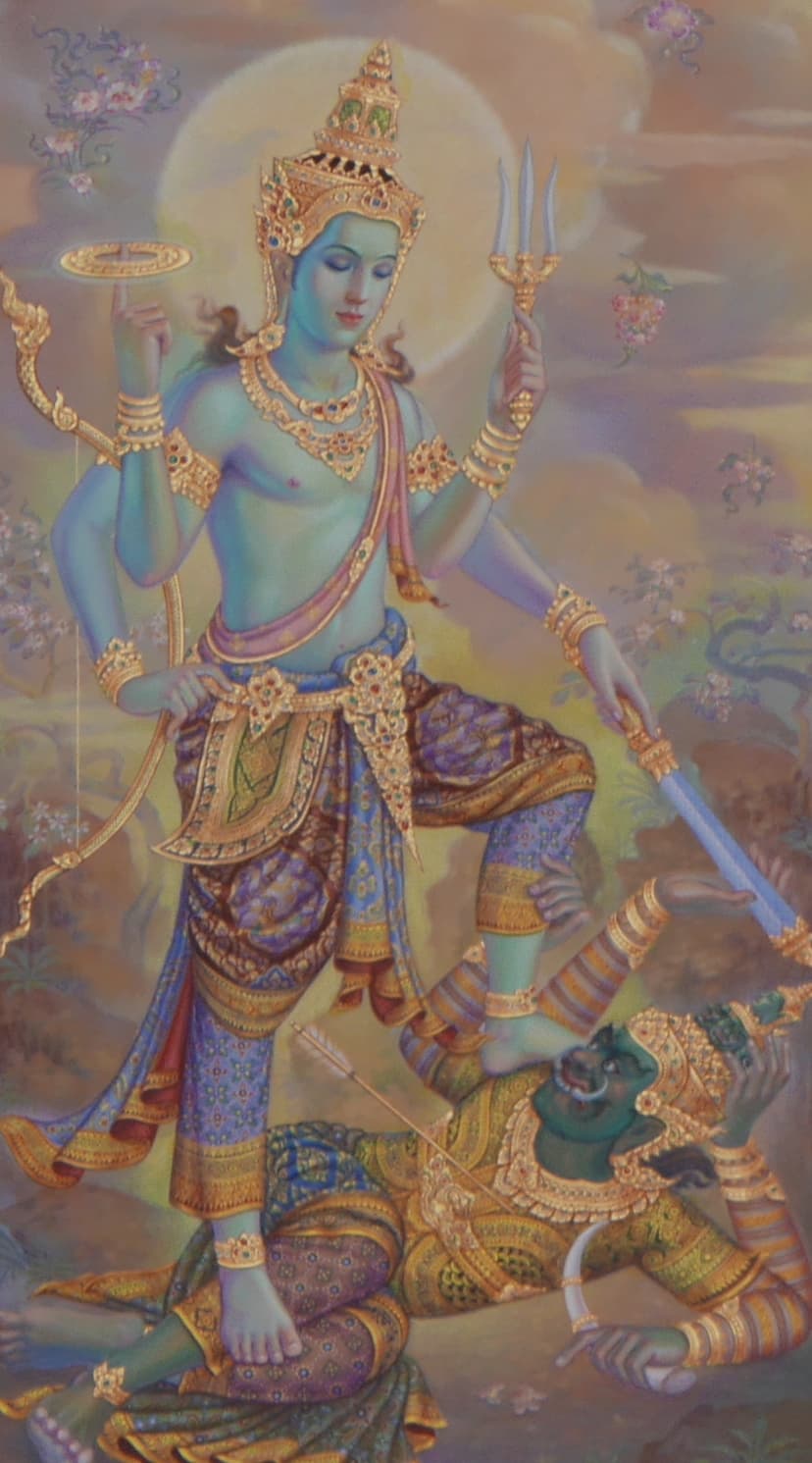
Rama
Rama is a major deity in Hinduism, revered as the seventh and one of the most popular avatars of Vishnu. He is considered the ideal man and the central figure of the epic Ramayana, embodying dharma and righteous living. His story, marked by exile, the abduction of his wife Sita, and a subsequent war to rescue her, illustrates duties, rights, and social responsibilities.