
Dakshinamurti
Dakshinamurti is a South-facing aspect of the Hindu god Shiva, embodying him as the ultimate guru, the personification of supreme awareness, understanding, and knowledge. He is revered as the god of wisdom and meditation, teaching yoga, music, and the Shastras, and is depicted as the destroyer of ignorance. His iconography often features four arms, seated under a banyan tree, with a mudra signifying knowledge, and his presence is a significant element in Shiva temples.
Key Facts
- ›Dakshinamurti literally translates to 'one who is facing south'.
- ›He is considered the personification of supreme awareness, understanding, and knowledge.
- ›Dakshinamurti is depicted as a teacher of yoga, music, and wisdom.
- ›He is often shown seated under a banyan tree with four arms.
- ›His iconography includes the Jnana Mudra, symbolizing knowledge and wisdom.
- ›He is worshipped as the god who destroys ignorance, symbolized by the demon Apasmara.
Jnana Dakshinamurti, Yoga Dakshinamurti, Veenadhara Dakshinamurti, Rishabharudha Dakshinamurti
- Four Arms
- Seated Under A Banyan Tree
- Right Foot On Apasmara
- Left Foot Folded On Lap
- Deer-Throne
- Snake Or Rosary In One Upper Hand
- Flame In the Other Upper Hand
- Vyakhyanamudra Or Abhaya Mudra In Lower Right Hand
- Bundle of Kusha Grass Or Scriptures In Lower Left Hand
- Jnana Mudra
Dakshinamurti Stotra By Adi Shankara
- Mahakaleshwar
- Srikalahasteeswara Temple Complex
- Sree Dakshinamurti Temple At Sukapuram
- Sree Medha Dakshinamurti Temple In Gujrathipeta
- Thiruvairanikulam Dakshinamurthy Temple
- Vaikom Shiva Temple
- Ettumanoor Mahadevar Temple
- Alangudi, Kumbakonam
- Sree Dakshinamurti Temple At Pattamangalam
- Sivanandeswarar Temple In Thirupanthurai
- Thirupulivanam
- Shrutisagar Ashram
- Chibavananda Ashram
- Suchindram Thanumalaya Temple
- Thiruvotriyur
- Poonthottam Village
- Vellave Near Taliparambu
- Panaickal Sree Dakshinamurti Temple
- Arsha Vidya Ashram
- Arsha Vidya Gurukulam
- Isha Institute of Inner-Sciences
- Thiruvallur
- Isha Yoga Center
- Thrikkapeleswaram Dakshinamurthi Temple
Trishula, Flame
Deer
About Dakshinamurti
Dakshinamurti: The Embodiment of Divine Knowledge
Dakshinamurti is a significant aspect of the Hindu deity Shiva, representing him as the ultimate guru or spiritual teacher. Literally meaning 'one who faces south,' this manifestation is revered as the personification of supreme awareness, understanding, and knowledge. Dakshinamurti embodies Shiva as the dispenser of wisdom, teaching yoga, music, and the sacred Shastras, and is widely worshipped as the god of wisdom and meditation. His icon is often installed in Shiva temples facing south, a tradition rooted in his name and significance.
Iconography and Symbolism
In his form as Jnana Dakshinamurti, Shiva is typically depicted with four arms, seated peacefully beneath a banyan tree. He is often shown on a deer-throne, with his right foot resting on Apasmara, the demon symbolizing ignorance, and his left foot folded. His upper hands may hold a snake or rosary and a flame, while his lower right hand is in the 'Jnana Mudra' (knowledge gesture), with the index finger bent to touch the thumb, signifying the union of the individual soul with the divine. The flame symbolizes illumination, dispelling the darkness of ignorance, and the Jnana Mudra illustrates the path to spiritual realization by detaching from ego, illusion, and past karmas.
Significance as a Guru
Indian tradition places immense value on the spiritual teacher, and Dakshinamurti is considered the supreme guru. He represents the quintessential spiritual guide who imparts profound knowledge and helps devotees overcome ignorance. The various symbolic elements in his depiction, such as the Jnana Mudra and the crushed demon, reinforce his role as the destroyer of ignorance and the bestower of ultimate wisdom. His teachings are believed to lead seekers towards salvation and self-realization, making him a central figure in the devotional practices of Shaivism.
Source: Wikipedia ↗
Frequently Asked Questions
What does the name Dakshinamurti mean?
Dakshinamurti literally means 'one who is facing south' in Sanskrit. Another interpretation suggests 'Dakshinya' refers to kindness or benevolence, portraying Shiva as a benevolent teacher.
How is Dakshinamurti typically depicted?
Dakshinamurti is generally shown with four arms, seated under a banyan tree and facing south. He is often depicted on a deer-throne, with his right foot on Apasmara, the demon of ignorance, and his left foot folded on his lap.
What is the significance of Dakshinamurti?
Dakshinamurti is revered as the ultimate guru and the embodiment of knowledge. He is seen as the destroyer of ignorance, and his teachings are considered paramount for seekers of salvation and wisdom.
What do the hand gestures (mudras) of Dakshinamurti signify?
The Jnana Mudra, where the index finger touches the thumb, symbolizes knowledge and wisdom. The Abhaya Mudra, a gesture of assurance and blessing, is also sometimes shown.
Where is Dakshinamurti usually installed in Shiva temples?
In most Shiva temples, the stone image of Dakshinamurti is installed facing south on the southern circumambulatory path around the sanctum sanctorum.
Related Hindu deities
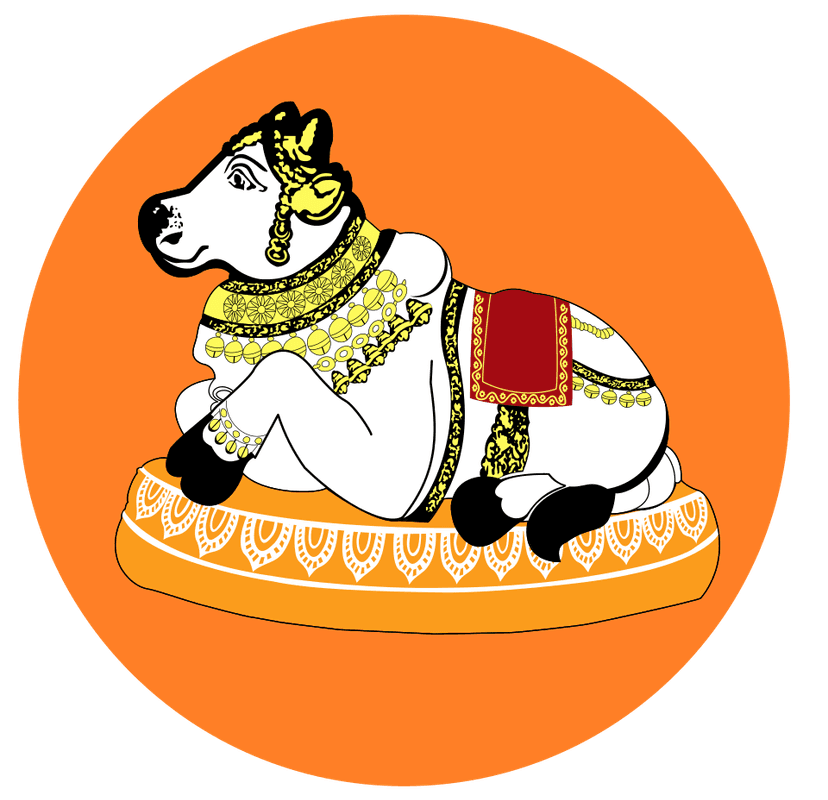
Nandi
Nandi is the sacred bull vahana (mount) of the Hindu god Shiva and the guardian deity of his abode, Kailash. He is widely depicted as a seated bull facing the main shrine in Shiva temples worldwide. Nandi symbolizes devotion and the soul's focus on the divine, and is also revered as a guru in Shaiva Siddhanta.
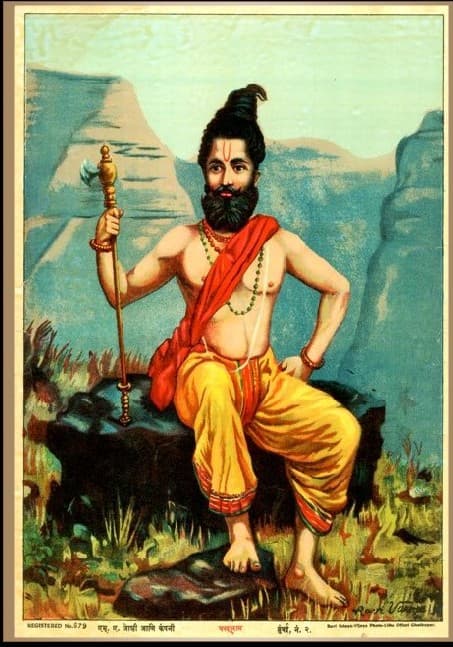
Parashurama
Parashurama is revered as the sixth avatar of Vishnu, known for his righteous fury and role as a warrior-sage. He is considered one of the Chiranjivi (immortals) and is destined to become the guru of Kalki, Vishnu's final incarnation. Parashurama is celebrated for correcting cosmic imbalance by eradicating corrupt Kshatriyas and is associated with the reclamation of land from the sea.

Manjunatha
Shiva, also known as Mahadeva and Hara, is a principal deity in Hinduism and the Supreme Being in Shaivism. He is revered as the creator, protector, and transformer of the universe, and is also known as The Destroyer within the Trimurti. Shiva embodies both benevolent and fearsome aspects, often depicted as an ascetic yogi or a householder, and is considered the patron god of yoga, meditation, and the arts.