
Indra
Indra is the Vedic god of weather and the king of the devas, associated with the sky, lightning, storms, and war. He is most prominently featured in the Rigveda, where he is celebrated for defeating the asura Vritra, thereby releasing life-giving rains and sunshine. While his significance diminished in later Hindu literature, he remains a powerful heroic figure and king of the gods.
Key Facts
- ›Vedic god of weather, sky, lightning, storms, and war.
- ›King of the devas and the ruler of Svarga.
- ›Most frequently mentioned deity in the Rigveda.
- ›Famed for slaying the asura Vritra, who obstructed rain.
- ›His title of 'Indra' is borne by the king of the gods, which changes with each Manvantara.
- ›Iconographically depicted wielding a vajra (thunderbolt) and riding the elephant Airavata.

Śakra, Purandhara, Indā (Pali)
Wields the Vajra, Rides the Elephant Airavata, Golden Hair, Bow, Sword, Net, Noose, Hook, Conch
Rigveda, Vishnu Purana, Shatapatha Brahmana, Aitareya Upanishad, Brihadaranyaka Upanishad, Avyakta Upanishad, Ramayana, Mahabharata, Bhagavata Purana
Father of Vali, Father of Arjuna, Father of Jayanta, Rishabha, Midhusha, Father of Jayanti, Devasena, Son of Kashyapa and Aditi, Son of Tvashtar, Son of Dyaus and Prithvi, Son of Ekashtaka, Brother of Agni
Svarga, Amaravati, Mount Meru
Jayanta, Rishabha, Midhusha, Jayanti, Devasena
Vajra
King of Devas, Heroic Figure
About Indra
Indra is a preeminent deity in the Vedic tradition of Hinduism, revered as the god of weather, the sky, lightning, thunder, storms, and rains. He is also recognized as the king of the devas (gods) and the ruler of the celestial realm of Svarga. Indra's most significant role, particularly in the Rigveda, is that of a heroic warrior who vanquishes evil forces, most notably the serpent asura Vritra, thereby releasing life-giving waters and ensuring prosperity for humanity.
Role and Significance
Indra is the most frequently mentioned deity in the Rigveda, a foundational scripture of Hinduism, underscoring his immense importance during the Vedic period. He is celebrated for upholding cosmic order and for his strength and prowess in battle. His victory over Vritra, who obstructed the flow of rivers and rains, is a central myth that highlights his role as a savior and provider.
Evolution and Iconography
While Indra's prominence waned in post-Vedic literature, where he is sometimes depicted with less heroic qualities, he nevertheless retains his position as the king of the gods. His iconography typically features him wielding the vajra, a thunderbolt, and riding his magnificent white elephant, Airavata. Descriptions in the Rigveda also note his distinctive golden hair, contrasting with the common portrayal of dark-haired deities.
Wider Connections
Indra's characteristics and myths bear striking resemblances to thunder gods and sky deities found in other Indo-European mythologies, such as Zeus, Jupiter, and Thor, indicating ancient shared cultural roots. He appears in Buddhist and Jain traditions as well, though often with modified roles and significance, reflecting the syncretic nature of religious development in ancient India.
Source: Wikipedia ↗
Frequently Asked Questions
Who is Indra in Hinduism?
Indra is the Vedic god of weather and the king of the devas (gods) in Hinduism. He is primarily associated with the sky, lightning, thunder, storms, and rain, and is also considered a god of war.
What is Indra most known for?
Indra is most celebrated for his heroic act of slaying the great evil asura named Vritra. This act released life-giving rains and sunshine, saving humanity from obstruction and ensuring prosperity.
What is Indra's significance in the Rigveda?
Indra is the most frequently mentioned deity in the Rigveda, a foundational scripture of Hinduism. He is the dedicatee of approximately 250 hymns and is praised alongside other deities in an additional 50 hymns.
How is Indra depicted in later Hindu texts?
In post-Vedic texts, Indra's importance diminishes, and he is sometimes depicted as an intoxicated, hedonistic god. However, he still plays a role in various religious accounts and is sometimes known as an aspect of Shiva.
What are Indra's divine attributes and iconography?
Indra is depicted as a powerful hero, often wielding his thunderbolt, the vajra. His iconography includes this vajra and his mount, the four-tusked white elephant named Airavata.
Does Indra have similarities to deities in other mythologies?
Yes, Indra shares similarities with various Indo-European deities, including Greek Zeus, Roman Jupiter, Germanic Odin and Thor, and Slavic Perun, often being a sky god, king of gods, and associated with thunder and rain.
Related Hindu deities
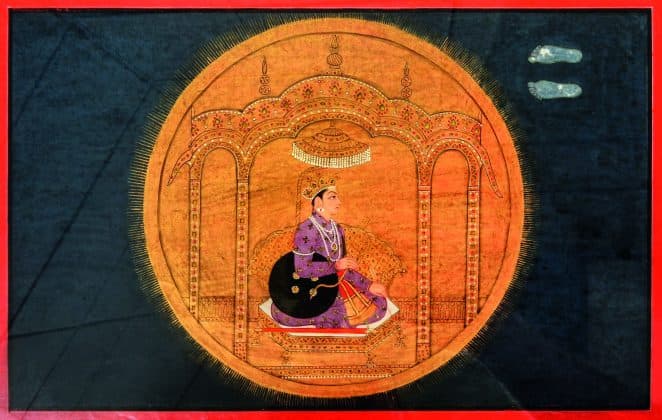
Dhruva
Dhruva was a devoted ascetic of Vishnu, mentioned in the Vishnu Purana and Bhagavata Purana. Born a prince, he undertook severe austerities after being slighted by his stepmother, leading to a divine encounter with Vishnu. His devotion and renunciation earned him the eternal position of the Pole Star.
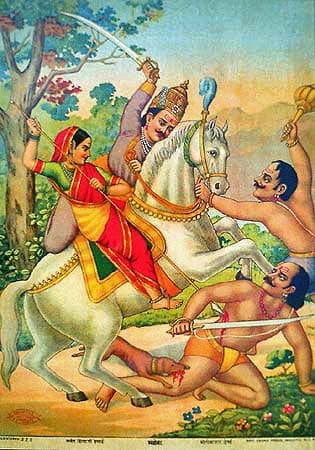
Khandoba
Khandoba is a prominent Hindu deity, primarily worshipped in Maharashtra and Karnataka, often seen as a manifestation of Shiva. He is revered as a family deity (Kuladevata) and the patron deity for various castes, including warriors, farmers, and tribal communities. Khandoba is known for his victory over demons Mani and Malla and his marriages, with his worship reflecting syncretic traditions that include Jain and Muslim influences.
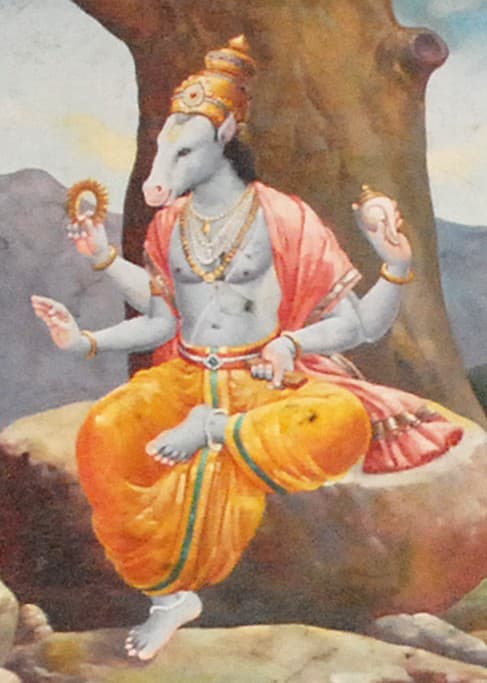
Hayagriva
Hayagriva is a significant Hindu deity, depicted as the horse-headed avatar of Vishnu. He is revered as the god of knowledge, wisdom, and speech, often invoked to overcome ignorance and demonic forces. His form symbolizes the triumph of divine knowledge over darkness and passion.