
Khandoba
White horse (given by the demon Mani)·Male·12th century·India
Khandoba is a prominent Hindu deity, primarily worshipped in Maharashtra and Karnataka, often seen as a manifestation of Shiva. He is revered as a family deity (Kuladevata) and the patron deity for various castes, including warriors, farmers, and tribal communities. Khandoba is known for his victory over demons Mani and Malla and his marriages, with his worship reflecting syncretic traditions that include Jain and Muslim influences.
Key Facts
- ›Khandoba is a manifestation of Shiva, also associated with Bhairava and Surya.
- ›He is the most popular Kuladevata (family deity) in Maharashtra.
- ›His primary legends involve defeating the demons Mani and Malla.
- ›Khandoba is depicted as a warrior, often on horseback, or in the form of a linga.
- ›His worship is widespread among various castes and communities, including Muslims.
- ›The main center of his worship is the temple in Jejuri, Maharashtra.
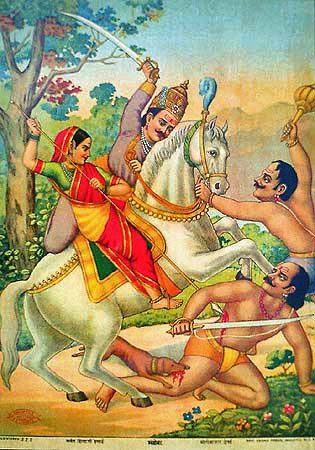
Martanda Bhairava, Malhari, Khanderaya, Khanderao, Mallanna, Mailara, Mhalsa-kant
- Warrior Riding A Horse
- Four-Armed Icon Holding A Damaru, Trident, Turmeric-Filled Bowl, and Sword
- Dressed As A Maratha Sardar Or Muslim Pathan
- Depicted With Wives and Dogs
- Aniconic Linga Form
Malhari Mahatmya, Jayadri Mahatmya, Martanda Vijaya
Champa Sashthi, Somvati Amavasya, Dasara, Chaitra Purnima
Jejuri, Pali, Adi-Mailar, Naldurg, Mailara Linga, Mangasuli, Devaragudda, Mannamailar, Nimgaon Dawadi, Shegud, Komuravelli, Satare, Malegaon, Mailapur Mailarlingeshwara Temple
Sword, Trishula
Dog, Horse
Kuladevata, Patron Deity
About Khandoba
Who is Khandoba?
Khandoba is a significant Hindu deity, primarily venerated in the Deccan region of India, with a strong presence in Maharashtra and Karnataka. He is widely regarded as a manifestation of Shiva, often identified with the fierce Bhairava and the sun god Surya. Khandoba holds the esteemed position of Kuladevata, or family deity, for a vast number of Maharashtrian households, and also serves as the patron deity for various social groups including warriors, farmers, shepherds, and even some Brahmin and tribal communities.
Legends and Significance
The mythology of Khandoba is rich with tales of his valor, most notably his victorious battles against the demons Mani and Malla, who were tormenting the populace. These legends, primarily documented in texts like the Malhari Mahatmya and elaborated in folk songs, highlight his role as a protector. His marriages to various women from different communities, such as Mhalsa and Banai, are also central to his lore, serving as cultural bridges between the divine and the human realms. The worship of Khandoba is characterized by its syncretic nature, incorporating elements from Hindu, Jain, and even Muslim traditions, reflecting a broad inclusivity.
Iconography and Worship
Khandoba is visually represented in two primary forms: as an aniconic linga, symbolizing Shiva, and as an anthropomorphic warrior deity. When depicted as a warrior, he is often shown mounted on a white horse, armed with a sword and trident, and sometimes possessing multiple arms. His images are frequently adorned with turmeric powder, a substance strongly associated with the sun and purity. Devotees worship Khandoba through various rituals, including offerings of turmeric, fruits, vegetables, and sometimes goat flesh outside temples. The concept of 'navas,' or vows made in exchange for divine favor, is a crucial aspect of his worship, underscoring his role as a powerful deity responsive to the needs of his followers.
Source: Wikipedia ↗
Frequently Asked Questions
Who is Khandoba?
Khandoba is a Hindu deity who is a manifestation of Shiva, widely worshipped in the Deccan region of India, particularly in Maharashtra and Karnataka. He is especially popular as a Kuladevata, or family deity, for many Maharashtrian communities.
What is Khandoba known for?
Khandoba is primarily known for his legends of defeating the demons Mani and Malla, and for his marriages. He is also recognized as a patron deity for various warrior, farming, and shepherd communities, and is a symbol of strong devotion and wish-granting.
What are Khandoba's main names and epithets?
Khandoba is known by several names, including Martanda Bhairava and Malhari. Other names and epithets include Khanderaya, Khanderao, Mallanna, and Mailara, reflecting his composite nature and regional variations.
How is Khandoba depicted iconographically?
Khandoba is typically depicted as a warrior riding a horse, often armed with a sword and trident, and sometimes with four arms. He can also be represented in an aniconic form as a linga, a symbol of Shiva. His images are often adorned with turmeric, and he is frequently shown with his wives and dogs.
What are the significant legends associated with Khandoba?
The central legends of Khandoba revolve around his battles against the demons Malla and Mani, who were causing suffering. After defeating them, Mani offered his white horse to Khandoba, and the deity granted boons to the demons. These stories are primarily found in the Malhari Mahatmya.
Who are Khandoba's principal consorts?
Khandoba has several wives, with Mhalsa and Banai being the most prominent. Mhalsa is from the Lingayat merchant community, while Banai is from the Dhangar (shepherd) caste. These marriages serve as cultural links between the deity and various communities.
Where is Khandoba most prominently worshipped?
Khandoba is most prominently worshipped in the Deccan region of India, especially in the state of Maharashtra, where he is the most popular Kuladevata. His primary temple and center of worship is located in Jejuri, Maharashtra.
Related Hindu deities
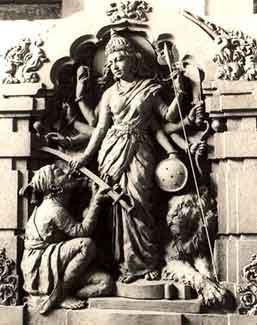
Bhavani
Bhavani is a significant epithet of the Hindu goddess Durga, translating to "giver of life." She is revered as a nurturing mother figure who provides for her devotees and dispenses justice by vanquishing evil forces. Bhavani is considered a manifestation of the primeval energy Shakti and is widely worshipped, particularly in Maharashtra, India.
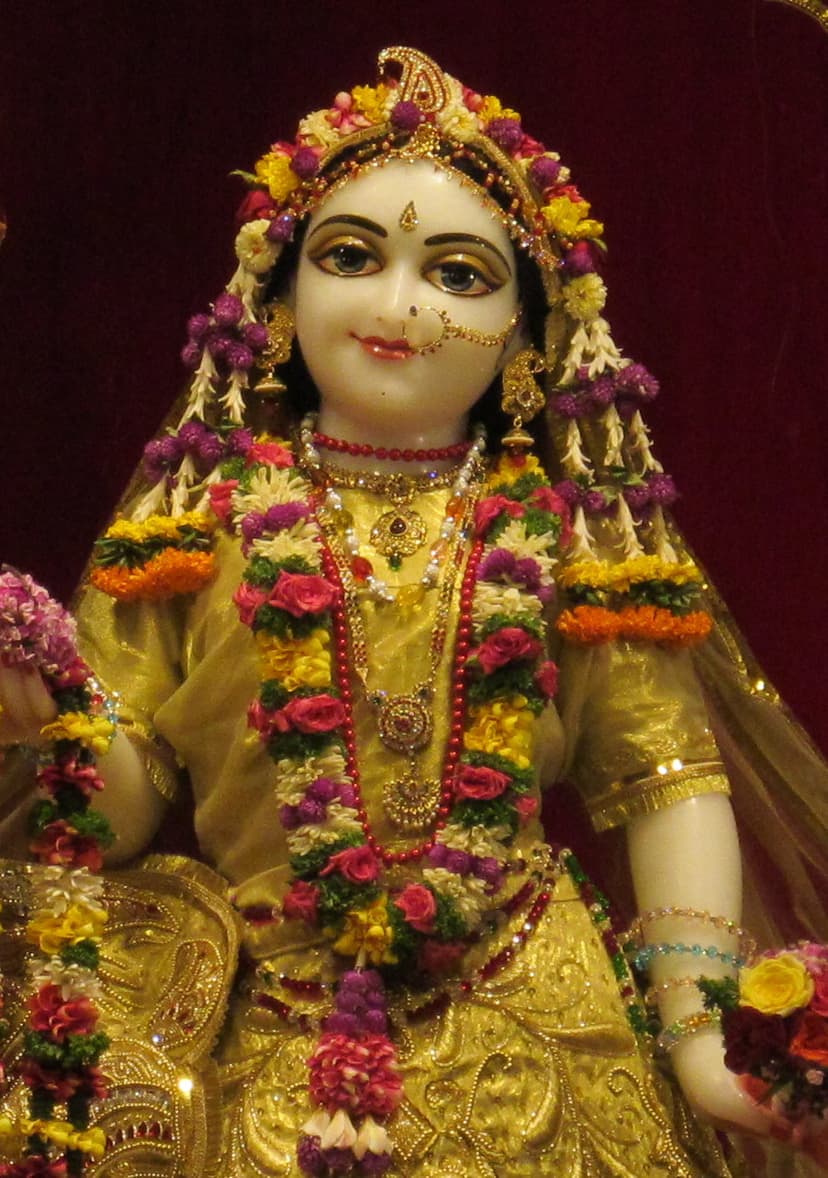
Radha
Radha is a principal Hindu goddess and the chief consort of Krishna. Revered as the goddess of love, compassion, and devotion, she is often depicted as an avatar of Lakshmi or as the supreme feminine energy of Krishna. Her profound love for Krishna has inspired countless devotional traditions, literary works, and artistic expressions.

Indra
Indra is the Vedic god of weather and the king of the devas, associated with the sky, lightning, storms, and war. He is most prominently featured in the Rigveda, where he is celebrated for defeating the asura Vritra, thereby releasing life-giving rains and sunshine. While his significance diminished in later Hindu literature, he remains a powerful heroic figure and king of the gods.