
Mhalsa
Mhalsa is a Hindu goddess worshipped as an independent deity and as the consort of Khandoba. As Mohini, Vishnu's avatar, she is revered as Mahalasa Narayani, particularly in Goa. In Maharashtra, she is primarily known as the consort of Khandoba, a form of Shiva, and is associated with Parvati.
Key Facts
- ›Mhalsa is worshipped as an independent goddess and as the consort of Khandoba.
- ›She is considered a form of Mohini, the female avatar of Vishnu, and is known as Mahalasa Narayani.
- ›Her chief temple is located in Mardol, Goa.
- ›Mhalsa is venerated as the Kuladevi (family goddess) by various castes and communities in western and southern India.
- ›She is associated with Parvati, the wife of Shiva, in the Khandoba tradition.
- ›Her iconography as Mahalasa Narayani includes four hands holding a trishula, sword, severed head, and drinking bowl.
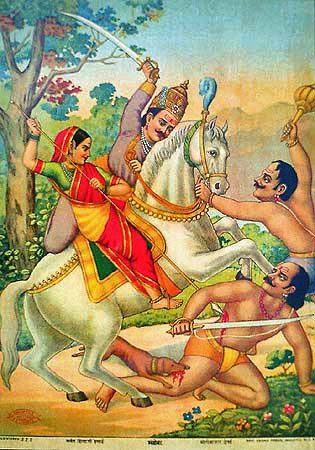
Mhalasa, Mhasa, Mahalasa, Mohini, Mahalasa Narayani, Narayani, Rahu-matthani
Four Hands, Trishula, Sword, Severed Head, Drinking Bowl, Yajnopavita, Stands On A Prostrate Man Or Demon, Tiger Or Lion Licking Blood From Severed Head, Depicted With Two Arms Accompanying Khandoba, Standing Beside Khandoba
Bhavishya Purana
Consort of Khandoba, Associated With Parvati, Considered A Form of Shiva's Wife, Parvati, Daughter of Timmaseth
Pausha Pournima
Mardol, Goa, Jejuri, Maharashtra, Pali
Trishula, Sword
Tiger, Lion
Goddess, Guardian Deity, Family Goddess
Independent Goddess, Consort Deity, Kuladevi
About Mhalsa
Mhalsa is a significant Hindu goddess, primarily worshipped in western and southern India. She is recognized in two major traditions: as an independent goddess, often identified with Mohini, the female avatar of Vishnu, and as the beloved consort of the folk deity Khandoba, a form of Shiva, particularly in Maharashtra. In her independent form as Mahalasa Narayani, her chief temple is located in Mardol, Goa.
Iconography and Symbolism
As Mahalasa Narayani, Mhalsa is depicted with four hands, carrying traditional divine weapons and symbols such as a trishula, a sword, a severed head, and a drinking bowl. She is often shown wearing a sacred thread, typically associated with male deities, and standing upon a vanquished foe, with a tiger or lion present, sometimes licking blood from the severed head. This imagery emphasizes her fierce and protective aspects. When depicted with Khandoba, she is usually shown with two arms, accompanying him on his horse or standing beside him.
Legends and Worship
According to folk legends, Mhalsa is considered a manifestation of Parvati, Shiva's wife. One prominent legend narrates her birth as the daughter of a merchant named Timmaseth, to whom Khandoba appeared in a dream, instructing him to marry his daughter to the deity. This divine union is celebrated annually on the full moon day of Pausha. Mhalsa's worship extends to her role as a Kuladevi, a family goddess, for numerous communities, including various Brahmin castes, Kalavant, and Bhandaris. Her presence is also noted in states like Karnataka, Kerala, and Gujarat, with new temples emerging along India's west coast due to the migration of her followers.
Source: Wikipedia ↗
Frequently Asked Questions
Who is Mhalsa?
Mhalsa is a Hindu goddess worshipped both as an independent deity and as the consort of Khandoba. She is also seen as a form of Mohini, the female avatar of Vishnu, and associated with Parvati, Shiva's wife.
Where is Mhalsa's main temple?
Mhalsa's chief temple is located in Mardol, Goa, where she is worshipped as Mahalasa Narayani.
What is Mhalsa's role in the Khandoba sect?
In the Khandoba sect of Maharashtra, Mhalsa is worshipped as the consort of the folk deity Khandoba. She is also considered a reincarnation of Goddess Parvati in this tradition.
What are some of Mhalsa's iconographic features?
In her Mahalasa Narayani form, Mhalsa is depicted with four hands holding a trishula, a sword, a severed head, and a drinking bowl. She is also shown wearing a sacred thread and standing on a prostrate figure, with a tiger or lion licking blood from the severed head.
Who considers Mhalsa their family goddess?
Mhalsa is worshipped as the Kuladevi (family goddess) by many Hindus from western and southern India, including Goud Saraswat Brahmins, Karhade Brahmins, Padye Brahmin, Daivajna Brahmin, Kalavant, Bhandaris, and other communities.
Related Hindu deities
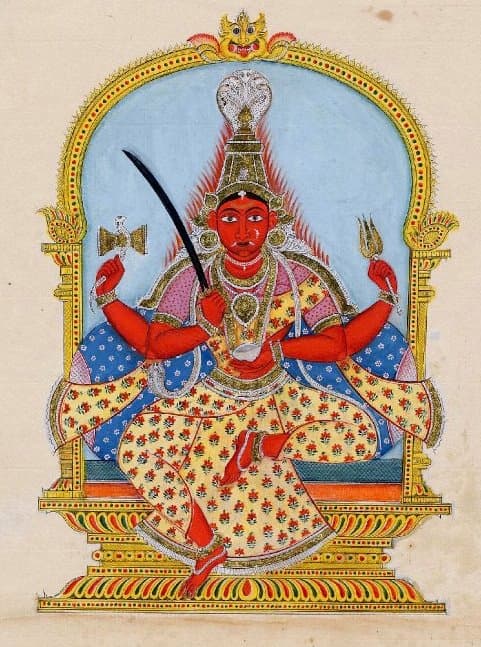
Mariamman
Mariamman, also known as Amman, is a Hindu goddess predominantly venerated in rural South India, primarily associated with weather, particularly bringing rain, and the healing of diseases like cholera, smallpox, and chickenpox. Originating from Dravidian folk religion, she is considered a form of Adi Parashakti or Durga and is worshipped as a guardian deity in many villages.

Ashvins
The Ashvins are twin Vedic deities associated with medicine, health, healing, sciences, and the twilight. They are depicted as youthful divine horsemen who travel in a swift chariot, known for rescuing mortals and aiding them in various situations. The Ashvins are prominent in the Rigveda and play significant roles in later Hindu scriptures.
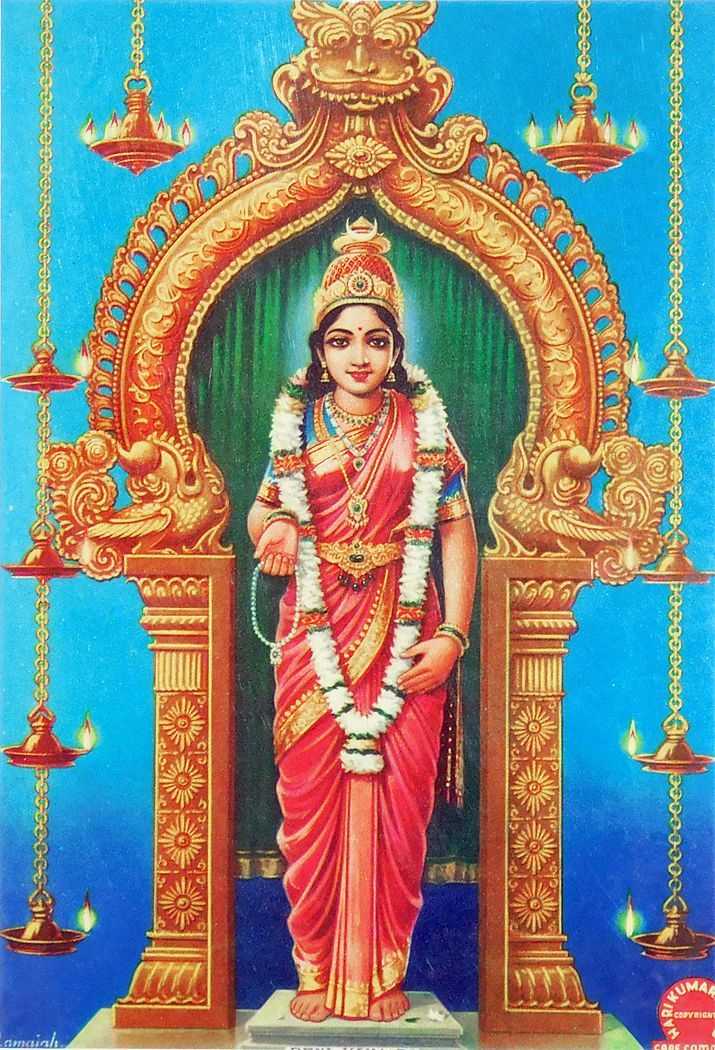
Devi Kanya Kumari
Devi Kanya Kumari is a prominent Hindu goddess, a manifestation of Mahadevi in the form of an adolescent girl. She is revered as a form of Parvati or Lakshmi, and is particularly known for her role in slaying the demon Banasura. Her worship is deeply tied to the town of Kanyakumari at the southernmost tip of India.