
Ashvins
Chariot drawn by horses (sometimes described as bulls, buffaloes, birds, geese, and falcons)·Male·India·Hinduism
The Ashvins are twin Vedic deities associated with medicine, health, healing, sciences, and the twilight. They are depicted as youthful divine horsemen who travel in a swift chariot, known for rescuing mortals and aiding them in various situations. The Ashvins are prominent in the Rigveda and play significant roles in later Hindu scriptures.
Key Facts
- ›Vedic twin gods, identified as Nāsatya and Dasra.
- ›Associated with medicine, healing, science, and twilight.
- ›Depicted as youthful horsemen traveling in a swift chariot.
- ›Known for rescuing mortals and aiding them in distress.
- ›Generally considered sons of the sun god Surya and Sanjna.
- ›In the Mahabharata, they are the divine fathers of the Pandava twins, Nakula and Sahadeva.

Ashvini Kumaras, Asvinau, Nāsatya, Dasra
Youthful Divine Twin Horsemen, Traveling In A Chariot Drawn By Horses
Rigveda, Mahabharata, Harivamsha, Puranas, Shatapatha Brahmana
Sons of Surya and Sanjna, Divine Fathers of Nakula and Sahadeva
Dhosi Hill
Horse
Healer, Guardian Deity, Divine Physician
About Ashvins
The Ashvins
The Ashvins, also known as the Ashvini Kumaras or Asvinau, are prominent twin deities in the Vedic tradition of Hinduism. They are revered as divine physicians and are strongly associated with medicine, health, healing, sciences, and the liminal time of twilight. The Ashvins are consistently depicted as youthful, twin horsemen who travel in a swift chariot, symbolizing their mobility and eagerness to aid humanity.
Mythology and Legends
In the Rigveda, the Ashvins appear frequently, often invoked for their role in rescuing mortals from peril. They are credited with numerous acts of benevolence, including saving sages lost in deserts, restoring lost eyesight, and healing the wounded. Legends describe them pouring sweet water from the sky, rescuing individuals abandoned at sea, and even replacing a lost limb with a metal prosthetic. Their parentage is generally attributed to the sun god Surya and his wife Sanjna, though some later texts suggest creation by Brahma. The Ashvins are also known for their marriage to Sūryā, the daughter of the Sun god.
Significance and Associations
The Ashvins are depicted as guardians and helpers, bringing light and recovery to those in need. They are associated with honey and are chief deities in certain Vedic rituals, such as the Pravargya rite. Their close connection with Uṣas, the goddess of dawn, reinforces their association with the return of light from darkness. In epic texts like the Mahabharata, the Ashvins play a role in the lineage of human heroes, notably as the divine fathers of the Pandava twins, Nakula and Sahadeva. Their epithets include Nāsatya, meaning 'ever true' or 'saviors,' and Dasra, signifying 'enlightened giving,' highlighting their benevolent nature and healing powers.
Source: Wikipedia ↗
Frequently Asked Questions
Who are the Ashvins?
The Ashvins are twin Vedic deities, also known as Ashvini Kumaras or Asvinau. They are recognized for their association with healing, medicine, sciences, and the transitional period of twilight. They are consistently referred to in the dual form in Vedic texts.
What are the main attributes of the Ashvins?
The Ashvins are characterized as youthful divine twin horsemen who travel in a chariot drawn by tireless horses. They are portrayed as benevolent deities who safeguard and rescue people, intervening in various difficult situations and bringing light and healing.
What is the origin of the Ashvins?
According to Vedic texts, the Ashvins are born from the union of the sun god Surya (Vivasvat) and his wife Saranyu (Sanjna), who took the form of a stallion and a mare. In post-Vedic texts, they are also sometimes mentioned as creations of Brahma.
What role do the Ashvins play in the Rigveda?
In the Rigveda, the Ashvins are mentioned extensively, with many hymns dedicated to them. They are depicted as helpers of mortals, performing numerous acts of rescue and restoration, such as saving sages from deserts, restoring eyesight, and healing the wounded.
How are the Ashvins depicted in later Hindu texts like the Mahabharata?
In post-Vedic texts, the Ashvins continue to be significant figures. The Mahabharata notably describes them as the divine fathers of the Pandava twins, Nakula and Sahadeva, who were born to Madri through their blessings.
What are some important epithets or alternative names for the Ashvins?
The Ashvins are also known as Ashvini Kumaras and Asvinau. They are frequently referred to by the epithet Nāsatya, meaning 'ever true' or 'saviors,' and sometimes by Dasra, meaning 'enlightened giving'.
What is the significance of the Ashvins' chariot?
The Ashvins' chariot is a prominent symbol, described as swift and powerful, capable of traveling vast distances. It is often depicted with three boxes, three wheels, and three rims, symbolizing their mobility and ability to reach those in need quickly.
Related Hindu deities
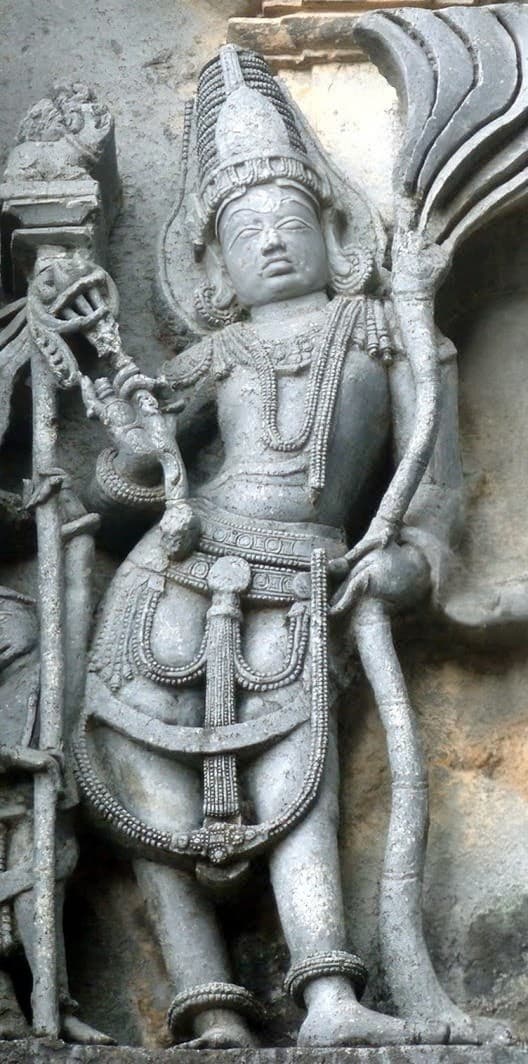
Kamadeva
Kamadeva is the Hindu god of love, attraction, pleasure, and beauty, as well as the personification of kāma (desire). He is depicted as a handsome youth armed with a bow of sugarcane and flower arrows, often accompanied by his consort Rati. Kamadeva's mythology is prominent in the Puranas, where he is known for being incinerated by Shiva's third eye and subsequently reborn as Pradyumna.

Kurma
Kurma is the second avatar of the Hindu preserver deity Vishnu, most famously appearing in the legend of the churning of the Ocean of Milk. He is also identified with Kashyapa, a Vedic sage and progenitor of all life, and Akupara, the cosmic turtle that supports the Earth. Kurma symbolizes steadfastness, spiritual regeneration, and the churning of the mind through meditation.
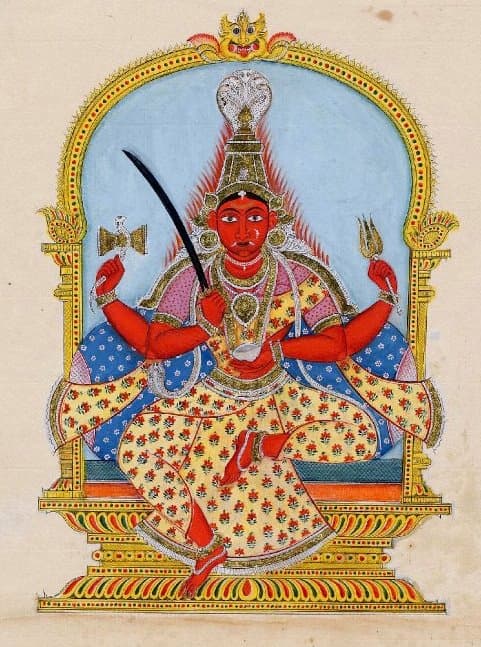
Mariamman
Mariamman, also known as Amman, is a Hindu goddess predominantly venerated in rural South India, primarily associated with weather, particularly bringing rain, and the healing of diseases like cholera, smallpox, and chickenpox. Originating from Dravidian folk religion, she is considered a form of Adi Parashakti or Durga and is worshipped as a guardian deity in many villages.