
Mariamman
Mariamman, also known as Amman, is a Hindu goddess predominantly venerated in rural South India, primarily associated with weather, particularly bringing rain, and the healing of diseases like cholera, smallpox, and chickenpox. Originating from Dravidian folk religion, she is considered a form of Adi Parashakti or Durga and is worshipped as a guardian deity in many villages.
Key Facts
- ›Mariamman is a South Indian Hindu goddess of weather, primarily invoked for rain.
- ›She is believed to cure diseases such as cholera, smallpox, and chickenpox.
- ›Her worship is rooted in Dravidian folk religion and she is considered a form of Adi Parashakti or Durga.
- ›The name "Mari" signifies rain, and "Amman" means mother in Tamil.
- ›Festivals dedicated to her are held during the late summer and early autumn.
- ›She is also known as a guardian deity (kaval deivam) in many South Indian villages.
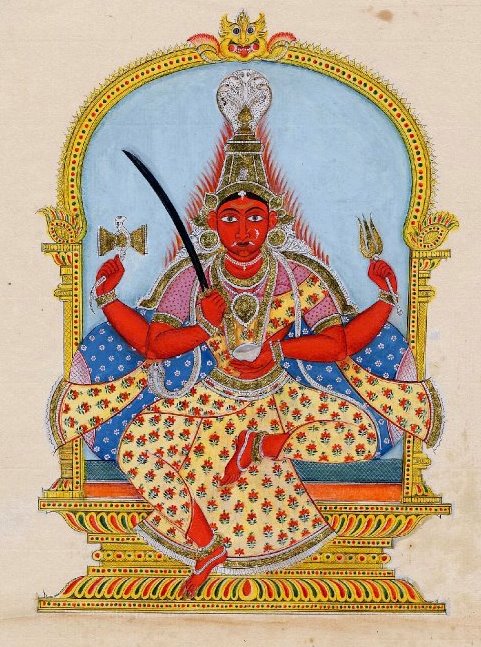
Amman, Muthumariamman, Karumariamman, Renuka, Draupadi, Marikambe, Mari Aai, Laxmi Aai, Puri Mariamman, Punnainallur Mariamman, Periya Mariamman, Putthu Mariamman, Shitala, Olai Chandi, Mogal mata
- Beautiful Young Woman With A Red-Hued Face
- Wearing A Red Dress
- Portrayed With Many Arms Or Two To Four Arms
- Wearing Snakes As Jewelry
- Generally Portrayed In Sitting Or Standing Position
- Five-Headed Serpent Over Her Head
- Holding A Trident In One Hand
- Holding A Bowl In the Other Hand
- May Display Abhaya Mudra To Ward Off Fear
- May Be Seen With A Damru With A Serpent Wrapped Around It
- Two Demeanors: Pleasant and Terrifying
āDi ThiruviḻA, Mulaikottu, Panguni Festival
- Samayapuram Mariamman Temple
- Punainallur Mariamman Temple
- Salem Kottai Sri Periya Mariamman Temple
- Veerapandi
- Anbil
- Narthamalai
- Thiruverkadu
- Virudhunagar
- Sivakasi
- Vellore
- Chennai
- Madurai
- Kaup, Karnataka
- Urwa Marigudi, Mangalore
- Erode Mariamman Temple
- Karur Mariamman Temple
- Arulmigou Shri Madhur Kannanour Mariamman Thirukkovil, Port-Louis, Mauritius
- Mariamman Temple, Ho Chi Minh City, Vietnam
- Mariamman Temple, Bangkok, Thailand
- Mariamman Temple, Pretoria, South Africa
- Sri Mahamariamman Temple, Kuala Lumpur, Malaysia
- Sri Mariamman Temple, Medan, Indonesia
- Sri Maha Mariamman Temple, Penang, Malaysia
- Sri Mariamman Temple, Singapore
- Sri Muthu Mariamman Temple, Negombo, Sri Lanka
- Sri Muthumariamman Temple, Matale, Sri Lanka
- Mari Mata Mandir Or Shri Mariamman Temple, Karachi, Pakistan
Trident, Dagger, Spear
Snakes
Goddess, Guardian Deity, Deity of Medicine, Fertility Goddess
Worshipped, Deified
About Mariamman
Mariamman, often abbreviated to Amman, is a prominent Hindu goddess primarily venerated in the rural areas of South India. Her worship is deeply connected to the forces of nature, with a particular focus on bringing life-sustaining rains and curing a range of serious diseases, including cholera, smallpox, and chickenpox. She is widely considered by Indo-Aryans to be a manifestation of Adi Parashakti or Durga, reflecting her significant place within the broader Hindu pantheon.
Origin and Significance
The worship of Mariamman has its roots in the ancient traditions of Dravidian folk religion, where she is revered as the main Tamil mother goddess. The name itself carries profound meaning: 'Mari' signifies rain, and 'Amman' translates to mother. This etymology underscores her vital role in agricultural societies, where rainfall is essential for prosperity and survival. She is also recognized as a guardian deity (kaval deivam) by many South Indian village dwellers, offering protection and well-being to her devotees.
Iconography and Mythology
Mariamman is typically visualized as a beautiful young woman with a red-hued face, often adorned in red attire. Her iconography can vary, sometimes depicting her with multiple arms to symbolize her vast powers, though more commonly with two or four. She is frequently portrayed with snakes as jewelry and may be seen with a five-headed serpent canopy over her head. In her hands, she might hold a trident (trisula) and a bowl (kapala), and often displays the abhaya mudra to instill courage. Her depiction can range from a benevolent to a terrifying aspect, reflecting the multifaceted nature of divine power.
While a single, standardized legend for Mariamman's origin is not universally established, various regional myths contribute to her lore. One narrative connects her to a cursed woman whose disfigured face led to the affliction of smallpox. Another tale associates her with Draupadi, the common wife of the Pandavas, who is considered an incarnation of Shakti. Other traditions link her to figures like Renuka, wife of Sage Jamadagni, or even a deified Brahmin girl who self-immolates. These diverse stories highlight her adaptability and integration into different cultural and social contexts.
Worship and Festivals
Mariamman's worship is often characterized by vibrant folk traditions, including dancing and the offering of 'pongal' (a rice and green gram dish cooked in earthen pots). Rituals such as fire walking and body piercings are practiced by devotees seeking her blessings. Her festivals, most notably the Ādi Thiruviḻa, are held during the late summer and early autumn, particularly in Tamil Nadu and the Deccan region. These celebrations often involve large processions, fasting, head shaving, and the carrying of pots adorned with margosa leaves, signifying devotion and purification.
Spread and Temples
Mariamman's worship has transcended geographical boundaries, carried by the Tamil diaspora to countries across the Caribbean, South Africa, Sri Lanka, Southeast Asia, and Fiji. Numerous temples dedicated to her exist both within India and internationally, ranging from simple village shrines to more elaborate structures like the Samayapuram Mariamman Temple near Tiruchirapalli. These temples serve as important centers of devotion and cultural continuity for communities worldwide.
Source: Wikipedia ↗
Frequently Asked Questions
What is Mariamman known for?
Mariamman is primarily known as the Hindu goddess of weather, especially for bringing rain. She is also widely worshipped for her power to cure serious diseases like cholera, smallpox, and chickenpox.
Where is Mariamman predominantly worshipped?
Mariamman is predominantly venerated in the rural areas of South India, particularly in Tamil Nadu and the Deccan region. Her worship has also spread to the Tamil diaspora in various parts of the world.
What is the origin of Mariamman's name?
The name Mariamman originates from Dravidian languages. 'Mari' means rain in Sangam Tamil, and 'Amman' means mother, signifying her role as the mother who brings rain and prosperity.
What are some of Mariamman's key attributes in iconography?
Mariamman is typically depicted as a beautiful young woman with a red face and red attire. She is often shown with a five-headed serpent over her head and may hold a trident and a bowl. Sometimes she is portrayed with multiple arms to represent her various powers.
What kinds of festivals are associated with Mariamman?
Her major festivals are held during the late summer and early autumn, with the Ādi Thiruviḻa being a significant celebration. These festivals often involve processions, fire walking, and other devotional rituals.
What are Mariamman's roles in addition to being a weather goddess?
Besides her association with weather and healing, Mariamman is also worshipped as a fertility goddess, praying for familial welfare, healthy progeny, and good spouses. She is also considered a guardian deity for many village dwellers.
Related Hindu deities
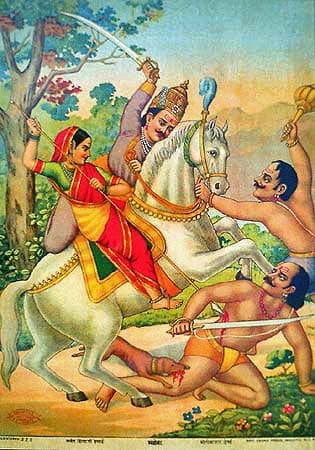
Mhalsa
Mhalsa is a Hindu goddess worshipped as an independent deity and as the consort of Khandoba. As Mohini, Vishnu's avatar, she is revered as Mahalasa Narayani, particularly in Goa. In Maharashtra, she is primarily known as the consort of Khandoba, a form of Shiva, and is associated with Parvati.

Ashvins
The Ashvins are twin Vedic deities associated with medicine, health, healing, sciences, and the twilight. They are depicted as youthful divine horsemen who travel in a swift chariot, known for rescuing mortals and aiding them in various situations. The Ashvins are prominent in the Rigveda and play significant roles in later Hindu scriptures.
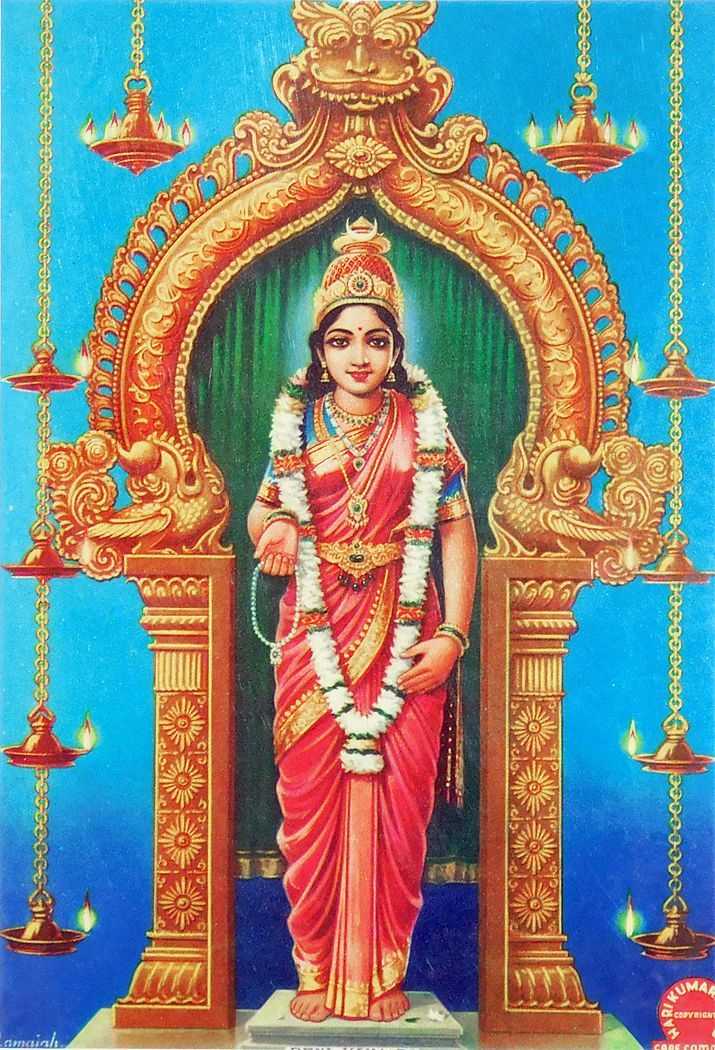
Devi Kanya Kumari
Devi Kanya Kumari is a prominent Hindu goddess, a manifestation of Mahadevi in the form of an adolescent girl. She is revered as a form of Parvati or Lakshmi, and is particularly known for her role in slaying the demon Banasura. Her worship is deeply tied to the town of Kanyakumari at the southernmost tip of India.