
Dhruva
Dhruva was a devoted ascetic of Vishnu, mentioned in the Vishnu Purana and Bhagavata Purana. Born a prince, he undertook severe austerities after being slighted by his stepmother, leading to a divine encounter with Vishnu. His devotion and renunciation earned him the eternal position of the Pole Star.
Key Facts
- ›Son of King Uttānapāda and Suniti, and grandson of Svayambhuva Manu.
- ›Undertook intense penance and meditation to please Lord Vishnu.
- ›Was guided by the sage Narada, who taught him the mantra 'Om Namo Bhagavate Vasudevaya'.
- ›Received the blessing of Dhruva-pada, the eternal state of the Pole Star, from Vishnu.
- ›Ruled his kingdom justly for many decades after returning from his austerities.
- ›Engaged in a war against Yakshas after his step-brother Uttama was killed.
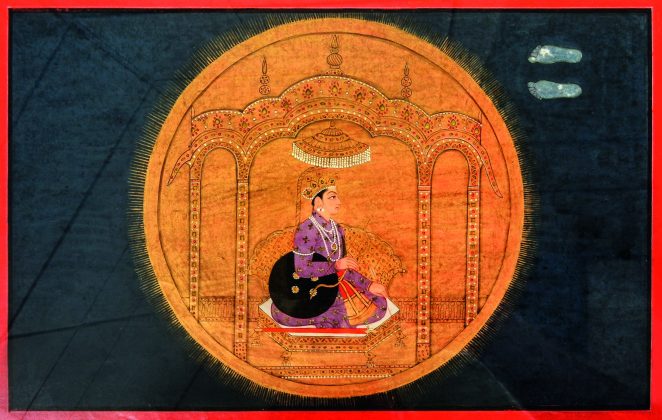
Dhruva Nakshatra (as the Pole Star)
Vishnu Purana, Bhagavata Purana
Son of King UttāNapāDa, Grandson of Svayambhuva Manu, Brother of Uttama
About Dhruva
Dhruva is a significant figure in Hindu Puranic literature, primarily known for his intense devotion to Lord Vishnu and his attainment of the eternal status of the Pole Star. His narrative, found in texts like the Vishnu Purana and Bhagavata Purana, serves as an exemplar of unwavering faith and spiritual discipline.
Narrative
Born the son of King Uttānapāda and Queen Suniti, Dhruva's early life was marked by the preferential treatment his father gave to his second wife, Suruchi, and her son, Uttama. A particularly harsh insult from Suruchi when Dhruva was only five years old ignited in him a resolve to seek the Lord's grace. He left his royal home to perform severe austerities in the forest, enduring hardship and renouncing worldly comforts.
The sage Narada offered guidance, teaching Dhruva the sacred mantra 'Om Namo Bhagavate Vasudevaya' and instructing him on the path of devotion. After six months of rigorous penance, Lord Vishnu appeared before Dhruva, pleased by his devotion. Dhruva, having transcended worldly desires, did not ask for material boons but for enduring remembrance of Vishnu. Vishnu granted him the unique boon of Dhruva-pada, the eternal and unshakeable position of the Pole Star, a celestial body untouched even by cosmic dissolution (Maha Pralaya).
Life and Rule
Upon his return, Dhruva was warmly welcomed and ascended the throne at the age of six. He ruled his kingdom justly and fairly for many decades. The Srimad Bhagavata Purana also recounts an event where Dhruva waged war against the Yakshas after his step-brother Uttama was killed. This conflict eventually led to Dhruva being advised by his grandfather Manu to quell his anger and seek reconciliation, which he did with the Yaksha king Vaishravana, ultimately asking for the preservation of his devotion.
Dhruva's story is often cited to illustrate the power of devotion, the importance of spiritual perseverance, and the ultimate reward of transcending ego and material desires in the pursuit of divine connection. His permanent celestial station as the Pole Star symbolizes steadfastness and eternal presence.
Source: Wikipedia ↗
Frequently Asked Questions
Who were Dhruva's parents and grandfather?
Dhruva was the son of King Uttānapāda and his wife Suniti. His grandfather was Svayambhuva Manu, the progenitor of mankind in Hindu cosmology.
What led Dhruva to perform austerities?
Dhruva, as a young child, was cruelly insulted by his stepmother Suruchi when he tried to sit on his father's lap. This incident, coupled with his father's preference for his other son, fueled Dhruva's determination to seek solace and validation from Lord Vishnu himself.
Who guided Dhruva in his spiritual quest?
The divine sage Narada appeared before Dhruva and, recognizing his unwavering resolve, guided him in performing severe austerities. Narada taught him the rituals and mantras necessary for meditating on Lord Vishnu.
What boon did Dhruva receive from Vishnu?
Pleased with Dhruva's intense devotion and penance, Vishnu granted him the boon of Dhruva-pada, an eternal celestial status as the Pole Star, which remains fixed even during cosmic dissolution. Dhruva also desired a life dedicated to Vishnu's remembrance.
What happened after Dhruva returned to his kingdom?
Dhruva returned to his kingdom and ascended the throne at the age of six. He ruled for many decades with fairness and justice, embodying the principles he learned through his devotion.
What was the Yaksha War?
The Yaksha War occurred after Dhruva's step-brother Uttama was killed by a Yaksha. Enraged, Dhruva waged war against the Yakshas, eventually vanquishing them. However, he was later advised by his grandfather Manu to quell his anger.
Related Hindu deities

Indra
Indra is the Vedic god of weather and the king of the devas, associated with the sky, lightning, storms, and war. He is most prominently featured in the Rigveda, where he is celebrated for defeating the asura Vritra, thereby releasing life-giving rains and sunshine. While his significance diminished in later Hindu literature, he remains a powerful heroic figure and king of the gods.

Gopis
Gopis, also known as Gopikas, are a group of milkmaids from the Braj region of India, revered in Hinduism as devoted consorts of Krishna. They are celebrated in scriptures like the Bhagavata Purana for their unconditional love and devotion (Bhakti) towards Krishna, with Radha being considered the chief among them. The Gopis' devotion and their ecstatic dance with Krishna, known as the Raslila, have significantly inspired art, literature, and performance traditions.
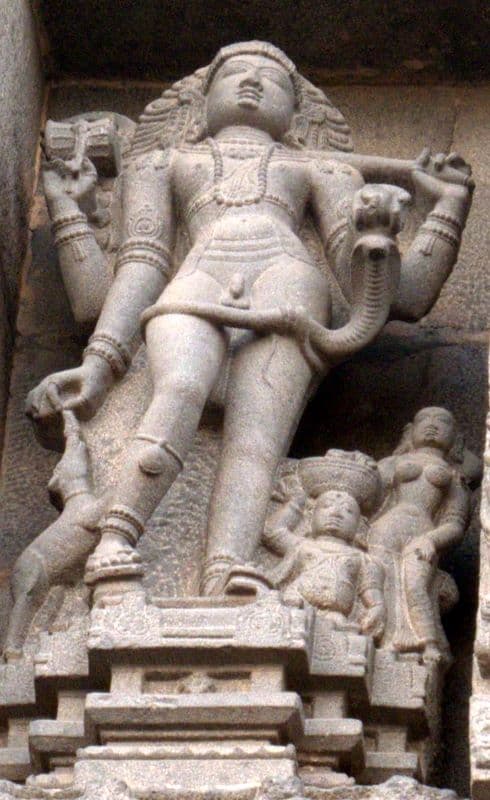
Bhikshatana
Bhikshatana is an aspect of the Hindu god Shiva, known as the "Supreme mendicant" or "Supreme Beggar." He is depicted as a nude, four-armed figure holding a begging bowl, often followed by goblin attendants and infatuated women. Bhikshatana represents a gentler phase of Shiva's fierce aspect, Bhairava, and is particularly associated with Shiva's atonement for the sin of severing one of Brahma's heads.