
Bhikshatana
Bhikshatana is an aspect of the Hindu god Shiva, known as the "Supreme mendicant" or "Supreme Beggar." He is depicted as a nude, four-armed figure holding a begging bowl, often followed by goblin attendants and infatuated women. Bhikshatana represents a gentler phase of Shiva's fierce aspect, Bhairava, and is particularly associated with Shiva's atonement for the sin of severing one of Brahma's heads.
Key Facts
- ›Bhikshatana is an iconographic form of Shiva as a mendicant seeking alms.
- ›The form arises from Shiva's need to atone for the sin of killing Brahma.
- ›He is depicted as a nude, four-armed figure holding a skull-cup as a begging bowl.
- ›Bhikshatana is associated with the legend of humbling arrogant sages in the Deodar Forest.
- ›He is a popular icon in South India, sculpted on temple walls and used as processional icons.
- ›His iconography includes specific details like wooden sandals, distinguishing him from other deities.
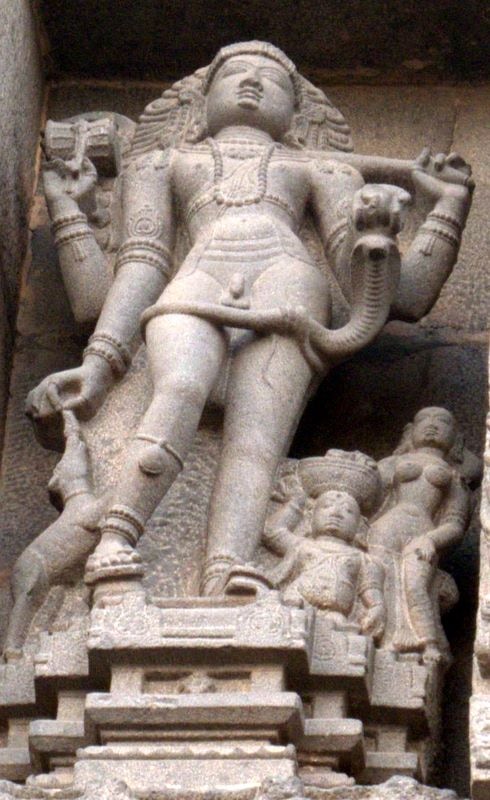
Bhikshatana-murti
Nude Four-Armed Man, Holding A Begging Bowl, Adorned With Ornaments, Dishevelled Matted Locks, Serpent In Hair, Crescent Moon In Hair, Tripundara On Forehead, Wooden Sandals, Followed By Goblin Attendants and Women
Kurma Purana, Shiva Purana, Matsya Purana, Skanda Purana, Vamana Purana, Linga Purana, Padma Purana, Mahabharata, Bhagavata Purana, Tevaram
- Temple Festival Processional Icon In Tamil Shiva Temples
- Chidambaram Temple Festival
- Mylapore Temple Festival
Varanasi, Deodar Forest
Trishula
Deer
Mendicant, Ascetic
About Bhikshatana
Bhikshatana, meaning "wandering about for alms," is a significant iconographic form of the Hindu god Shiva, portraying him as the "Supreme mendicant" or "Supreme Beggar." This aspect of Shiva is often depicted as a nude, four-armed figure, adorned with ornaments, and carrying a begging bowl, typically a skull-cup. He is frequently accompanied by goblin attendants and is known for attracting the infatuated attention of women.
Origins and Significance
The Bhikshatana form primarily emerges from Shiva's need to atone for the grave sin of severing one of the five heads of the god Brahma. This act, a form of Brahmicide, necessitated a period of wandering penance. As Bhikshatana, Shiva embodies a gentler phase between his more terrifying aspects, such as Bhairava. His expiatory journey, often involving begging with Brahma's skull as a bowl, continues until his sin is absolved, typically upon reaching the holy city of Varanasi.
Key Narratives and Iconography
One of the most prominent legends associated with Bhikshatana involves his visit to the Deodar Forest. Here, he encounters sages who have become engrossed in asceticism to the neglect of true knowledge. Bhikshatana's seductive appearance entices the wives of these sages, leading to a confrontation. Through this encounter, Bhikshatana humbles the sages and ultimately establishes the worship of the Shiva Linga, his aniconic symbol. Iconographically, Bhikshatana is distinguished by his nudity, four arms, the skull-cup begging bowl, and significantly, wooden sandals (paduka), which set him apart from other deities.
Worship and Development
Bhikshatana is particularly popular in South India, where he is sculpted on temple walls and cast as bronze processional icons in many major Shiva temples. While not usually the primary deity of a temple, he is worshipped as a subsidiary figure. Tamil hymns often narrate his wanderings and the pining of those enamored by him. The mythology and iconography of Bhikshatana developed significantly in South India, contributing to the rich traditions of Tamil Shaivism, and his legends are intricately linked with festivals and temple traditions.
Source: Wikipedia ↗
Frequently Asked Questions
What does Bhikshatana mean?
Bhikshatana literally translates from Sanskrit as "wandering about for alms" or "mendicancy." It refers to the aspect of Shiva who wanders the universe as a beggar.
Why did Shiva become Bhikshatana?
Shiva assumed the form of Bhikshatana to atone for the sin of severing one of Brahma's heads. This act, known as Brahmahatya, required him to wander as a beggar until his sin was expiated.
What is Bhikshatana's iconography?
Bhikshatana is typically depicted as a nude, four-armed man adorned with ornaments. He holds a skull-cup (kapala) as a begging bowl and is often shown with dishevelled matted locks, a serpent in his hair, and a crescent moon. A distinctive feature is his wooden sandals (paduka).
What is the legend of Bhikshatana and the Deodar Forest?
In this legend, Bhikshatana visits the Deodar Forest to humble arrogant sages. He seduces their wives, leading to a confrontation where the sages curse his phallus to fall off, which then becomes an infinite pillar of light. Ultimately, Bhikshatana establishes the worship of the Linga.
Is Bhikshatana a major deity in North India?
No, Bhikshatana is a popular icon in South India but is of lesser importance in North India. While not having dedicated primary temples, he is widely depicted in South Indian Shiva temples.
Related Hindu deities
Dhruva
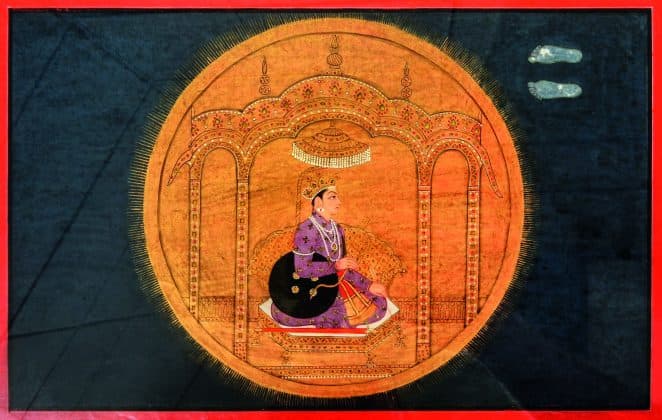
Dhruva was a devoted ascetic of Vishnu, mentioned in the Vishnu Purana and Bhagavata Purana. Born a prince, he undertook severe austerities after being slighted by his stepmother, leading to a divine encounter with Vishnu. His devotion and renunciation earned him the eternal position of the Pole Star.
Brahmacharini
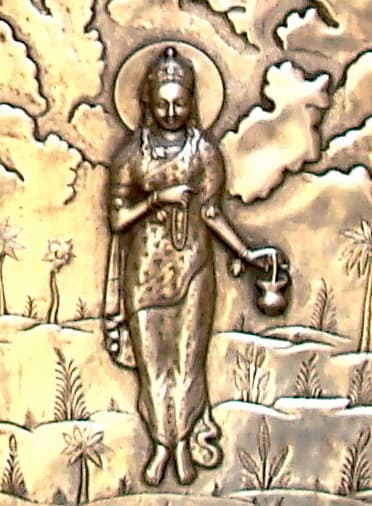
Brahmacharini is a form of the Hindu goddess Mahadevi, revered as Parvati when she embodies the persona of a female ascetic. As the second of the Navadurga, she is worshipped on the second day of Navaratri, symbolizing her arduous penance to win Shiva's hand in marriage. Her iconography often depicts her in white, holding a rosary and a water pot.
Dakshinamurti
Dakshinamurti is a South-facing aspect of the Hindu god Shiva, embodying him as the ultimate guru, the personification of supreme awareness, understanding, and knowledge. He is revered as the god of wisdom and meditation, teaching yoga, music, and the Shastras, and is depicted as the destroyer of ignorance. His iconography often features four arms, seated under a banyan tree, with a mudra signifying knowledge, and his presence is a significant element in Shiva temples.