
Brahmacharini
Brahmacharini is a form of the Hindu goddess Mahadevi, revered as Parvati when she embodies the persona of a female ascetic. As the second of the Navadurga, she is worshipped on the second day of Navaratri, symbolizing her arduous penance to win Shiva's hand in marriage. Her iconography often depicts her in white, holding a rosary and a water pot.
Key Facts
- ›Brahmacharini is the second of the Navadurga, a group of nine forms of the goddess Durga.
- ›She is worshipped on the second day of the Navaratri festival.
- ›Her name signifies a woman devoted to pursuing sacred religious knowledge through ascetic practices.
- ›She is depicted in white attire, holding a japamala (rosary) and a kamandalu (water pot).
- ›The legend describes her undertaking severe penance for 5,000 years to marry Shiva.
- ›She is considered a form of Parvati in her ascetic manifestation.
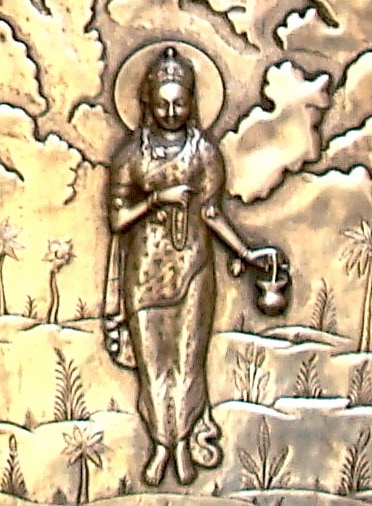
Depicted Wearing White Clothes, Holding A Japamala In Her Right Hand, Holding A Kamandalu In Her Left Hand
Form of Mahadevi, Venerated As Parvati
Navaratri
- Maa Brahmacharini Devi Durga Mandir At Hanuman Ganj, Ballia, Uttar Pradesh
About Brahmacharini
Who is Brahmacharini?
Brahmacharini is a significant form of the Hindu goddess Mahadevi, venerated as a manifestation of Parvati in her aspect as a female ascetic. She holds the distinction of being the second of the Navadurga, a group of nine distinct forms of the goddess Durga, and is specifically worshipped on the second day of the Navaratri festival. Her worship embodies the principles of penance, devotion, and the steadfast pursuit of spiritual knowledge.
Legend and Significance
The legend of Brahmacharini recounts the arduous penance undertaken by Parvati, who resolved to marry Lord Shiva. Despite her parents' attempts to dissuade her, she remained resolute and embarked on a spiritual austerity said to have lasted for 5,000 years. During this period, she adopted an ascetic way of life, dwelling in the mountains, practicing intense yoga, and subsisting on minimal fare. This profound dedication and unwavering resolve in her spiritual quest earned her the name Brahmacharini, signifying a woman devoted to pursuing sacred religious knowledge. Her perseverance eventually caught Shiva's attention, leading to their marriage.
Iconography
In her iconography, Brahmacharini is depicted in a serene manner, typically adorned in white garments. She is classically portrayed holding a japamala, or rosary, in her right hand, symbolizing her continuous meditation and prayer, and a kamandalu, a water pot often associated with ascetics, in her left hand. These attributes highlight her ascetic nature and her deep spiritual practice.
Worship and Temples
Brahmacharini is revered during the Navaratri festival, a nine-night celebration honoring the divine feminine. Her worship on the second day emphasizes the importance of austerity, self-discipline, and spiritual dedication. A notable temple dedicated to her is the Maa Brahmacharini Devi Durga Mandir, located in Hanuman ganj, Ballia, Uttar Pradesh, India, which serves as a pilgrimage site for devotees.
Source: Wikipedia ↗
Frequently Asked Questions
Who is Brahmacharini?
Brahmacharini is a form of the Hindu goddess Mahadevi, specifically a manifestation of Parvati as a female ascetic. She is revered as the second of the Navadurga and is worshipped on the second day of Navaratri.
What does the name Brahmacharini mean?
The name Brahmacharini derives from Sanskrit roots meaning 'one who is engaged in Brahma' or 'one who pursues sacred knowledge.' In Vedic texts, it refers to a woman dedicated to studying sacred knowledge.
What is the legend behind Brahmacharini?
According to legend, Parvati undertook severe penance for 5,000 years, living an ascetic life, to win the heart of Shiva. This rigorous asceticism and unwavering resolve led her to be known as Brahmacharini.
How is Brahmacharini depicted in iconography?
Brahmacharini is typically depicted wearing white clothes. She is shown holding a japamala (rosary) in her right hand and a kamandalu (water pot) in her left hand.
What is Brahmacharini's significance during Navaratri?
Brahmacharini is worshipped on the second day of Navaratri, a major Hindu festival. Her worship signifies perseverance, devotion, and the pursuit of spiritual knowledge through asceticism.
Related Hindu deities
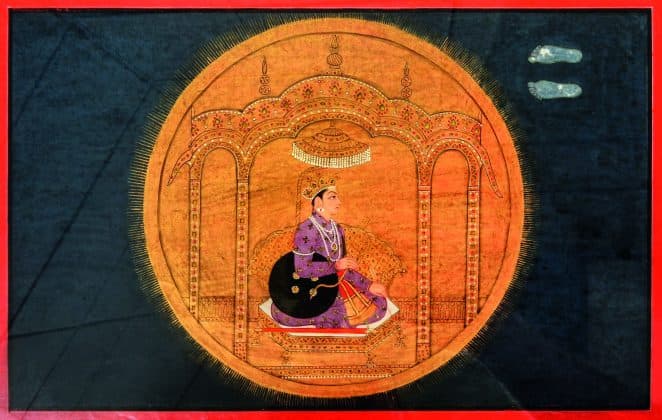
Dhruva
Dhruva was a devoted ascetic of Vishnu, mentioned in the Vishnu Purana and Bhagavata Purana. Born a prince, he undertook severe austerities after being slighted by his stepmother, leading to a divine encounter with Vishnu. His devotion and renunciation earned him the eternal position of the Pole Star.
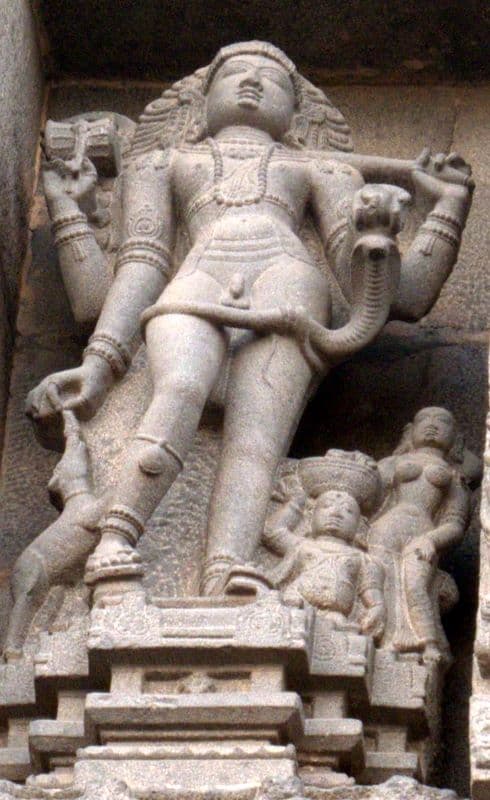
Bhikshatana
Bhikshatana is an aspect of the Hindu god Shiva, known as the "Supreme mendicant" or "Supreme Beggar." He is depicted as a nude, four-armed figure holding a begging bowl, often followed by goblin attendants and infatuated women. Bhikshatana represents a gentler phase of Shiva's fierce aspect, Bhairava, and is particularly associated with Shiva's atonement for the sin of severing one of Brahma's heads.
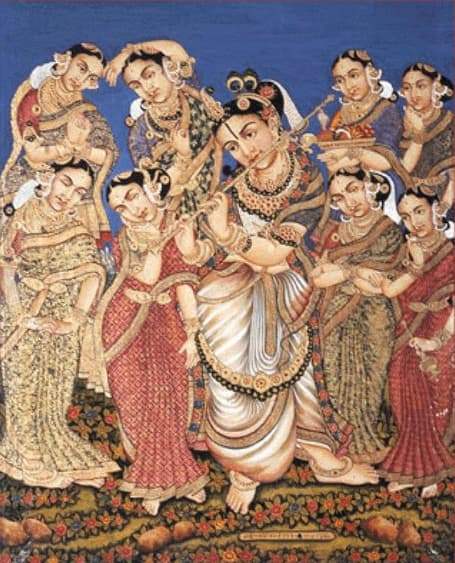
Ashtabharya
The Ashtabharya are the eight principal queen-consorts of the Hindu deity Krishna, who was the king of Dvaraka. These queens, often princesses, are revered as avatars of the goddess Lakshmi and play significant roles in various Hindu scriptures. They symbolize different aspects of Krishna's sovereignty and are central figures in narratives of his life and divine play.