
Ashtabharya
The Ashtabharya are the eight principal queen-consorts of the Hindu deity Krishna, who was the king of Dvaraka. These queens, often princesses, are revered as avatars of the goddess Lakshmi and play significant roles in various Hindu scriptures. They symbolize different aspects of Krishna's sovereignty and are central figures in narratives of his life and divine play.
Key Facts
- ›The Ashtabharya are the eight principal wives of Krishna.
- ›They are primarily listed in the Bhagavata Purana, with variations in other texts like the Vishnu Purana and Harivamsa.
- ›Most of the Ashtabharya were princesses by birth.
- ›They are all considered avatars or manifestations of the goddess Lakshmi.
- ›They are symbolic of Krishna's sovereignty, representing his majesty, realm, and clan.
- ›Krishna fathered many children with the Ashtabharya, including the prominent crown-prince Pradyumna.
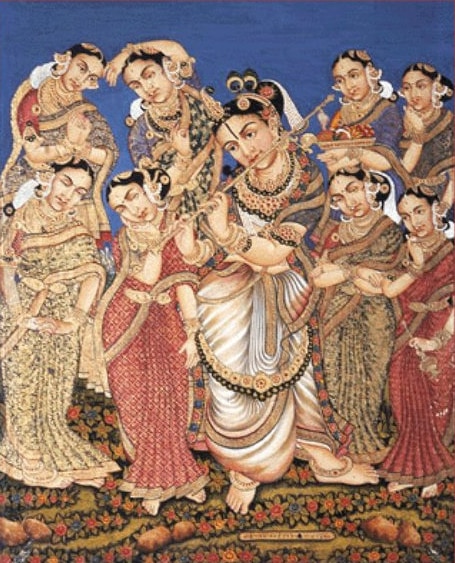
Ashta-bharya(s)
Bhagavata Purana, Vishnu Purana, Harivamsa, Padma Purana, Vishnu Dharmottara Purana, Devi Bhagavata Purana
Pradyumna
About Ashtabharya
The Ashtabharya
The Ashtabharya, also known as Ashta-bharya(s), refers to the group of eight principal queen-consorts of the Hindu deity Krishna, who reigned as the king of Dvaraka in the Dvapara Yuga. These queens, predominantly princesses, are revered in Hinduism as divine figures, often considered avatars or manifestations of the goddess Lakshmi.
Significance and Symbolism
The Ashtabharya hold considerable symbolic importance, representing different aspects of Krishna's sovereignty and divine authority. The hierarchy and roles of these wives are interpreted to symbolize Krishna's majesty and the extent of his kingdom. For instance, Rukmini, his first wife, is seen as an avatar of Shri (goddess of prosperity), symbolizing wealth and majesty, while Satyabhama, representing the earth-goddess Bhudevi, embodies the kingdom itself. Other queens represent different regions or noble lineages within Krishna's realm.
Key Figures and Narratives
The most widely recognized list of the Ashtabharya appears in the Bhagavata Purana and includes Rukmini, Jambavati, Satyabhama, Kalindi, Nagnajiti, Mitravinda, Lakshmana, and Bhadra. Variations exist in other scriptures like the Vishnu Purana and Harivamsa, which might name queens such as Madri or Rohini instead of Bhadra. Krishna fathered numerous children with these wives, the most notable being Pradyumna, the crown prince and a rebirth of Kamadeva, the god of love.
Narratives often highlight specific consorts. Rukmini, the princess of Vidarbha, is depicted as Krishna's first and primary wife, whom he abducted to marry. Satyabhama, known for her beauty and courage, is famed for accompanying Krishna in his battle against the demon Narakasura. Stories also touch upon the symbolic weighing of Krishna by Satyabhama, often contrasted between scriptural accounts emphasizing devotion and folkloric tales highlighting rivalry.
Source: Wikipedia ↗
Frequently Asked Questions
Who are the Ashtabharya?
The Ashtabharya are the eight chief queen-consorts of Lord Krishna, the king of Dvaraka. They are considered divine figures and are often depicted as manifestations of the goddess Lakshmi.
What is the significance of the Ashtabharya?
They hold significant symbolic meaning, representing different facets of Krishna's kingship and divine power. They are also revered as embodiments of prosperity and are prominent in various Hindu scriptures.
Which scriptures mention the Ashtabharya?
The most popular list of the Ashtabharya is found in the Bhagavata Purana. Variations in their names appear in other important texts such as the Vishnu Purana and the Harivamsa.
Are the Ashtabharya considered divine beings?
Yes, all of Krishna's chief consorts, including the Ashtabharya, are revered as avatars of the goddess Lakshmi. Specific wives are associated with aspects like prosperity, the earth goddess, and victory.
What is the relationship between the Ashtabharya and Lakshmi?
The Ashtabharya are considered avatars or manifestations of the goddess Lakshmi. For instance, Rukmini is seen as an avatar of Sridevi (goddess of prosperity), and Satyabhama is an aspect of Bhudevi (earth-goddess).
Did Krishna have many children with the Ashtabharya?
Yes, the scriptures mention that Krishna fathered numerous children with the Ashtabharya. The most well-known among them is Pradyumna, the crown prince, who is also considered the rebirth of Kamadeva, the god of love.
Related Hindu deities

Indrani
Indrani, also known as Shachi and Paulomi, is the queen of the devas and the consort of Indra, the king of the gods in Hinduism. Revered for her beauty and sensuality, she is also recognized as one of the Sapta Matrikas, or divine mothers. While rarely worshipped independently, she is an important goddess in Shaktism and is often venerated alongside Indra.
Niladevi
Niladevi, also known as Nappinnai, is a Hindu goddess primarily revered in South India as one of Vishnu's consorts. Within the Sri Vaishnava tradition, she is considered an aspect of Lakshmi, alongside Sridevi and Bhudevi. She is particularly significant in Tamil culture as a favorite gopi of Krishna, whom Krishna won in marriage by subduing fierce bulls.
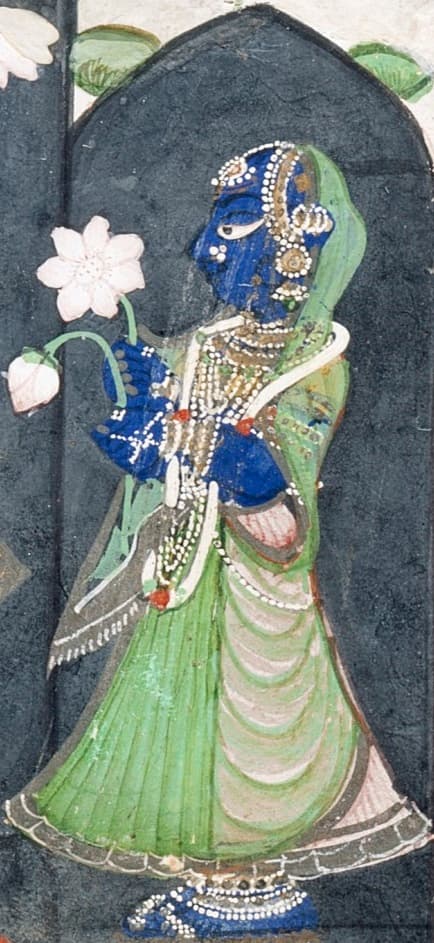
Revati
Revati is a goddess in Hindu scriptures, known as the consort of Balarama and the daughter of King Kakudmi. Her myth involves a significant temporal displacement, where she and her father traveled to Brahmaloka, returning to find 27 Chatur-yugas had passed on Earth. She is also associated with mother goddesses, fortune, and prosperity.