
Revati
Revati is a goddess in Hindu scriptures, known as the consort of Balarama and the daughter of King Kakudmi. Her myth involves a significant temporal displacement, where she and her father traveled to Brahmaloka, returning to find 27 Chatur-yugas had passed on Earth. She is also associated with mother goddesses, fortune, and prosperity.
Key Facts
- ›Consort of Balarama, elder brother of Krishna.
- ›Daughter of King Kakudmi.
- ›Her marriage to Balarama involved a physical adjustment due to her greater height from a previous Yuga.
- ›Associated with the nakshatra (lunar mansion) Revati, symbolizing nourishment and prosperity.
- ›Her account is found in texts like the Mahabharata and Bhagavata Purana.
- ›Originally a mother goddess capable of destruction, later assimilated with aspects of Lakshmi.
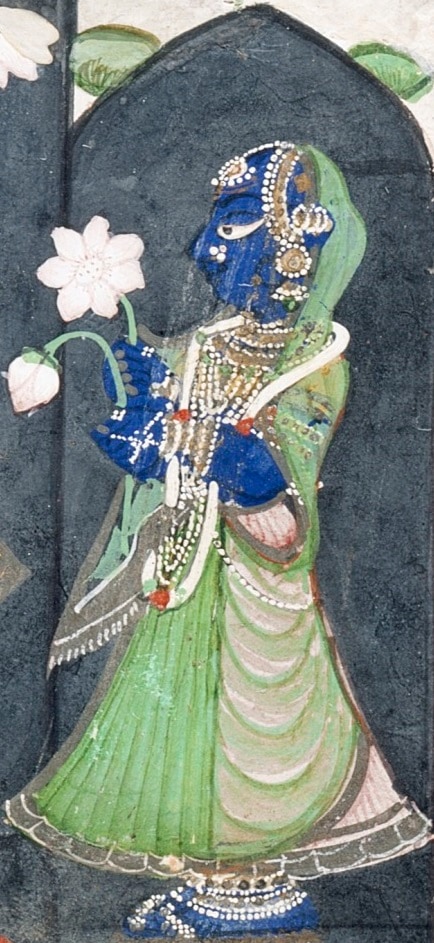
Revatī, Nagalakshmi (incarnation), Shasthi (associated with), Rematī (in Tibetan Buddhism)
- Associated With the Vixen Shalavriki and the Jataharini Form.
- Depicted With A Reddish Glow and Wearing Red Silk Garments In Some Traditions.
- Sometimes Shown In A Boon-Granting Gesture.
- Mahabharata
- Bhagavata Purana
- Vishnu Purana
- Devi Bhagavata Purana
- Balabhadra Mahatmya
- āRyamañJuśRīMūLakalpa
- MahāSāHasrapramardanī Sutra
- Dharani Sutra For the Protection of All Children
- Kangyur
Daughter of King Kakudmi, Consort of Balarama, Mother of Nishatha and Ulmuka
- Worshipped On the Sixth Day After A Child's Birth .
Dvaraka
Nishatha, Ulmuka
Plough
Fish
About Revati
Revati is a significant goddess in Hindu scriptures, renowned as the consort of Balarama, the elder brother of Lord Krishna, and the daughter of King Kakudmi. Her mythology is particularly notable for the tale of temporal displacement, where her father's visit to Brahmaloka resulted in the passage of 27 Chatur-yugas on Earth before their return.
Origin and Early Associations
Initially, Revati is depicted as a powerful mother goddess capable of great destruction. In this capacity, she was invoked to combat demons, even taking the form of a vixen named Shalavriki. Later traditions associate her with Shasthi, a deity revered for protecting children, and she was particularly worshipped by childless couples on the sixth day after a child's birth. Her connection to fortune and wealth led to her assimilation with Lakshmi, symbolic of her marriage to Balarama, an avatar of Vishnu.
The Legend of Time and Marriage
The legend of Revati, as narrated in texts like the Vishnu Purana, centers on her father Kakudmi's search for a suitable husband. Dissatisfied with earthly princes, he took Revati to Brahmaloka. Upon their return, they were shocked to find that millennia had passed, and humanity had devolved. Brahma advised Kakudmi to marry Revati to Balarama. When they met, Revati was considerably taller than Balarama due to her origin in an earlier era. Balarama, using his characteristic plough, adjusted her height to match his, and their marriage was celebrated.
Significance and Symbolism
Revati is linked to the nakshatra (lunar mansion) of the same name, which is symbolized by a fish and represents nourishment, movement, and prosperity. This nakshatra marks the end of the lunar mansions and is considered auspicious for new beginnings requiring endurance and protection. The astronomical counterpart of the nakshatra Revati is the star Zeta Piscium in the constellation Pisces. In Vedic traditions, Revati is associated with fertility, abundance, and safe transitions, with her position at the end of the zodiac symbolizing spiritual completion and detachment from material concerns.
Later Traditions and Buddhist Influence
In some interpretations, Revati is considered an incarnation of Nagalakshmi, the consort of Shesha. Her myths also extend to Tibetan Buddhism, where a goddess named Rematī is often conflated with Revatī. In this context, she is sometimes depicted as a rakshasi associated with childhood illnesses and mortality, appearing to children in the form of a dog and being one of fifteen grahas that alarm them. The Āryamañjuśrīmūlakalpa describes her as a yakshini invoked with specific mantras and iconography.
Source: Wikipedia ↗
Frequently Asked Questions
Who is Revati?
Revati is a goddess in Hindu scriptures, primarily known as the consort of Balarama and the daughter of King Kakudmi. She is also recognized as a mother goddess associated with fortune and prosperity.
What is the story of Revati's marriage?
King Kakudmi, seeking a husband for his daughter Revati, took her to Brahmaloka. Upon their return, they discovered that 27 Chatur-yugas had passed on Earth. Brahma recommended Balarama as a suitable husband, and despite Revati being taller, Balarama adjusted her height with his plough, and they were married.
What is Revati's connection to Balarama?
Revati is the consort of Balarama, the elder brother of Lord Krishna. Their marriage is a significant event in her mythology, highlighting themes of time and divine unions.
What is the significance of the nakshatra Revati?
The nakshatra Revati is symbolized by a fish and is associated with nourishment, movement, and prosperity. It marks the end of the lunar mansions and is considered auspicious for beginnings requiring endurance and protection.
What are Revati's origins as a goddess?
Revati originally emerged as a mother goddess with destructive capabilities, invoked to fight demons. She later became associated with Shasthi, a deity of children, and was revered by childless couples. Her association with fortune led to her assimilation with Lakshmi.
What scriptures mention Revati?
Revati's account is featured in several Hindu texts, including the Mahabharata and the Bhagavata Purana. Her story is also narrated in the Vishnu Purana.
Related Hindu deities
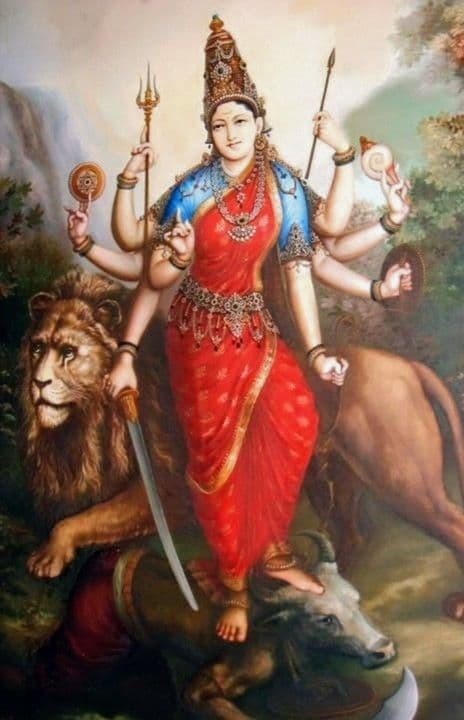
Durga
Durga is a prominent Hindu deity, widely worshipped in Shaktism as the principal aspect of Mahadevi, the Ultimate Reality. She is revered for her protective, motherly, and warrior attributes, symbolizing the triumph of good over evil. Legends often depict her battling demonic forces that threaten cosmic order, and she is a central figure in festivals like Durga Puja and Navaratri.
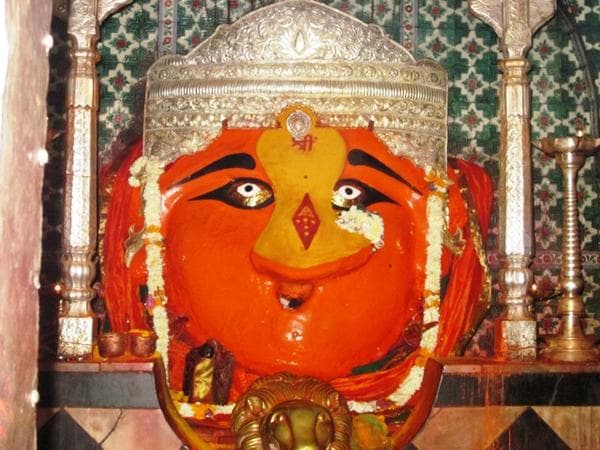
Renuka
Renuka is a prominent Hindu goddess, primarily worshipped in South and West India. She is revered as the wife of sage Jamadagni and the mother of Parashurama, an avatar of Vishnu. Renuka is considered a manifestation of Shakti, the Mother Goddess, and is known for her devotion and protective qualities.
Pṛthivī
Pṛthivī is the Hindu goddess personifying the Earth, revered as the archetypal Mother Goddess. In Vedic texts, she is often depicted as a stable, fertile, and benevolent provider of sustenance, frequently associated with Dyaus, the sky god. In later Hinduism, her role is often taken by the goddess Bhumi, and Pṛthivī becomes an epithet, with her figure significantly linked to Vishnu.