
Pṛthivī
Pṛthivī is the Hindu goddess personifying the Earth, revered as the archetypal Mother Goddess. In Vedic texts, she is often depicted as a stable, fertile, and benevolent provider of sustenance, frequently associated with Dyaus, the sky god. In later Hinduism, her role is often taken by the goddess Bhumi, and Pṛthivī becomes an epithet, with her figure significantly linked to Vishnu.
Key Facts
- ›Pṛthivī is the Sanskrit name for the Earth and its personified goddess in Hinduism.
- ›She is an archetypal Mother Goddess, symbolizing stability, fertility, and nurturing.
- ›In Vedic scriptures, she is often paired with Dyaus (Father Sky) as the divine parents of creation.
- ›In classical Hinduism, the goddess Bhumi largely supplants her, though Pṛthivī remains an epithet.
- ›She is adopted into Buddhism, playing a vital role in the Buddha's enlightenment as a witness.
- ›The mythological figure Prithu, meaning 'broad', is connected to her name and story.
Pṛthivī Mātā, Bhūmi, Bhudevi
- Often Depicted As A Stable, Fertile, and Benevolent Presence.
- In Buddhist Art, She May Emerge From the Earth With Her Head and Torso Visible.
- Sometimes Shown With A Vase of Plenty, Brimming With Jewels Or Lotuses.
Rigveda, Atharva Veda, Yajurveda, Brahmanas, PāLi Canon
Consort of Dyaus, Consort of Indra, Consort of Prajapati, Associated With Vishnu
Cow
Personification of Earth
About Pṛthivī
Pṛthivī: The Earth Mother Goddess
Pṛthivī is a prominent goddess in Hinduism, personifying the Earth itself. Known in Sanskrit as "the Vast One" or "Mother Earth" (Pṛthivī Mātā), she is recognized as an archetypal Mother Goddess, embodying stability, fertility, and the nurturing provider of sustenance for all life. Her significance spans ancient Vedic traditions to later Hindu mythology and even extends to Buddhist cosmology.
Role in Vedic Scriptures
In the historical Vedic religion, Pṛthivī is a crucial deity. She is often depicted as a stable, fertile, and benevolent presence, frequently addressed as a mother who generously supplies all beings. While the Rigveda predominantly associates her with Dyaus, the sky god, forming the dual entity Dyavaprithivi symbolizing the cosmic union of heaven and earth, the Atharvaveda and later texts increasingly present her as an independent deity. The Pṛthvī Sūkta within the Atharvaveda is dedicated solely to her, highlighting her greatness and fertility, and mentioning Indra as her protector.
Transformation in Later Hinduism and Buddhism
As Hindu traditions evolved, the figure of Pṛthivī underwent transformation. In classical Hinduism, her role as the primary Earth goddess is often supplanted by the goddess Bhumi (or Bhudevi), with Pṛthivī becoming one of her epithets. This later depiction frequently associates her with Vishnu, particularly in his avatars such as Varaha and Prithu. In Buddhist tradition, Pṛthivī retains her essential qualities of nurturing and upholding cosmic order. She plays a vital role during the moment of Shakyamuni Buddha’s enlightenment, appearing as a witness to his virtue and dispelling the forces of Mara, thus symbolizing the Earth's support for righteous spiritual progress.
Source: Wikipedia ↗
Frequently Asked Questions
Who is Pṛthivī in Hinduism?
Pṛthivī is the Hindu goddess who personifies the Earth. She is revered as an archetypal Mother Goddess, symbolizing stability, fertility, and the provider of sustenance to all beings.
What is Pṛthivī's role in the Vedas?
In the Vedic period, Pṛthivī was predominantly associated with the Earth and often paired with Dyaus (the sky god) as the divine parents. She represented the terrestrial realm and was seen as a nurturing, benevolent presence.
How is Pṛthivī depicted in later Hinduism?
In classical and later Hinduism, the figure of Pṛthivī is often supplanted by the goddess Bhumi, who becomes the primary personification of the Earth. Pṛthivī then serves as one of Bhumi's epithets. She is also significantly associated with Vishnu.
What is Pṛthivī's significance in Buddhism?
In Buddhism, Pṛthivī is considered the first goddess to appear in early Buddhist texts. She plays a vital role during the moment of Shakyamuni Buddha's enlightenment, acting as a witness and dispelling the forces of Mara.
What are some key epithets of Pṛthivī?
Pṛthivī is known by numerous epithets highlighting her nurturing and sustaining qualities, such as Bhumi ('Soil'), Medinī ('Fertile one'), Janitrī ('Birthplace'), Dhātrī ('Nursing mother'), and Vasundharā ('Bearer of treasure').
Related Hindu deities
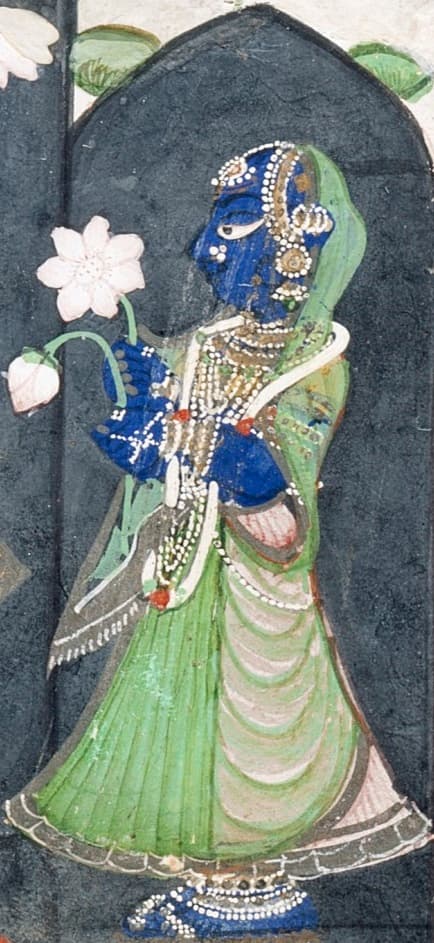
Revati
Revati is a goddess in Hindu scriptures, known as the consort of Balarama and the daughter of King Kakudmi. Her myth involves a significant temporal displacement, where she and her father traveled to Brahmaloka, returning to find 27 Chatur-yugas had passed on Earth. She is also associated with mother goddesses, fortune, and prosperity.
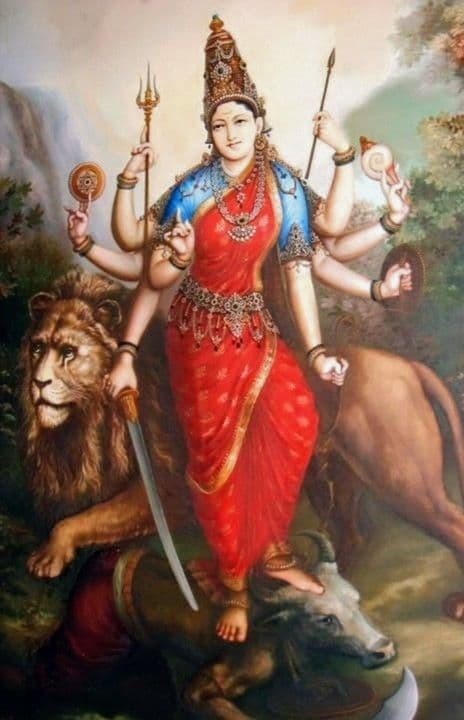
Durga
Durga is a prominent Hindu deity, widely worshipped in Shaktism as the principal aspect of Mahadevi, the Ultimate Reality. She is revered for her protective, motherly, and warrior attributes, symbolizing the triumph of good over evil. Legends often depict her battling demonic forces that threaten cosmic order, and she is a central figure in festivals like Durga Puja and Navaratri.
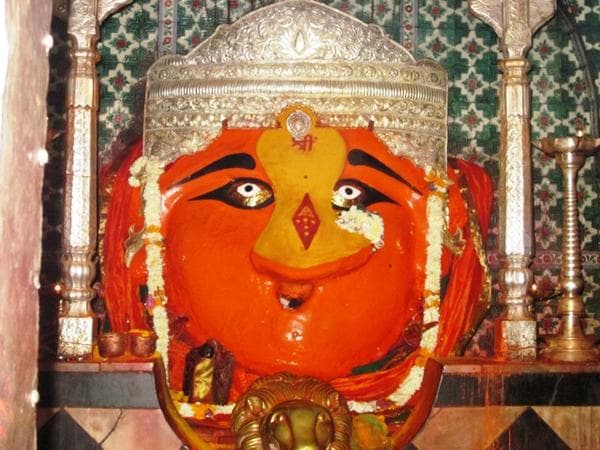
Renuka
Renuka is a prominent Hindu goddess, primarily worshipped in South and West India. She is revered as the wife of sage Jamadagni and the mother of Parashurama, an avatar of Vishnu. Renuka is considered a manifestation of Shakti, the Mother Goddess, and is known for her devotion and protective qualities.