
Bhumi
Bhumi is the Hindu goddess of the Earth, also known as Bhudevi, Dharani, and Vasundhara. She is a prominent figure in major Hindu texts and often depicted as a supplicant seeking Vishnu's aid against evil forces. Bhumi is revered in Vaishnava traditions, particularly in South India, where she is sometimes considered Vishnu's secondary consort.
Key Facts
- ›Bhumi is the personification of the Earth goddess in Hinduism.
- ›She is often depicted appealing to Lord Vishnu for protection against demons and corrupt rulers.
- ›Vishnu has taken avatars, such as Varaha and Prithu, to rescue and benefit Bhumi.
- ›She is considered the mother of the asura Naraka and the divine child Mangala.
- ›Sita, the protagonist of the Ramayana, is regarded as Bhumi's daughter.
- ›Bhumi is revered in Vaishnava sects and is sometimes seen as a secondary consort of Vishnu.
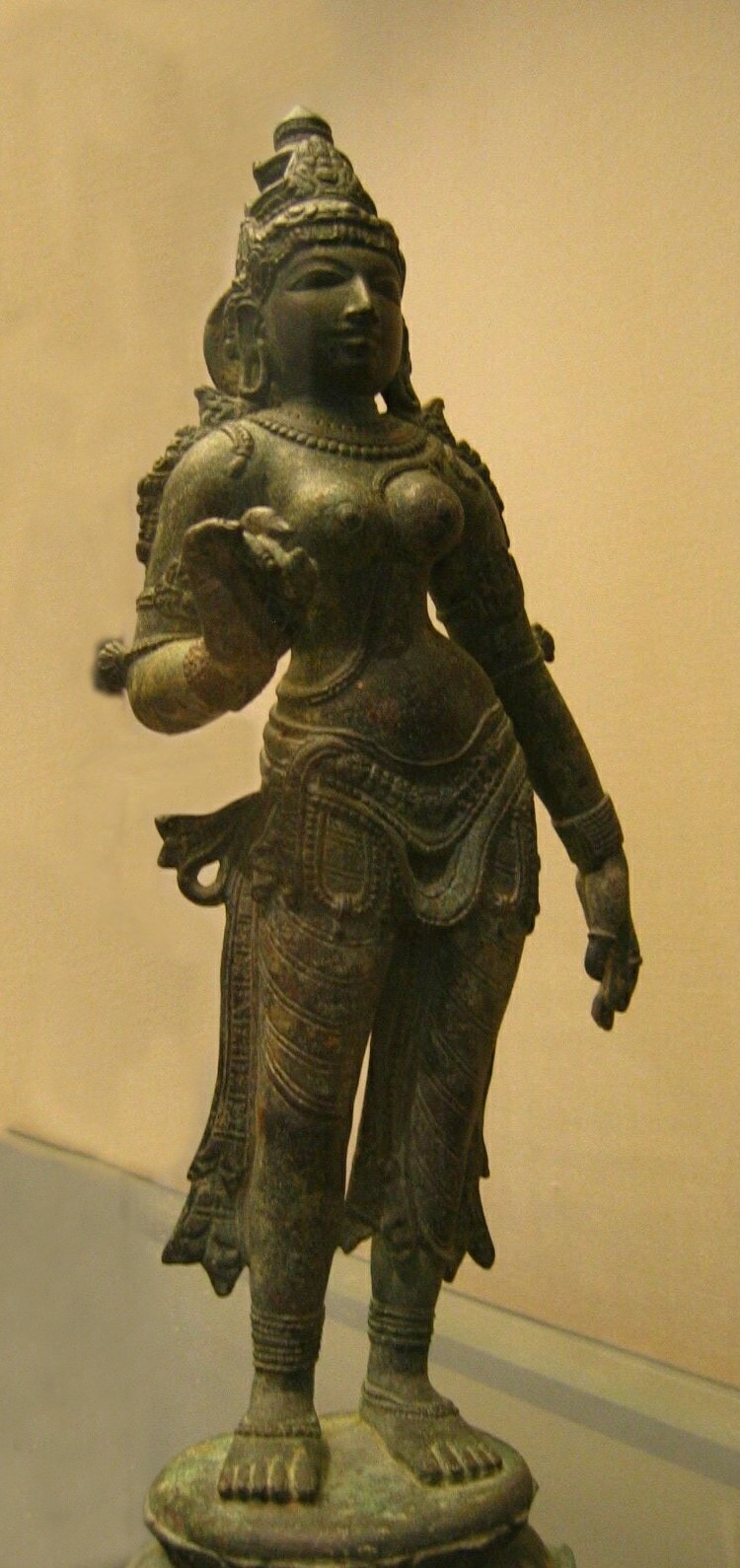
Bhudevi, Dharani, Vasundhara, Prithvi, Bhuvaneshwari, Avni, Dharti, Vaishnavi, Kashyapi, Urvi, Ira, Mahi, Ela, Vasumati, Dhanshika, Hema, Hiranmaya, Bhumija
- Seated On A Platform Resting On Four Elephants
- Four Arms Holding A Pomegranate, A Water Vessel, A Bowl Containing Healing Herbs, and Another Bowl Containing Vegetables
- Two Hands Holding A Blue Lotus
- Left Hand In Abhayamudra Or Lolahasta Mudra
- Depicted In the Form of A Cow
Mahabharata, Ramayana, Puranas, Padma Purana, Devi Bhagavata Purana
- Daughter of Brahma
- Born From the Remains of Rakshasas Madhu and Kaitabha
- Mother of Mangala
- Mother of Naraka
- Mother of Sita
- Consort of Varaha
- Incarnates As Satyabhama, Queen of Krishna
Raja Festival
Mangala, Naraka, Sita
Cow
About Bhumi
Bhumi: Goddess of the Earth
Bhumi, also widely known as Bhudevi, Dharani, and Vasundhara, is the principal Earth goddess in Hinduism. She represents the fertile ground and the planet itself, playing a crucial role in Hindu cosmology and mythology. While the early Vedic period personified the earth as the goddess Prithvi, Bhumi rose to prominence in the post-Vedic era, though Prithvi remains a significant epithet for her.
Mythology and Significance
Bhumi is frequently depicted in major Hindu scriptures like the Mahabharata, Ramayana, and various Puranas. Her mythological narratives often portray her as a distressed figure, suffering under the oppression of demons or corrupt rulers. In these instances, she appeals to Lord Vishnu for help. Vishnu has intervened on her behalf through his divine avatars; most notably, he assumed the form of Varaha (a boar) to rescue her from the clutches of the asura Hiranyaksha, and later as King Prithu, he 'milked' the Earth (in her cow form) to restore resources for all beings.
Bhumi is also recognized as the mother of the asura Naraka and the divine being Mangala (Mars). In a significant narrative, she incarnates as Satyabhama, the queen of Vishnu's avatar Krishna, to play a role in defeating her son Naraka. Furthermore, Sita, the revered female protagonist of the Ramayana and wife of Rama, is considered a daughter of Bhumi, emerging from the Earth itself.
Worship and Iconography
Bhumi commands reverence, particularly within Vaishnava traditions, especially in South India, where she is sometimes regarded as a secondary consort to Vishnu, alongside Lakshmi. Some traditions, such as Sri Vaishnavism, consider her an aspect of Lakshmi. Iconographically, Bhumi is often depicted holding a pomegranate and a blue lotus. She may be shown with four arms, bearing symbols like a water vessel, healing herbs, or vegetables, or with two arms, one holding the blue lotus and the other in a gesture of fearlessness or an aesthetic pose. She is also sometimes represented in the form of a cow.
Festivals and Epithets
The Raja festival, celebrated in Odisha, is a significant three-day event dedicated to Bhudevi, honoring womanhood and agriculture. During this festival, Bhumi is venerated as a symbol of motherhood, femininity, and fertility, marking the onset of the monsoon. She is known by a multitude of names, including Bhuvati, Bhuvani, Bhuvaneshwari, Avni, Prithvi, Dharti, Dhaatri, Dharani, Vasudha, Vasundhara, Vaishnavi, Kashyapi, Urvi, Ira, Mahi, Ela, Vasumati, Dhanshika, Hema, and Hiranmaya, each highlighting different aspects of her divine nature as the Earth.
Source: Wikipedia ↗
Frequently Asked Questions
Who is Bhumi in Hinduism?
Bhumi is the Hindu goddess of the Earth, also known by names such as Bhudevi, Dharani, and Vasundhara. She represents the Earth and its fertility in Hindu mythology and worship.
What is Bhumi known for in Hindu mythology?
Bhumi is known for her role in mythological narratives where she often appears oppressed by evil forces and seeks the intervention of Lord Vishnu for her rescue and protection. She is also central to stories about the creation and sustenance of the world.
What are some of Bhumi's significant epithets or alternative names?
Bhumi is known by many names, including Prithvi, Dharani, Vasundhara, Avni, Dharti, and Bhuvaneshwari. Prithvi, in particular, was an earlier personification of the Earth goddess whom Bhumi later supplanted.
How is Bhumi depicted in iconography?
Iconographically, Bhumi is often depicted with four arms, holding symbols like a pomegranate, a water vessel, a bowl of healing herbs, and a bowl of vegetables. She may also be shown with two hands, holding a blue lotus and displaying a gesture of fearlessness or an aesthetic pose.
What are some key mythological stories involving Bhumi?
Key myths include Lord Vishnu's Varaha avatar rescuing Bhumi from the demon Hiranyaksha, and Vishnu's Prithu avatar milking the Earth (Bhumi in cow form) to provide resources for all creatures. She also incarnates as Satyabhama to defeat her son, Naraka.
What is the significance of the Raja festival in relation to Bhumi?
The Raja festival in Odisha is dedicated to Bhudevi (Bhumi) and honors womanhood and agriculture. It marks the beginning of the monsoon, and during this time, Bhumi is revered as a symbol of motherhood, femininity, and fertility, with agricultural work being suspended to respect her rest.
Related Hindu deities
Devi Kanya Kumari
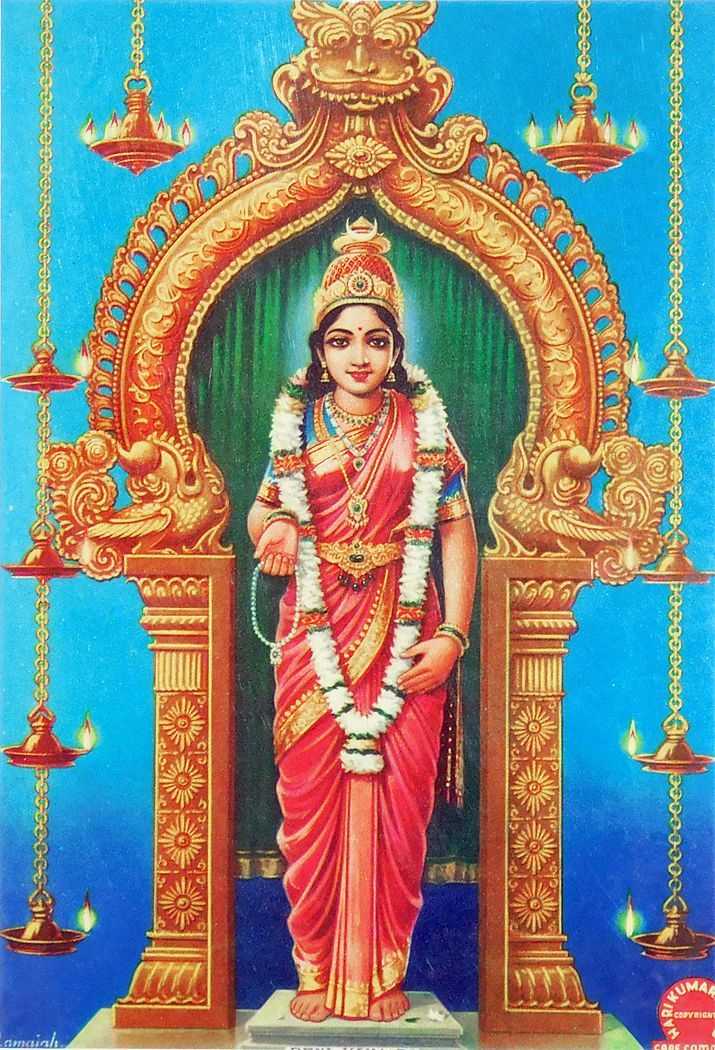
Devi Kanya Kumari is a prominent Hindu goddess, a manifestation of Mahadevi in the form of an adolescent girl. She is revered as a form of Parvati or Lakshmi, and is particularly known for her role in slaying the demon Banasura. Her worship is deeply tied to the town of Kanyakumari at the southernmost tip of India.

Chandraghanta
Chandraghanta is a powerful form of the Hindu goddess Mahadevi, revered as the destroyer of demons and the protector of her devotees. She is the third of the Navadurga and is prominently worshipped on the third day of Navaratri. Her name, meaning 'adorned with the moon as her bell,' refers to the crescent moon on her forehead, and she is depicted with ten arms holding various weapons and a bell.
Gayatri
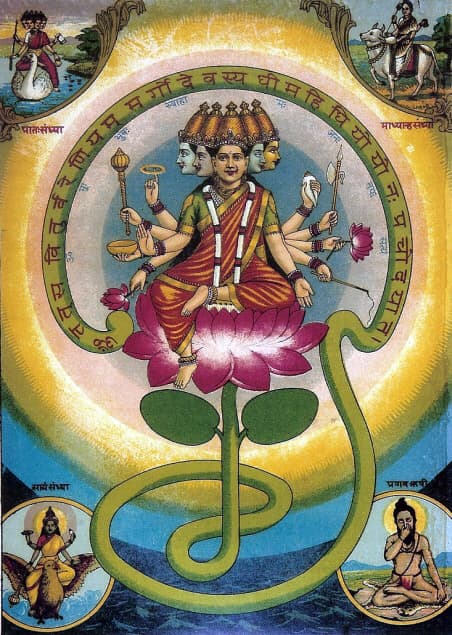
Gayatri is the personified form of the Gayatri Mantra, a significant hymn from Vedic texts, and is also known as Savitri and Vedamata ('mother of the Vedas'). She is considered a manifestation of Saraswati and is often associated with the solar deity Savitṛi, with whom she is sometimes depicted as the consort of the creator god Brahma in Puranic traditions. Gayatri is revered as the Supreme pure consciousness and a powerful goddess.