
Savitri
Saraswati is a principal Hindu goddess revered as the deity of knowledge, education, arts, music, and speech. She is part of the Tridevi, a trinity of chief goddesses, and is also venerated in Jainism and Buddhism. Originally associated with the Saraswati River, her significance evolved to encompass wisdom, creativity, and culture, making her a central figure in learning and the arts.
Key Facts
- ›Revered as the goddess of knowledge, education, learning, speech, arts, music, and creativity.
- ›Forms the Tridevi along with Lakshmi and Parvati.
- ›Originally a river goddess associated with the Saraswati River, she evolved to embody speech and wisdom.
- ›Linked to the creator god Brahma, sometimes as his consort or creation.
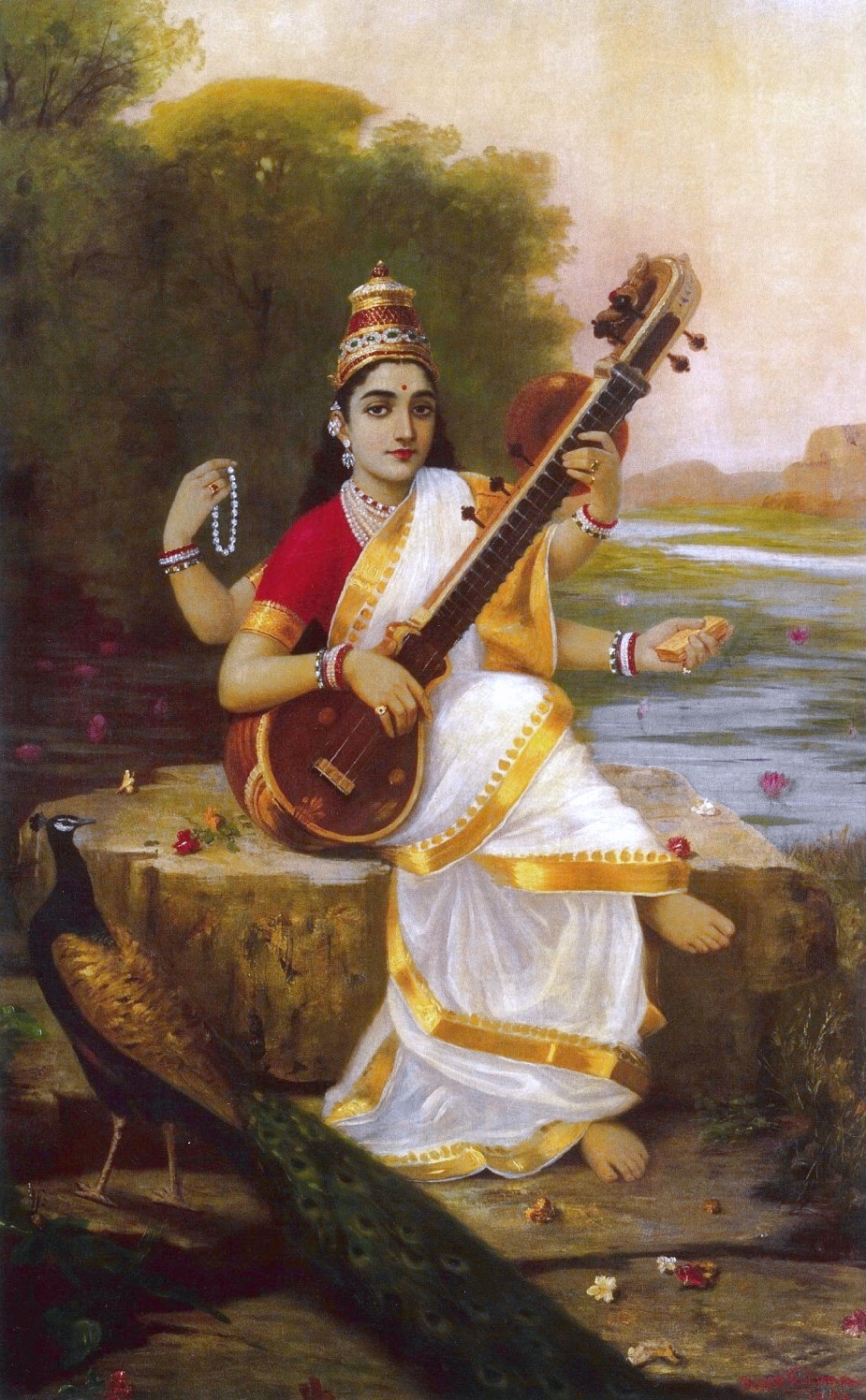
- ›Iconography typically features four arms holding a book, rosary, water pot, and veena.
- ›Her mount is often depicted as a hamsa (swan) or a peacock.
Sharada, Brahmani, Brahmi, Bharadi, Vani, Vachi, Varnesvari, Kavijihvagravasini, Ambika, Bharati, Chandrika, Devi, Gomati, Hamsasana, Saudamini, Shvetambara, Subhadra, Vaishnavi, Vasudha, Vidya, Vidyarupa, Vindhyavasini, Nāmagal (in Tamil literature), Thurathadi (Burmese), Tipitaka Medaw (Burmese), Biàncáitiān (Chinese), Benzaiten (Japanese), Suratsawadi (Thai), Saratsawadi (Thai)
Four Arms, Radiant White Complexion, White Attire, Holds A Book, Holds A Rosary, Holds A Water Pot, Holds A Veena
Rigveda, Atharva Veda, Yajur Veda, Brahmanas, Mahabharata, Ramayana, Puranas
- Associated With Brahma
- Considered A Manifestation of Mula Prakrti Or Shakti of Brahman
- Sometimes Considered A Consort of Vishnu
Vasant Panchami, Saraswati Puja, Saraswati Jayanti
Sharada Peeth
Cow, Mother
Principal Goddess
About Savitri
Saraswati
Saraswati is a principal goddess in Hinduism, revered across India and beyond for her association with knowledge, education, arts, music, speech, and culture. She is considered one of the Tridevi, a trinity of chief goddesses alongside Lakshmi and Parvati, representing the creative and intellectual aspects of the divine feminine.
Origins and Evolution
Initially venerated in the Vedic period (c. 1500–500 BCE) as a powerful river goddess, Saraswati's significance evolved over millennia. Her connection with the Saraswati River, a source of purification and fertility, gradually transformed into her role as the embodiment of "Vac" (speech) and inspired thought. This evolution is evident in later Vedic literature, where she becomes increasingly identified with knowledge, wisdom, and the arts.
Iconography and Symbolism
Saraswati is typically depicted as a serene woman with a radiant white complexion, symbolizing purity and the quality of sattva (goodness). She possesses four arms, each holding symbolic objects: a book representing the Vedas or sacred knowledge, a rosary for spiritual devotion, a water pot for purification, and a veena, a stringed musical instrument, signifying her dominion over music and the arts. Her mount is commonly a hamsa (white goose or swan), symbolizing discernment and purity, or a peacock, representing beauty and majesty.
Worship and Significance
Saraswati is a pan-Indian deity, with her worship extending to Jainism and Buddhism, where she is known by various names such as Benzaiten in Japan. In Hinduism, she is particularly honored on Vasant Panchami, a festival dedicated to her as the patron goddess of students and scholars. On this day, it is traditional to help young children learn to write, invoking her blessings for academic success and creative endeavors. Her association with Brahma, the creator god, as either his consort or his creation, further solidifies her role as the source of creative power and intellectual order, giving form and clarity to existence.
Source: Wikipedia ↗
Frequently Asked Questions
Who is Saraswati and what does she represent?
Saraswati is a principal goddess in Hinduism, revered as the goddess of knowledge, education, learning, speech, arts, poetry, music, creativity, sciences, purification, language, and culture. She represents wisdom, inspiration, and the purity of expression.
What is the origin of Saraswati?
Saraswati's origins are linked to the Saraswati River, where she was initially a river goddess. Over time, her association with the river transformed into her role as the goddess of speech and knowledge, particularly in later Vedic literature and the Brahmanas.
What are the key symbols associated with Saraswati?
Saraswati is typically depicted with four arms, holding a book (representing the Vedas), a rosary (representing spiritual power), a water pot (representing purification), and a veena (a musical instrument symbolizing the arts). Her mount is often a hamsa (swan) or a peacock.
What is Saraswati's relationship with other deities?
Saraswati is part of the Tridevi, a trinity of goddesses with Lakshmi and Parvati. She is also linked to Brahma, sometimes as his consort, representing his creative power. In some traditions, she is considered a consort of Vishnu.
When is Saraswati celebrated?
Saraswati is primarily celebrated on Vasant Panchami, the fifth day of spring, also known as Saraswati Puja or Saraswati Jayanti. This festival is dedicated to her as the patron goddess of knowledge and education, especially by students.
How is Saraswati depicted in different traditions?
In Hinduism, she is the goddess of knowledge and arts. In Buddhism, she is known as Benzaiten, and in Jainism, she is revered as the deity responsible for disseminating the teachings of the Tirthankaras.
Related Hindu deities

Narmada
The Narmada River, also known as Narbada or Nerbudda, is the fifth longest river in India and the longest west-flowing river. It is considered a goddess and a mother figure in Hinduism, revered for its sacredness and the banalinga pebbles found in its bed. The river originates from the Amarkantak Plateau and flows through Madhya Pradesh and Gujarat, forming a traditional boundary between North and South India.
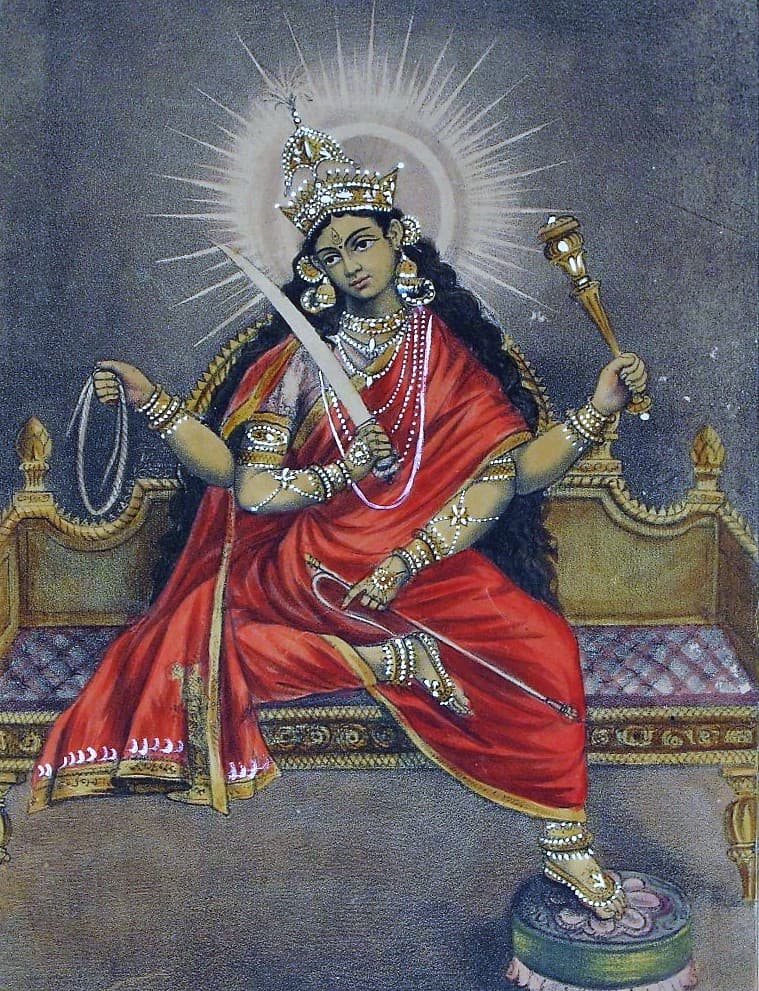
Matangi
Matangi is a significant Hindu goddess, revered as one of the Mahavidyas, a group of ten Tantric goddesses. She is considered a Tantric manifestation of Sarasvati, the deity of knowledge, music, and the arts, and is believed to govern speech, knowledge, and artistic expression. Her worship is sought for acquiring supernatural powers, controlling enemies, attracting others, and attaining supreme knowledge.
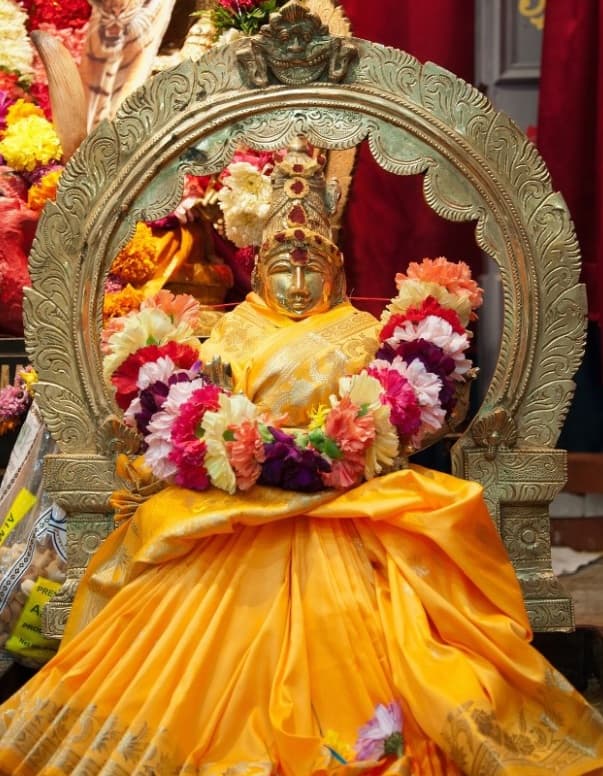
Bhuvaneshvari
Bhuvaneshvari is a prominent Hindu goddess, revered as the "Goddess of the world" or "Queen of the universe." She is the fourth of the ten Mahavidya goddesses and an important aspect of Mahadevi, considered a form of Adi Parashakti. Her name signifies her dominion over the three realms of existence: Earth, atmosphere, and Heavens.