
Kaumari
peacock·Female·Matrikas
Kaumari is one of the Matrikas, a group of mother goddesses in Hinduism, often depicted as the energy (Shakti) of the god Kartikeya. She is associated with war and protection, and her iconography typically includes a peacock mount and weapons like a spear. Kaumari is considered a significant deity within Shaktism and Tantrism, often depicted assisting in battles against demons.
Key Facts
- ›Kaumari is one of the Saptamatrikas (seven Mothers), a group of Hindu mother goddesses.
- ›She is considered the Shakti or divine energy of the god Kartikeya.
- ›Her iconography features a peacock as her vahana (mount) and she is often depicted with multiple arms.
- ›She is associated with warfare, protection, and the defeat of demons.
- ›Kaumari is prominently venerated in Shaktism and Tantric traditions.
- ›Her worship is linked to the conception, birth, and protection of children, as well as warding off diseases.
Kumari, Kartiki, Kartikeyani, Ambika
Rides A Peacock, Has Four Or Twelve Arms, Holds A Spear, Axe, Shakti, Or Tankas, Carries A Bow With Arrows, May Be Depicted As Six-Headed, Wears A Cylindrical Crown
Mahabharata, Devi Mahatmya, Varaha Purana, Agni Purana, Matsya Purana, Vishnudharmottara Purana, Agamas, Rupamandana
Spear, Axe, Shakti, Tankas, Bow, Arrows
About Kaumari
Kaumari is one of the Matrikas, a group of mother goddesses in Hinduism who are considered the energies (Shaktis) of major male deities. She is specifically identified as the Shakti of Kartikeya, the god of war. As part of the Saptamatrika (Seven Mothers) or sometimes Ashtamatrika (Eight Mothers) pantheon, Kaumari plays a significant role, particularly within the goddess-oriented traditions of Shaktism and Tantrism.
Iconography and Symbolism
Kaumari's iconography is closely tied to her divine patron, Kartikeya. She is depicted riding a peacock, her vahana (mount), and is often shown with multiple arms, holding weapons such as a spear, axe, or Shakti. Like Kartikeya, she may also be depicted with six heads. Her association with Kartikeya links her to warfare, victory, and the protection of the righteous.
Role and Significance
Historically, the Matrikas, including Kaumari, were associated with the conception, birth, and protection of children, as well as with warding off diseases. They were sometimes viewed with apprehension due to their formidable powers, but were propitiated to avert ills. In later mythology, they evolved into protective figures, often depicted assisting goddesses like Durga in their battles against demons. Kaumari's presence in these narratives highlights her role as a powerful warrior goddess, embodying both fierce and nurturing aspects of the divine feminine. Her worship became prevalent from the seventh century CE onwards, with sculptural representations becoming a standard feature in temples from the ninth century CE.
Source: Wikipedia ↗
Frequently Asked Questions
Who is Kaumari?
Kaumari is one of the Matrikas, a group of mother goddesses in Hinduism. She is considered the divine energy or Shakti of the god Kartikeya, the god of war.
What is Kaumari known for?
Kaumari is known for her association with warfare and protection. She is depicted as assisting in battles against demons and is also linked to the well-being of children, including their conception, birth, and protection from diseases.
What are the visual characteristics of Kaumari?
Kaumari's iconography typically includes riding a peacock as her vehicle (vahana). She is often depicted with multiple arms, holding weapons such as a spear, axe, or a Shakti. Like Kartikeya, she may be depicted as six-headed and wears a cylindrical crown.
In which Hindu traditions is Kaumari significant?
Kaumari holds significant importance in Shaktism, the goddess-oriented sect of Hinduism, and in Tantrism. She is often described as assisting the goddess Durga in her battles against demons.
What is the origin of the Matrikas, including Kaumari?
The Matrikas, including Kaumari, are believed to have origins possibly dating back to the Vedic period and the Indus Valley civilization. They were incorporated into mainstream Hinduism by the fifth century CE, often seen as local goddesses who were assimilated into the pantheon.
Related Hindu deities
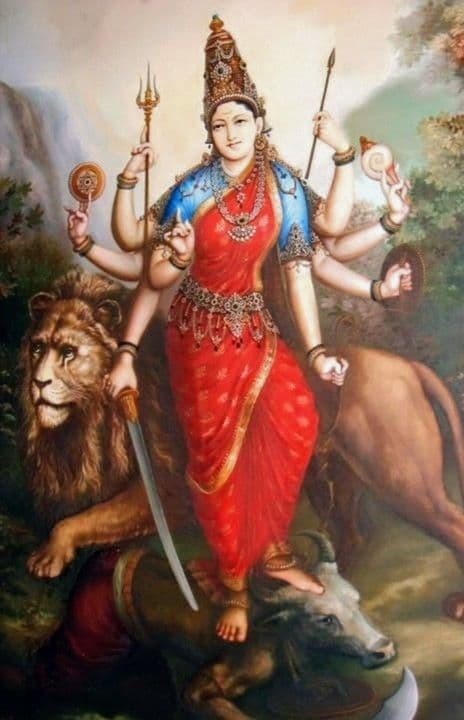
Durga
Durga is a prominent Hindu deity, widely worshipped in Shaktism as the principal aspect of Mahadevi, the Ultimate Reality. She is revered for her protective, motherly, and warrior attributes, symbolizing the triumph of good over evil. Legends often depict her battling demonic forces that threaten cosmic order, and she is a central figure in festivals like Durga Puja and Navaratri.
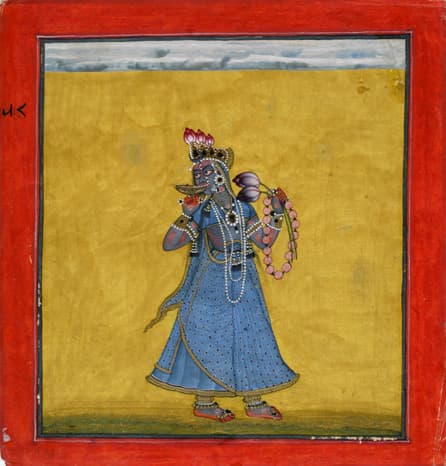
Bhadrakali
Bhadrakali is a fierce and auspicious form of the Hindu supreme goddess Adi Shakti, primarily worshipped in South India, particularly Kerala. She is associated with divine wrath, protection, and the bestowal of spiritual knowledge, often depicted as a powerful warrior goddess who vanquishes evil.

Katyayani
Katyayani is a formidable form of the Hindu goddess Mahadevi, primarily venerated as the slayer of the tyrannical asura Mahisha. She is recognized as the sixth of the Navadurga and is a significant deity in Shaktism, embodying the fierce warrior aspect of the divine feminine. Her worship is particularly prominent during the Navaratri festival.