
Narsimha
Male·4th century·India·Vaishnava theology (Vaikhanasa, Sri Vaishnava, Sadha sects)
Narasimha, meaning "man-lion," is a prominent avatar of the Hindu god Vishnu, revered as a fierce protector who eradicates evil. He is famously known for safeguarding his devoted son Prahlada and for defeating the tyrannical demon king Hiranyakashipu. Narasimha embodies creative resistance, hope, and victory over adversity, both external and internal.
Key Facts
- ›Narasimha is the fourth of the ten principal avatars (Dashavatara) of Vishnu.
- ›He is depicted with a human torso and a lion's head, equipped with sharp claws.
- ›His legend centers on protecting Prahlada from his demon father Hiranyakashipu, whose boon made him nearly invincible.
- ›Narasimha's unique form and the circumstances of Hiranyakashipu's death circumvented the demon's boons.
- ›He is worshipped in various fierce and serene forms, including Yoga-Narasimha, the god of yoga.
- ›Early representations of Narasimha date back to the 2nd to 4th centuries CE.

Nṛsiṃha, ṉrisimha, Agnilochana, Bhairavadambara, Karala, Hiranyakashipumardana, Nakhastra, Simhavadana, Simha, Mrityormrityu Narasimha
Human Torso With A Lion's Head, Clawed Fingers, Emerging From A Pillar, Nine Forms Venerated At Ahobilam, Three Eyes, Fiery Eyes
Rigveda, Shatapatha Brahmana, Vajaseneyi Samhita, Pancavimsa Brahmana, Taittiriya Brahmana, Bhagavata Purana, Valmiki Ramayana, Harivamsa, Vishnu Purana, Agni Purana, Brahmanda Purana, Vayu Purana, Brahma Purana, Vishnudharmottara Purana, Kurma Purana, Matsya Purana, Padma Purana, Shiva Purana, Linga Purana, Skanda Purana, Paripatal, Narasimha Tapaniya Upanishad
Avatar of Vishnu
Holi, Narasimha Jayanti
Ahobilam, Mathura, Tigava, Eran, Kondamotu, Prambanan, Antarvedi, Simhachalam, Mangalagiri, Vedadri, Kadiri, Penchalakona, Saligma, Bidar, Devarayanadurga, Melukote, Bhadravati, Javagal, Haranhalli, Nuggehalli, Seebi, Thalassery, Kozha, Chelakkara, Bhubaneswar, Puri, Sholinghur, Namakkal, Narasingam, Karur, Yadadri, Dharmapuri, Sundilla, Mallur, Bhadrachalam, Mayapur, Hampi
Claws, Fingernails
Lion
About Narsimha
Narasimha: The Man-Lion Avatar of Vishnu
Narasimha, a Sanskrit term meaning "man-lion," is a significant deity within Hinduism and is revered as the fourth of the ten principal avatars, or Dashavatara, of the god Vishnu. His iconography is striking: a being with a human torso and the head and claws of a lion. Narasimha is primarily venerated as a fierce protector who embodies the destruction of evil forces and the safeguarding of his devotees.
The Legend of Prahlada and Hiranyakashipu
The most famous narrative associated with Narasimha involves his divine intervention to protect his devout follower, Prahlada. Prahlada's father, the tyrannical demon king Hiranyakashipu, had received a powerful boon from the creator god Brahma, rendering him nearly invulnerable. This boon prevented his death by man or beast, indoors or outdoors, during day or night, on earth or in the sky, and by any weapon. Empowered by this, Hiranyakashipu persecuted Vishnu's devotees, including his own son Prahlada.
To circumvent the stringent conditions of the boon, Vishnu incarnated as Narasimha—a form that was neither fully human nor fully animal. The divine confrontation occurred at twilight (neither day nor night), on the threshold of a palace courtyard (neither indoors nor outdoors), and Hiranyakashipu was placed on Narasimha's lap (neither earth nor sky). With his sharp claws (neither animate nor inanimate weapons), Narasimha disemboweled and killed the demon, thereby fulfilling his role as the protector of righteousness.
Significance and Iconography
Narasimha holds a central position in Vaishnava theology, iconography, and devotional practices. He is venerated as a symbol of creative resistance, hope against overwhelming odds, and the ultimate victory over persecution and evil. Beyond external threats, Narasimha is also seen as the destroyer of one's own inner evils of "body, speech, and mind." His iconography ranges from fierce (ugra) to serene (saumya) forms. He is particularly worshipped as Yoga-Narasimha, the god of yoga, and in some interpretations, as the deity of destruction who presides over the universe's dissolution.
Historical and Textual Presence
Early representations of Narasimha have been discovered at archaeological sites in Uttar Pradesh and Andhra Pradesh, dating between the 2nd and 4th centuries CE. The deity is prominently featured in various scriptures, including early Vedic texts like the Rigveda, where a verse describes Vishnu as a fearsome beast, often interpreted as a precursor to the Narasimha narrative. Numerous Puranas, such as the Bhagavata Purana and Vishnu Purana, detail his exploits. Important pilgrimage sites dedicated to Narasimha include Ahobilam in Andhra Pradesh, which houses nine different forms of the deity (Nava Narasimha).
Narasimha's influence is also evident in ancient inscriptions and coins from the Gupta Empire, where rulers associated themselves with his power to signify their own might against adversaries. The deity is honored through various temples, performance traditions, and festivals, most notably the annual Narasimha Jayanti, which commemorates his divine appearance.
Source: Wikipedia ↗
Frequently Asked Questions
Who is Narasimha?
Narasimha is a deity in Hinduism, revered as the fourth of the ten principal avatars of the god Vishnu. He is depicted with a human torso and a lion's head and claws, venerated as a fierce protector who destroys evil and safeguards his devotees.
What is the story behind Narasimha and Hiranyakashipu?
The demon king Hiranyakashipu, empowered by a boon from Brahma, persecuted Vishnu's devotees. To protect his devotee Prahlada and circumvent the boon, Vishnu incarnated as Narasimha, a being neither man nor animal, and killed Hiranyakashipu on a palace threshold at twilight using his claws.
What does Narasimha's iconography signify?
Narasimha's iconography, with his lion face and human body, signifies his dual nature as neither fully man nor animal, crucial for overcoming Hiranyakashipu's boon. His emergence from a pillar symbolizes his omnipresence.
What is Narasimha's significance in Hinduism?
Narasimha is a significant symbol of creative resistance, hope against odds, victory over persecution, and the destruction of evil. He is worshipped for protection against both external threats and internal vices.
When is Narasimha Jayanti celebrated?
Narasimha Jayanti is celebrated annually on the 14th day of the Hindu month of Vaisakha (April–May). This festival commemorates the deity’s appearance to protect Prahlada and defeat Hiranyakashipu.
Where are early depictions of Narasimha found?
Early representations of Narasimha have been found at archaeological sites in Uttar Pradesh and Andhra Pradesh, such as Mathura, and are dated between the 2nd and 4th centuries CE.
Related Hindu deities
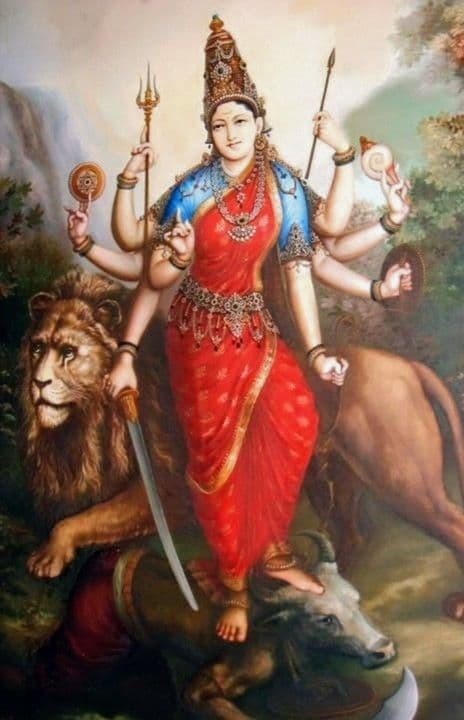
Durga
Durga is a prominent Hindu deity, widely worshipped in Shaktism as the principal aspect of Mahadevi, the Ultimate Reality. She is revered for her protective, motherly, and warrior attributes, symbolizing the triumph of good over evil. Legends often depict her battling demonic forces that threaten cosmic order, and she is a central figure in festivals like Durga Puja and Navaratri.

Caturvyūha
Caturvyūha, meaning 'four emanations,' is an ancient Indian religious concept that initially referred to the four earthly emanations of the Supreme deity Nārāyaṇa, later identified as Viṣṇu. These emanations are primarily associated with the Vrishni heroes, with Vāsudeva being the first and most prominent. The concept evolved from earlier cults of heroes into a doctrine of divine incarnations, becoming a foundational element in the development of Vaishnavism.
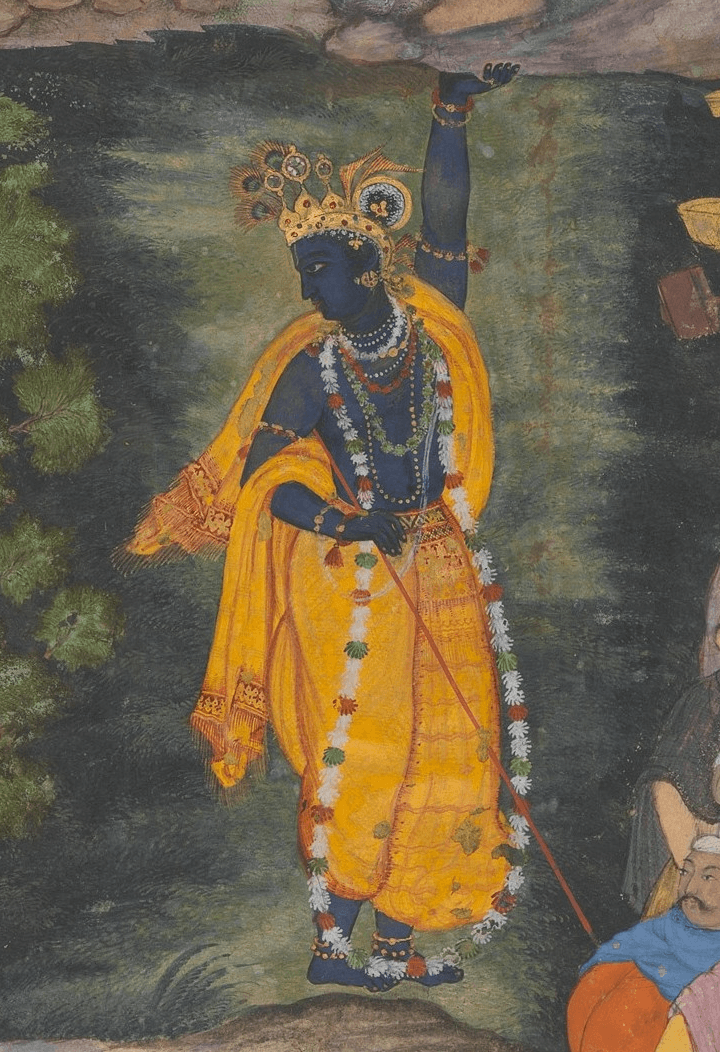
Krishna
Krishna is a major deity in Hinduism, revered as the eighth avatar of Vishnu and also as the Supreme God. He is widely celebrated for his divine qualities of love, compassion, protection, and tenderness. Krishna is a central figure in important scriptures like the Mahabharata and the Bhagavad Gita, where he is depicted as a divine statesman, teacher, and savior of dharma.