
Bagalamukhi
Crane·Female·India·Mahavidyas
Bagalamukhi is a prominent Hindu goddess, one of the Mahavidyas, representing potent female primeval force. She is known for her power to stun, paralyze, and control enemies, making her a significant deity for those seeking victory and protection. Her iconography often features her pulling a demon's tongue and holding a club, symbolizing her ability to silence and defeat adversaries.
Key Facts
- ›Bagalamukhi is one of the ten Mahavidyas, a group of Tantric deities.
- ›She symbolizes potent female primeval force and is associated with the power of stambhana (paralyzing or stunning).
- ›Her iconography commonly depicts her pulling a demon's tongue and holding a club.
- ›She is also known as Pitambaradevi or Pitambari, signifying her association with the color yellow.
- ›Worshippers seek her blessings for victory over enemies and for supernatural powers (siddhis).
- ›Key temples dedicated to her are found in Himachal Pradesh, Telangana, Andhra Pradesh, Madhya Pradesh, Uttarakhand, Assam, and Nepal.

Bagala, Pitambaradevi, Pitambari, Shatrubuddhivinashini, Brahmastra Roopini
- Two-Handed Or Four-Handed Depictions
- Holds A Club To Strike A Demon
- Pulls A Demon's Tongue
- Sits On A Golden Throne In An Ocean
- Yellow Complexion, Clad In Yellow Clothes
- Adorned With A Garland of Yellow Flowers and Yellow Ornaments
- Sometimes Described With A Crane's Head, Or Associated With Cranes, Ducks, Or Parrots
- A Yellow Crescent Moon Adorns Her Forehead
Kubjika Tantra, Tantrasara, Rudrayamala
- Bankhandi, Kangra, Himachal Pradesh
- Shri Bagalamukhee Shakthi Peetham, Shivampet, Narsapur, Telangana
- Bagalamukhi In Chandole, Guntur District, Andhra Pradesh
- Bagalamukhi Temple, Datia, Madhya Pradesh
- Bugiladhar, Ghuttu, Uttarakhand
- Kamakhya Temple, Guwahati, Assam
- Baglamukhi Temple of Lalitpur, Nepal
- Maa Bagalamukhi Dham Ludhiana
- Nalkheda Siddhapitham Temple, Nalkheda Mp
- Kotla and Bankhandi, Himachal Pradesh
- Badowan Near Mahilapur District Hoshiarpur Punjab
- Pitambara Peeth In Datia
- Dusmahavidhya Temple At Nikhildham Bhojpur -Bhopal Madhya Pradesh
- Bagalapeetam, Eraiyur Road, Vallakottai In Kanchipuram District, Tamil Nadu
- Sree Suryamangalam, Kallidaikurichi, Papankulam Village In Tirunelveli District, Tamil Nadu
- Somalapura of Sindhanur Taluk, Raichur District of North Karnataka
- Virupakshi, Kolar District, Karnataka
Club, Brahmastra
Crane, Duck, Parrot
About Bagalamukhi
Bagalamukhi: The Goddess of Power and Paralysis
Bagalamukhi is a significant deity within Hinduism, recognized as one of the Mahavidyas, a group of ten Tantric goddesses who embody potent aspects of the divine feminine. She is particularly revered for her power to stun, paralyze, and silence adversaries, symbolizing the primeval force that can bring order and control.
Iconography and Symbolism
Her iconography often depicts her in a two-handed form: with her left hand, she pulls out the tongue of a demon, and with her right, she wields a club to strike him. This imagery powerfully represents her ability to immobilize and defeat enemies. Bagalamukhi is also known as Pitambaradevi or Pitambari, due to her strong association with the color yellow. She is depicted clad in yellow garments, adorned with yellow ornaments, and often associated with yellow flowers. This color symbolizes auspiciousness, purity, and intelligence, and plays a crucial role in her worship rituals.
Legends and Significance
Legends describe Bagalamukhi as emerging from the Haridra Sarovar (lake of turmeric) to quell a destructive storm during the Satya Yuga, after Lord Vishnu's austerities. Another tale recounts her defeating a demon named Madan by incapacitating him and ultimately slaying him. Devotees worship Bagalamukhi to gain victory over their enemies, to overcome obstacles, and to acquire supernatural powers (siddhis).
Worship and Sacred Sites
Major temples dedicated to Bagalamukhi are located across India, including prominent sites in Himachal Pradesh, Telangana, Madhya Pradesh, and Andhra Pradesh, as well as in Nepal. Her worship is deeply rooted in Tantric traditions, and rituals often involve the color yellow, including yellow offerings and the use of yellow turmeric bead rosaries for chanting mantras.
Source: Wikipedia ↗
Frequently Asked Questions
Who is Bagalamukhi?
Bagalamukhi is a significant Hindu goddess and one of the Mahavidyas, representing potent female primeval force. She is revered for her power to vanquish demons and enemies, often invoked for protection and victory.
What is Bagalamukhi known for?
Bagalamukhi is primarily known for her ability to stun, paralyze, and silence opponents, a power referred to as stambhana. Devotees worship her to overcome adversaries and gain supernatural or magical powers.
What does Bagalamukhi's iconography typically show?
Her common iconography depicts her in a two-handed form, pulling a demon's tongue with her left hand while holding a club in her right to strike him. She is often shown with a yellow complexion and adorned in yellow garments.
What is the significance of the color yellow in relation to Bagalamukhi?
Bagalamukhi is strongly associated with the color yellow, earning her the epithet Pitambara-devi. She is depicted and worshipped with yellow clothes, ornaments, and offerings, as yellow symbolizes auspiciousness, purity, and intelligence.
Are there any famous legends about Bagalamukhi?
One legend states that in the Satya Yuga, she emerged from the Haridra Sarovar to calm a great storm that was destroying creation, appearing after Lord Vishnu performed austerities. Another tale recounts her defeating a demon named Madan by immobilizing his power by grabbing his tongue.
Where are the main temples dedicated to Bagalamukhi?
Prominent temples dedicated to Bagalamukhi are located in Bankhandi, Himachal Pradesh; Shivampet, Telangana; Chandole, Andhra Pradesh; Datia, Madhya Pradesh; and Ghuttu, Uttarakhand. There are also significant shrines in Nepal and Assam.
Related Hindu deities
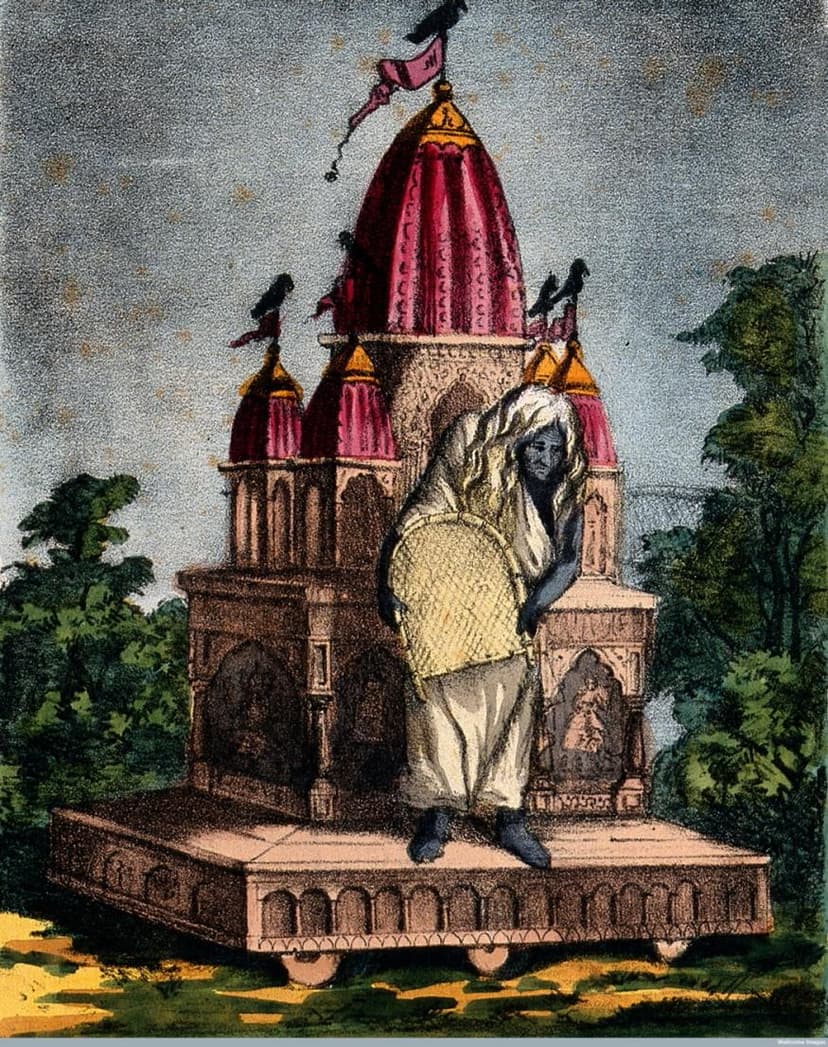
Dhumavati
Dhumavati is one of the Mahavidyas, a group of ten Tantric goddesses representing the fearsome aspects of Mahadevi. Often depicted as an old, unattractive widow, she embodies inauspiciousness, poverty, and cosmic dissolution, but also offers ultimate knowledge and liberation. Her worship is particularly suited for those on the fringes of society, bestowing siddhis and protection.
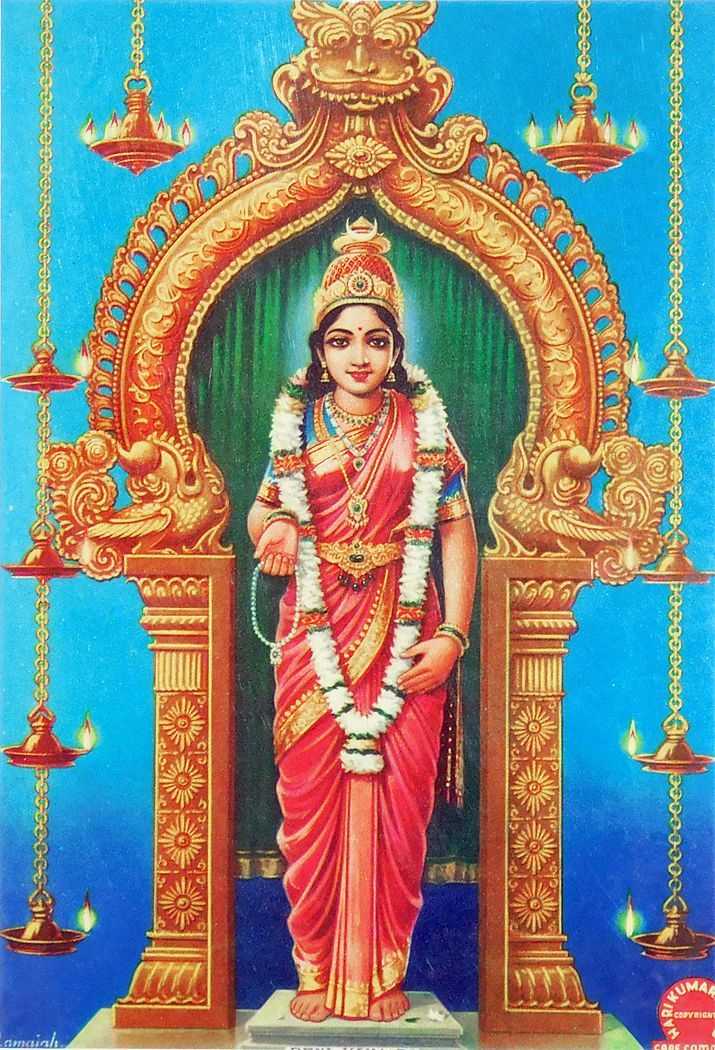
Devi Kanya Kumari
Devi Kanya Kumari is a prominent Hindu goddess, a manifestation of Mahadevi in the form of an adolescent girl. She is revered as a form of Parvati or Lakshmi, and is particularly known for her role in slaying the demon Banasura. Her worship is deeply tied to the town of Kanyakumari at the southernmost tip of India.

Chandraghanta
Chandraghanta is a powerful form of the Hindu goddess Mahadevi, revered as the destroyer of demons and the protector of her devotees. She is the third of the Navadurga and is prominently worshipped on the third day of Navaratri. Her name, meaning 'adorned with the moon as her bell,' refers to the crescent moon on her forehead, and she is depicted with ten arms holding various weapons and a bell.