
Annapurna
Annapurna is a revered Hindu goddess, a manifestation of Parvati, known as the deity of food and nourishment. Her worship emphasizes the sanctity of food and the act of feeding, making her a popular and significant figure in Hinduism. She is often depicted with a vessel of food and a ladle, symbolizing her role as the provider.
Key Facts
- ›Annapurna is a form of the goddess Parvati, consort of Shiva.
- ›Her name translates to 'filled with food' or 'possessing food'.
- ›She is primarily worshipped as the goddess of food and feeding.
- ›Worship of Annapurna often involves the recitation of her thousand or one hundred and eight names.
- ›Annadana, the donation of food, is highly praised in Hinduism and associated with her worship.
- ›Akshaya Tritiya is considered her birthdate and is auspicious for purchasing gold.
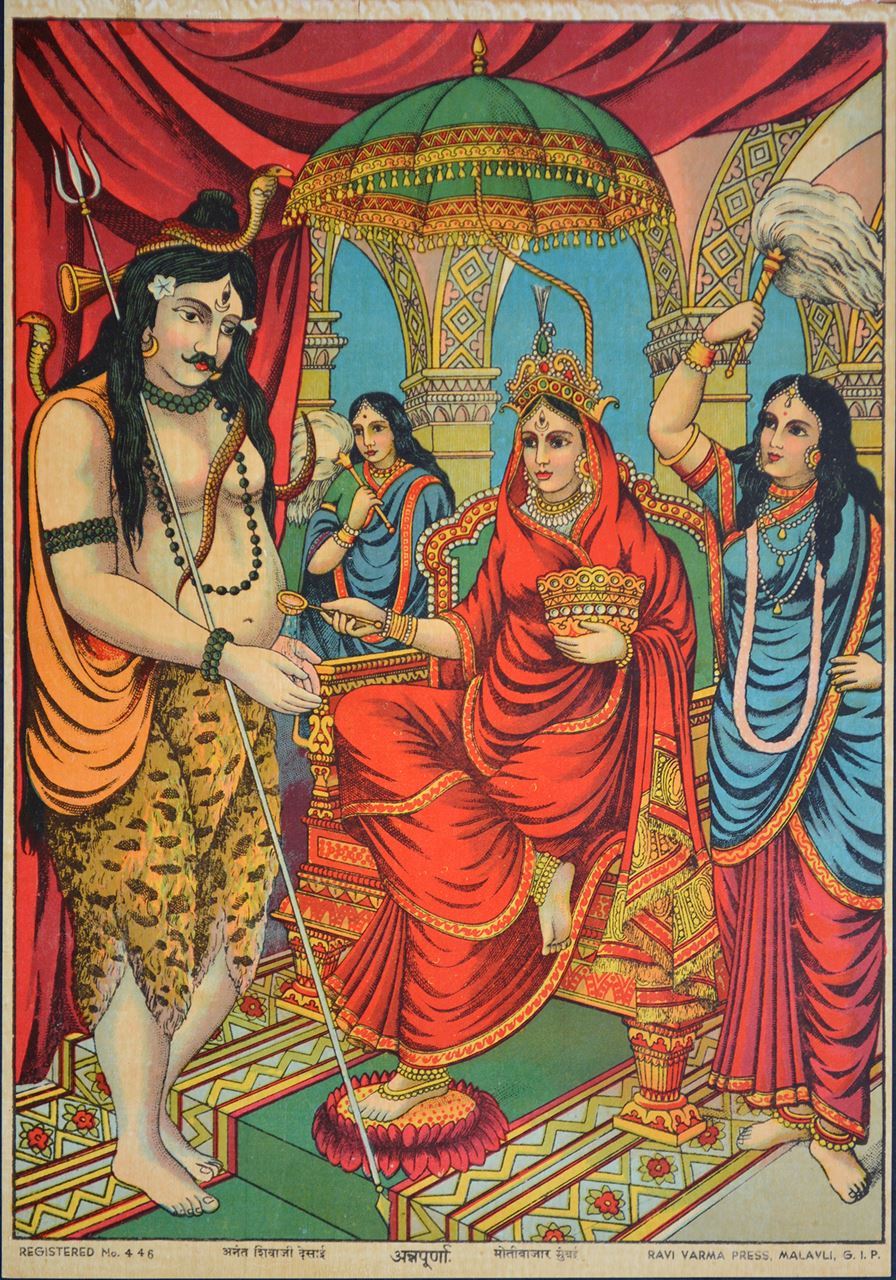
Annapurneshwari, Annada, Annapoorna, Vishalakshi, Vishvashakti, Vishvamata, Bhuvaneshwari, Renu
- Youthful Goddess With Red Complexion and A Face Round Like the Full Moon
- Three Eyes
- High Breasts
- Four Hands
- Lower Left Hand Holding A Vessel Full of Porridge
- Right Hand With A Golden Ladle Adorned With Jewels
- Other Two Hands In Abhaya and Varada Poses
- Depicted With Wristlets and Golden Jewelry On Her Chest
- Seated On A Throne With A Crescent Moon Adorning Her Head
- Shiva Depicted Standing To Her Right With A Begging Bowl
Annada Mangal, Annapurna Sahasranam, Annapurna Shatanama Stotram, Rudrayamala, Sivarahasya, Annapurnamantratsava, Maha Tripurasiddhanta, Annapurna Kavacha, Annapurnahavamti, Annapurnamalininaksatramalika, Bhairvahyantantra, Annapurna Upanishad, Devi Bhagavata, Skanda Purana, Linga Purana, Kumara Sambhavam, Kasikhanda, Vishnu Dharamottara, Agni Purana, Padma Purana, Kurma Purana, Nandi Purana, Vayu Purana
Manifestation of Parvati, Consort of Shiva
Akshaya Tritiya, Navaratri
Varanasi, Horanadu, Barrackpore, Indore, Chikkamagaluru, Chalappally, Cherukunnu, Puducode, Thodupuzha, Tiruchotruturai, Watrap, Coimbatore, Achangudi, Pathikonda, Hyderabad, Jalandhar, Bhatinda, Bhandara, Akola, Manegaon, Unjha, Mishroli, Kagdara, Chittor Fort, Ramgarh Hill, Irinjalakuda, Kathmandu
Goddess, Provider
Deity, Popular
About Annapurna
Annapurna: Goddess of Food and Nourishment
Annapurna, also known as Annapurneshwari, Annada, or Annapoorna, is a beloved Hindu goddess and a manifestation of Parvati, the divine consort of Shiva. Her name, derived from Sanskrit, translates to 'filled with food' or 'possessing food,' underscoring her primary role as the goddess of food and nourishment. In Hinduism, the act of offering and consuming food is considered sacred, elevating Annapurna to a position of great popularity and significance.
Iconography and Symbolism
Annapurna is typically depicted as a youthful goddess with a radiant, moon-like face and three eyes. She is often shown holding a vessel brimming with delicious food in one hand and a jeweled ladle in another, symbolizing her boundless generosity and ability to provide sustenance. In some traditions, Shiva himself is depicted standing beside her, begging for alms, illustrating her ultimate power over worldly needs.
Literary and Mythological Significance
Annapurna is celebrated in numerous Hindu scriptures, including the Annada Mangal, Annapurna Sahasranam, and various Upanishads and Puranas. Legends recount her divine intervention during times of famine, notably in Varanasi (Kashi), where she established a kitchen to feed the starving gods and humans. This myth highlights her crucial role in maintaining the balance of the material world and ensuring the survival of all beings.
Worship and Temples
Devotees worship Annapurna through the recitation of her sacred names and hymns, such as the Annapurna Stotra composed by Adi Shankara. The practice of Annadana (food donation) is highly esteemed and closely associated with her worship. Major temples dedicated to Annapurna are found in Varanasi, Horanadu, and across various regions of India, serving as centers of pilgrimage and devotion for her followers.
Source: Wikipedia ↗
Frequently Asked Questions
Who is Annapurna?
Annapurna is a Hindu goddess and a manifestation of Parvati. She is widely known as the goddess of food and nourishment. Her worship highlights the importance of food and the act of giving food.
What does the name Annapurna mean?
The name Annapurna is derived from Sanskrit. 'Anna' means food or grains, and 'purna' means full, complete, or perfect. Thus, Annapurna signifies 'filled with food' or 'the giver of food'.
What is Annapurna known for?
Annapurna is known for her role as the goddess of food and nourishment. She is celebrated for providing sustenance and ensuring that no one goes hungry. Her worship is closely linked to the practice of Annadana, or the donation of food.
What are some of Annapurna's other names?
Annapurna is known by several other names, including Annapurneshwari, Annada, and Annapoorna. Some of her epithets include Vishalakshi (she who has large eyes), Vishvashakti (world power), and Vishvamata (mother of the world).
What is the iconography of Annapurna?
Annapurna is often depicted as a youthful goddess with a round, moon-like face and three eyes. She typically holds a vessel full of porridge in one hand and a jeweled ladle in another, symbolizing her role as a provider of food. She may also be shown with Shiva begging for alms.
Where are prominent temples dedicated to Annapurna?
Prominent temples dedicated to Annapurna include the Annapoorneshwari Temple in Horanadu, Karnataka, and the Annapurna Devi Mandir in Varanasi. Many other temples are located across India in states like West Bengal, Madhya Pradesh, Kerala, and Tamil Nadu.
Related Hindu deities
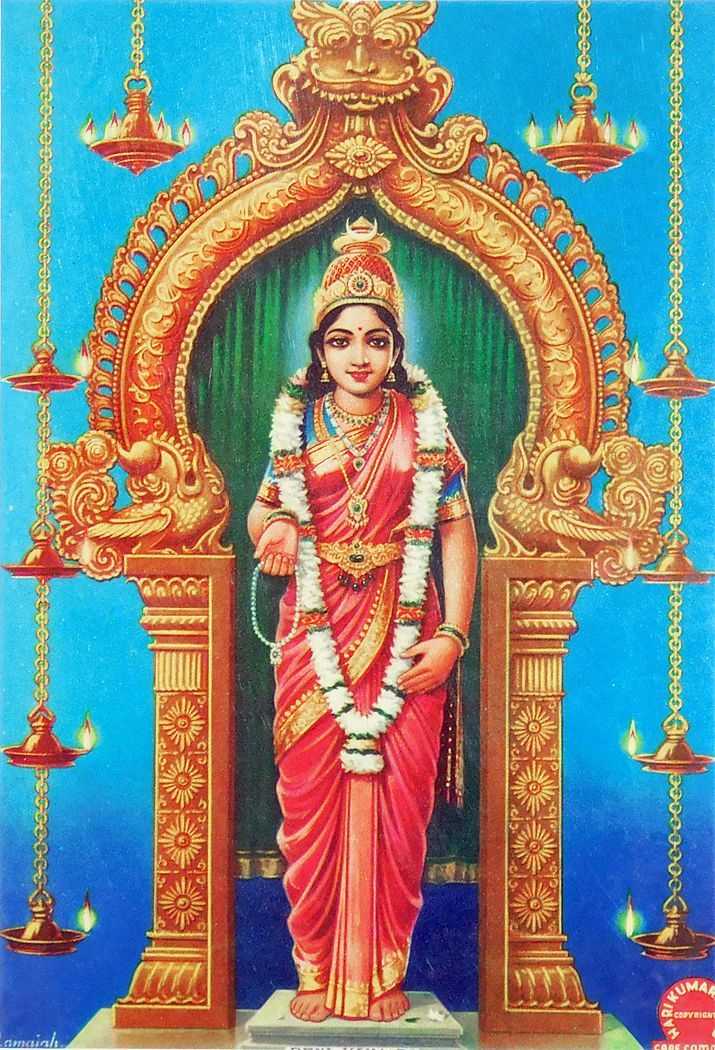
Devi Kanya Kumari
Devi Kanya Kumari is a prominent Hindu goddess, a manifestation of Mahadevi in the form of an adolescent girl. She is revered as a form of Parvati or Lakshmi, and is particularly known for her role in slaying the demon Banasura. Her worship is deeply tied to the town of Kanyakumari at the southernmost tip of India.

Chandraghanta
Chandraghanta is a powerful form of the Hindu goddess Mahadevi, revered as the destroyer of demons and the protector of her devotees. She is the third of the Navadurga and is prominently worshipped on the third day of Navaratri. Her name, meaning 'adorned with the moon as her bell,' refers to the crescent moon on her forehead, and she is depicted with ten arms holding various weapons and a bell.
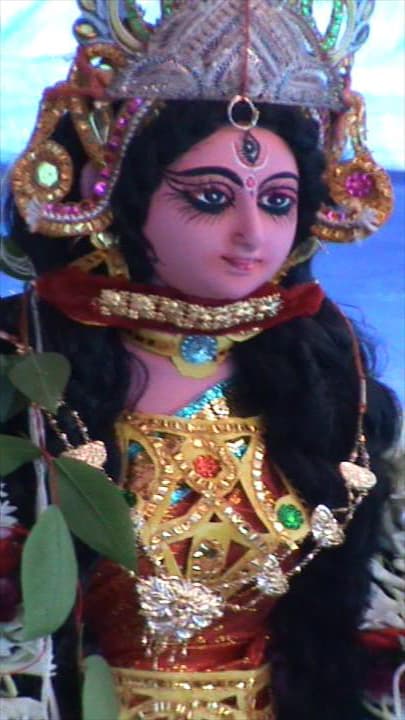
Bipadtarini
Bipadtarini is a Hindu goddess, also known as Bipodtarini or Bipattarini, worshipped primarily in West Bengal, Jharkhand, Orissa, and Assam. She is considered an avatar of Goddess Durga and is invoked for protection and deliverance from troubles. Her legends are recounted during the annual Bipadtarini Vrata, observed by women, and her worship involves rituals like fasting and tying a sacred red thread on the wrist.