
Shesha
Shesha, also known as Ananta, is a primordial serpentine demigod (naga) and king of serpents in Hinduism, renowned for holding all the planets on his hoods and singing Vishnu's glories. He is a foundational being in creation myths, often depicted as Vishnu's resting place, and is believed to have descended to Earth in various human forms, including Lakshmana and Balarama.
Key Facts
- ›Shesha is a primordial serpentine demigod and the king of all nagas.
- ›He is depicted as holding the universe on his many hoods and serves as the cosmic bed for Vishnu.
- ›Shesha is also known as Ananta, meaning 'endless' or 'without end'.
- ›He is believed to have incarnated as Lakshmana, brother of Rama, and Balarama, brother of Krishna.
- ›His name signifies 'remainder' as he persists even after the destruction of the universe.
- ›Shesha is said to reside in the netherworld, Patala, where he stabilizes the earth.
Sheshanaga, Adishesha, Ananta, Ananta Shesha, Sankarshana
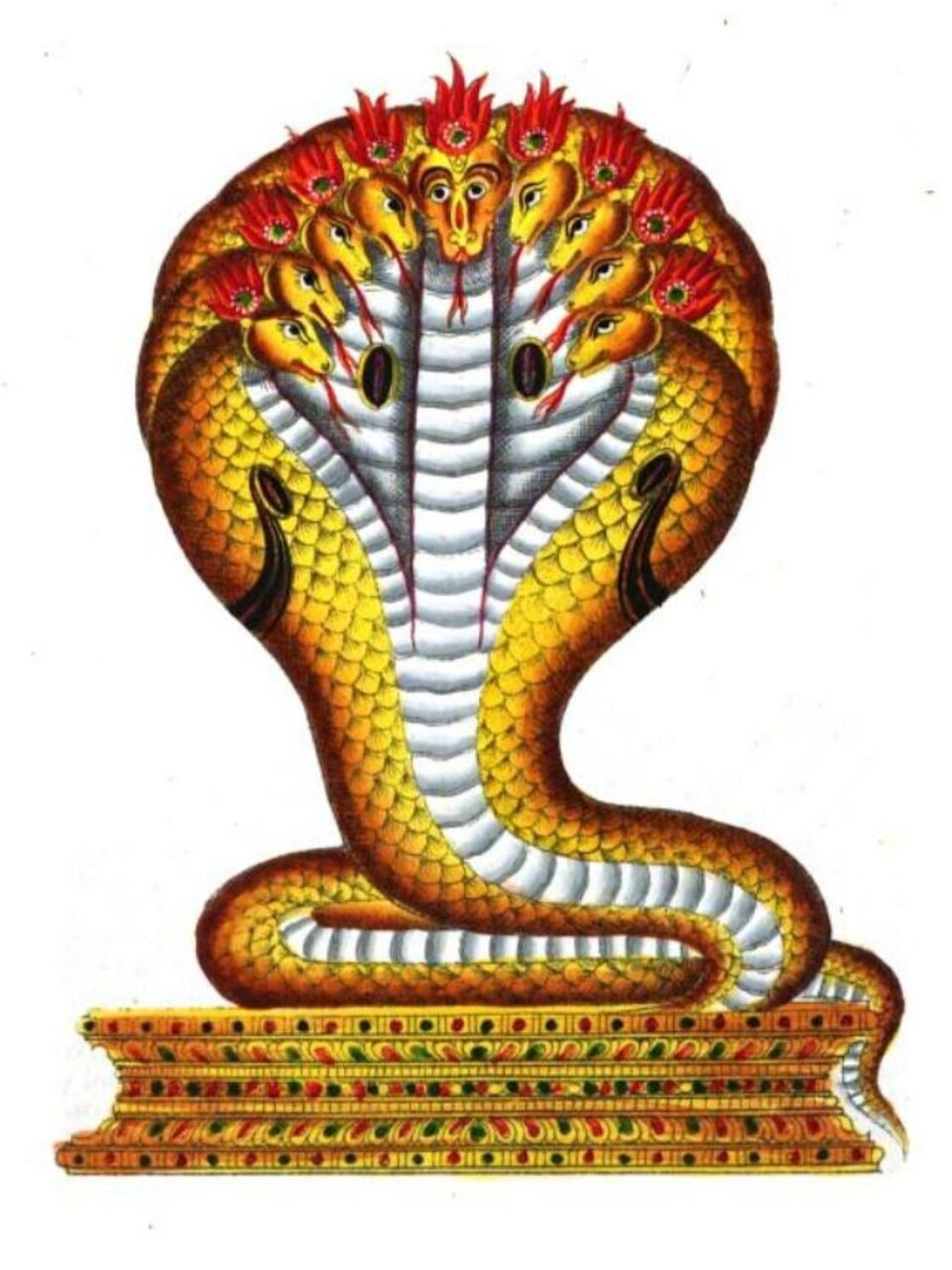
Massive Serpentine Form, Coiled To Form Vishnu's Bed, Multiple Heads, Ornate Crowns On Heads, Blue Garments, White Garlands, Holding A Plough-Share, Holding An Iron Club
Mahabharata, Bhagavata Purana, Brahma Purana, Brahmanda Purana, Bhagavad Gita
Son of Kashyapa and Kadru, Brother of Vasuki, Iravati, and Takshaka, Consort of Nagalakshmi
Patala
Iron Club
Serpent
Primordial Being, Demigod, King of Serpents
Primordial Being, King of Serpents, Incarnated Figure
About Shesha
Shesha, also known by epithets such as Sheshanaga, Adishesha, and Ananta, is a prominent serpentine demigod (naga) and the king of all serpents within Hindu mythology. He is revered as a primordial being of creation, often depicted as holding the entire universe upon his many hoods and serving as the cosmic bed for Lord Vishnu. His name, meaning 'remainder,' signifies his eternal nature, persisting even when the universe is destroyed and recreated.
Origins and Cosmic Role
According to the Mahabharata, Shesha was born to the sage Kashyapa and his wife Kadru, being the eldest of their thousand serpent offspring. Disgusted by the cruelty of his siblings, Shesha renounced his family and undertook severe austerities. His penances were so intense that Brahma appeared and granted him a boon, asking him in return to stabilize the earth by supporting it from beneath. Shesha agreed, descending to the netherworld (Patala) to fulfill this role, where he is believed to reside to this day.
Shesha is intrinsically linked with Vishnu. He is famously depicted as the couch upon which Vishnu rests in his primordial form, Narayana, on the cosmic ocean. In the Bhagavata Purana, Shesha is identified with Sankarshana, a manifestation of Vishnu, and is described as residing deep within Patala, reigning as its ruler. He is also considered one of Vishnu's mounts, alongside Garuda.
Incarnations and Significance
Shesha is believed to have descended to Earth in several significant human incarnations. During the Treta Yuga, he was born as Lakshmana, the devoted brother of Vishnu's avatar Rama, playing a crucial role in the Ramayana. In the Dvapara Yuga, he is, by some traditions, considered to have incarnated as Balarama, the brother of Vishnu's avatar Krishna. The Bhagavad Gita features Krishna stating, 'Of Nāgas, I am Ananta,' underscoring Shesha's divine importance. In later traditions, he is also associated with figures like Patanjali and Ramanuja.
Visually, Shesha is commonly portrayed as a colossal serpent, sometimes with five, seven, or ten heads, but more often depicted with thousands or even a million heads, each possibly wearing a crown. He is often shown coiled, supporting the divine being Vishnu. His consort is traditionally known as Nagalakshmi.
Source: Wikipedia ↗
Frequently Asked Questions
Who is Shesha?
Shesha is a primordial serpentine demigod, the king of all nagas, and a significant being in Hindu creation mythology. He is known for his immense size and his role as the cosmic bed for Lord Vishnu.
What is Shesha known for?
Shesha is known for holding all the planets of the universe on his hoods and for constantly singing the glories of Vishnu. He is also recognized for his role as a divine mount for Vishnu and for his incarnations as human figures.
What are Shesha's other names?
Shesha is also widely known by his epithets Sheshanaga and Adishesha. He is also referred to as Ananta, meaning 'endless,' and Ananta Shesha.
In what forms has Shesha appeared?
Shesha is believed to have descended to Earth in human forms. He incarnated as Lakshmana, the brother of Vishnu's avatar Rama, and in some traditions, as Balarama, the brother of Vishnu's avatar Krishna.
Where does Shesha reside?
According to legends, Shesha resides in the netherworld, known as Patala. He is believed to have gone beneath the earth to stabilize it and continues to support it with his hoods.
How is Shesha depicted visually?
Shesha is typically depicted as a massive serpent, often coiled and floating in space or on the Ocean of Milk. He can be shown with five, seven, ten, a thousand, or even a million heads, sometimes adorned with crowns.
Related Hindu deities
Dhāta
Dhata, also known as Dhatr, is a solar deity and one of the Adityas in Hinduism, revered as a god of health and magic. He is invoked in tantric practices and Vedic hymns, and plays a role in major sacrifices like the Ashwamedha yagna. Dhata is depicted in Hindu epics as a participant in significant events and is described as the seventh son of Aditi and Kashyapa.

Kalki
Kalki is the prophesied tenth and final avatar of the Hindu god Vishnu, destined to appear at the end of the Kali Yuga. His arrival signifies the destruction of unrighteousness and the dawn of the Satya Yuga, initiating a new cycle of existence. Kalki is typically depicted as a warrior riding a white horse and wielding a fiery sword.
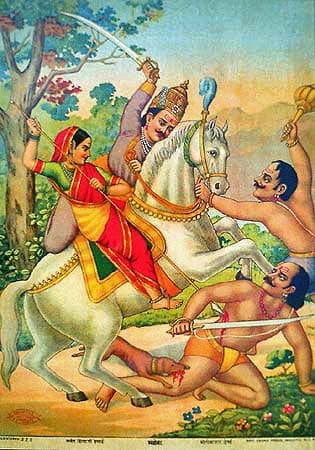
Khandoba
Khandoba is a prominent Hindu deity, primarily worshipped in Maharashtra and Karnataka, often seen as a manifestation of Shiva. He is revered as a family deity (Kuladevata) and the patron deity for various castes, including warriors, farmers, and tribal communities. Khandoba is known for his victory over demons Mani and Malla and his marriages, with his worship reflecting syncretic traditions that include Jain and Muslim influences.