
Dhāta
Dhata, also known as Dhatr, is a solar deity and one of the Adityas in Hinduism, revered as a god of health and magic. He is invoked in tantric practices and Vedic hymns, and plays a role in major sacrifices like the Ashwamedha yagna. Dhata is depicted in Hindu epics as a participant in significant events and is described as the seventh son of Aditi and Kashyapa.
Key Facts
- ›Dhata is a solar deity and one of the Adityas.
- ›He is considered a god of health and magic.
- ›He is invoked in tantra and through Vedic hymns.
- ›Dhata participated in the burning of Khandava Forest alongside other deities.
- ›He is the seventh son of Aditi and Kashyapa according to the Bhagavata Purana.
- ›His wives are Kuhu, Sinivali, Raka, and Anumati.
Dhatr
Associated With the Color Yellow
Mahabharata, Ramayana, Bhagavata Purana, Agni Purana
Son of Aditi and Kashyapa, One of the Adityas
Sayam, Darsha, Pratar, Purnamasa
Solar Deity, Deity of Health, Deity of Magic
About Dhāta
Dhata
Dhata, also known as Dhatr, is a significant figure in Hinduism, primarily recognized as a solar deity and one of the Adityas. He is also venerated as a god of health and magic, making him a deity invoked for well-being and spiritual power. Dhata's presence is noted in major religious practices, including his invocation in tantra through the creation of tantras and the chanting of Vedic hymns. He is frequently called upon during important yagnas, such as the Ashwamedha yagna, highlighting his role in ancient Vedic rituals.
Scriptural Mentions and Mythology
Evidence of Dhata's existence as an Aditya is found in both major Hindu epics, the Mahabharata and the Ramayana. In the Mahabharata, he is described as having fought against Arjuna and Krishna during the burning of the Khandava Forest, indicating his participation in epic conflicts. The Bhagavata Purana further elaborates on his lineage, identifying him as the seventh son born to Aditi and the sage Kashyapa. This purana also names his four wives: Kuhu, Sinivali, Raka, and Anumati, and lists their respective sons as Sayam, Darsha, Pratar, and Purnamasa.
Associations and Symbolism
Beyond his role as a solar deity, Dhata is associated with aspects of healing and magical prowess. The Agni Purana provides additional details, linking him to the color yellow and the zodiac sign Cancer. These associations add layers to his symbolic representation, connecting him with specific astrological and visual attributes within the broader Hindu cosmological framework.
Source: Wikipedia ↗
Frequently Asked Questions
Who is Dhata in Hinduism?
Dhata, also known as Dhatr, is a solar deity and one of the Adityas. He is also recognized as a god of health and magic within the Hindu pantheon.
What is Dhata known for?
Dhata is known for being invoked in tantra and through the chanting of Vedic hymns. He is often called upon during major yagnas, such as the Ashwamedha yagna, and is associated with healing and magical practices.
Where is Dhata mentioned in Hindu scriptures?
Dhata is mentioned in both the Mahabharata and the Ramayana epics. The Bhagavata Purana also identifies him as the seventh son of Aditi and Kashyapa, detailing his family and lineage.
What are Dhata's associations in the Agni Purana?
In the Agni Purana, Dhata is associated with the color yellow. He is also linked to the zodiac sign Cancer in this scripture.
Who are Dhata's wives and children?
According to the Bhagavata Purana, Dhata has four wives: Kuhu, Sinivali, Raka, and Anumati. These wives gave birth to his sons Sayam, Darsha, Pratar, and Purnamasa, respectively.
Related Hindu deities

Nataraja
Nataraja is a depiction of the Hindu deity Shiva as the divine cosmic dancer, known for his tandava dance. This iconic form symbolizes Shiva's cosmic functions of creation, preservation, and destruction, and is widely revered as one of the highest forms of Shiva, particularly in Tamil Nadu. The Nataraja sculpture is a significant symbol of Indian culture and Hindu art, representing the interconnectedness of religion and the arts.
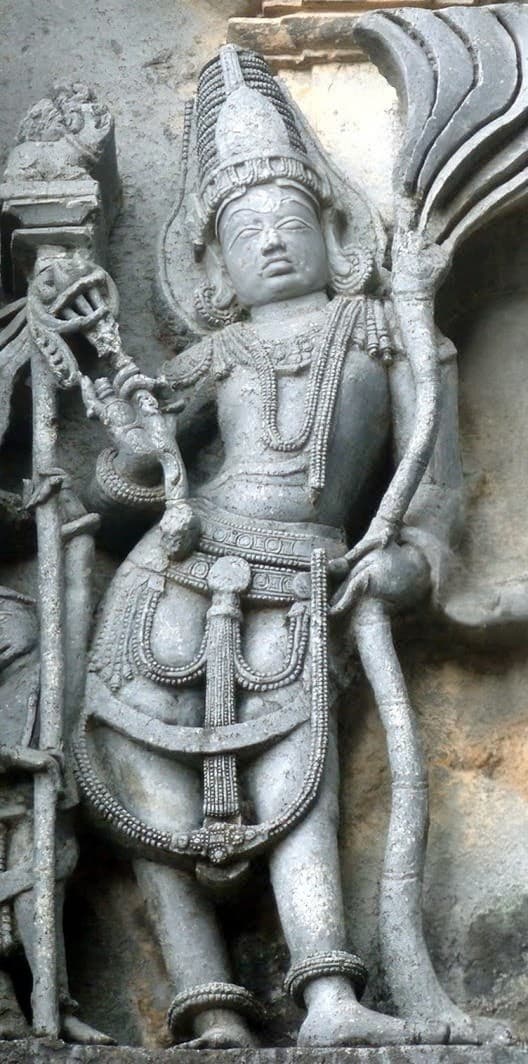
Kamadeva
Kamadeva is the Hindu god of love, attraction, pleasure, and beauty, as well as the personification of kāma (desire). He is depicted as a handsome youth armed with a bow of sugarcane and flower arrows, often accompanied by his consort Rati. Kamadeva's mythology is prominent in the Puranas, where he is known for being incinerated by Shiva's third eye and subsequently reborn as Pradyumna.

Ashvins
The Ashvins are twin Vedic deities associated with medicine, health, healing, sciences, and the twilight. They are depicted as youthful divine horsemen who travel in a swift chariot, known for rescuing mortals and aiding them in various situations. The Ashvins are prominent in the Rigveda and play significant roles in later Hindu scriptures.