
Rachel
Classical antiquity·Canaan
Rachel was a matriarch of the Israelite people in the Hebrew Bible, known as Jacob's favorite wife and the mother of Joseph and Benjamin. She is chiefly remembered for her role in the patriarchal narratives, her infertility, her intense love for Jacob, and her eventual death in childbirth. Her legacy includes her descendants, such as the tribes of Benjamin and Ephraim, and her symbolic representation as a weeping mother interceding for her exiled children.
Key Facts
- ›Rachel was the younger daughter of Laban and the niece of Rebekah, making her Jacob's first cousin.
- ›Jacob worked fourteen years for Laban to marry both Leah and Rachel.
- ›Rachel was initially infertile, relying on her maidservant Bilhah as a surrogate.
- ›She gave birth to Joseph, who became a prominent figure in biblical narrative, and Benjamin, who was born during a difficult labor.
- ›Rachel died near Ephrath while giving birth to Benjamin and was buried on the road to Bethlehem, not in the ancestral tomb.
- ›She is symbolically depicted as weeping for her exiled descendants, a theme found in the Book of Jeremiah.
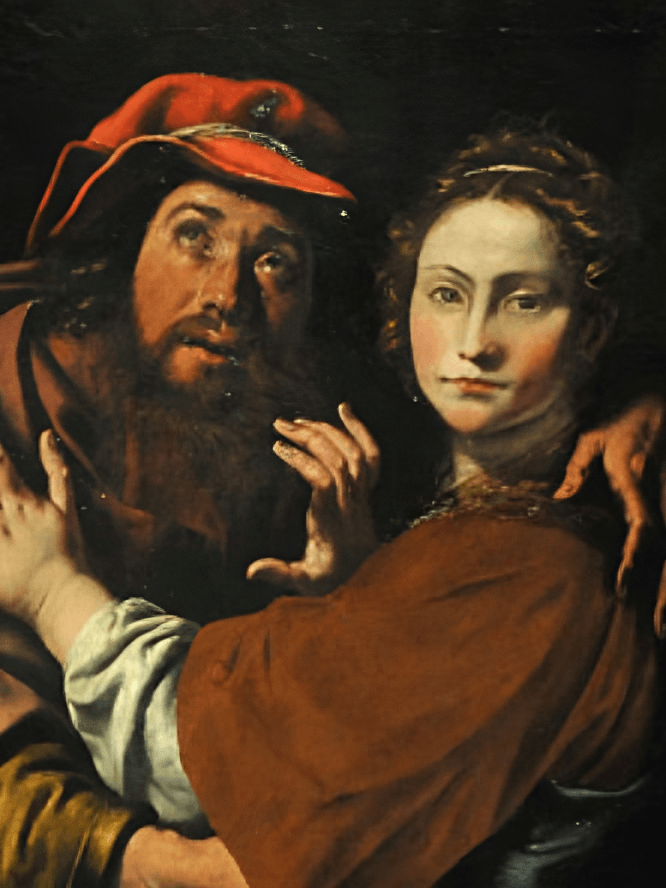
Rāḥēl, Rāḥīl (Arabic)
Mothers, Childbirth, Exiled People
Ewe, Teraphim, Weeping Mother
About Rachel
Rachel was a pivotal matriarch in the Hebrew Bible, recognized as one of the foundational figures of the Israelite people. She is primarily known as the beloved wife of Jacob and the mother of two of his twelve sons, Joseph and Benjamin, who became progenitors of important Israelite tribes. Her narrative is intertwined with themes of love, deception, infertility, and maternal devotion.
Life and Historical Context
Rachel's story begins when Jacob encounters her watering her father Laban's flock. As the daughter of Laban and sister to Leah, Rachel was Jacob's first cousin. Jacob fell deeply in love with Rachel and agreed to serve Laban for seven years to win her hand. However, on their wedding night, Laban substituted Leah, Rachel's older sister, for Rachel. After completing the wedding week, Jacob agreed to serve another seven years to marry Rachel, who was described as "lovely in form and beautiful."
Like other prominent matriarchs such as Sarah and Rebekah, Rachel experienced a period of infertility, which heightened the drama surrounding the birth of her children and emphasized the role of divine intervention. In her desire for children, Rachel gave her maidservant Bilhah to Jacob as a surrogate, who bore Dan and Naphtali. Rachel named and raised these sons as her own. Later, Rachel finally conceived and gave birth to Joseph, who became Jacob's favorite son. The narrative then shifts to Jacob's decision to leave Laban and return to Canaan with his family. During their escape, Rachel secretly took her father's teraphim, hiding them on her camel and refusing to rise during Laban's search, thus protecting her family from Jacob's curse.
Death and Burial
Rachel's life concluded near Ephrath while giving birth to her second son, Benjamin. The labor was difficult, and before she died, she named the child Ben Oni, meaning "son of my mourning." Jacob, however, renamed him Benjamin, likely signifying "son of the right hand" or "son of my old age." Unlike other patriarchs and matriarchs buried in the ancestral tomb at Machpelah, Rachel was interred on the roadside leading to Ephrath (modern Bethlehem). Her tomb, known as Rachel's Tomb, has become a significant site of veneration and pilgrimage.
Legacy and Interpretation
Rachel's legacy extends beyond her immediate family. Her descendants formed the tribes of Benjamin and Ephraim. In Jewish tradition, she is particularly remembered through the prophetic imagery of "Rachel weeping for her children" (Jeremiah 31:15). This passage is interpreted as Rachel mourning for the exiles of Israel and interceding on their behalf. This prophecy was later applied in Christian tradition, notably in the Gospel of Matthew, in relation to Herod's Massacre of the Innocents.
Her act of remaining silent and concealing the teraphim, even under Jacob's curse, is seen by rabbinic tradition as a parallel to her ability to remain silent and protect her lineage by not revealing her ancestry, as exemplified by Esther. Rachel is honored in Islam as the wife of Jacob and mother of Joseph, though not explicitly named in the Quran.
Source: Wikipedia ↗
Frequently Asked Questions
Who was Rachel in the Hebrew Bible?
Rachel was a principal matriarch of the Israelites. She was the favorite wife of Jacob, the mother of Joseph and Benjamin, and the sister of Leah.
Why did Jacob work for Laban?
Jacob fell in love with Rachel and agreed to work for her father, Laban, for seven years in exchange for her hand in marriage. He later worked another seven years to marry her after being tricked into marrying her older sister, Leah, first.
What were Rachel's children?
Rachel was the mother of Joseph, who became a significant figure in biblical history, and Benjamin, whose birth was difficult and led to Rachel's death. She also raised two sons born to her maidservant Bilhah: Dan and Naphtali.
Where was Rachel buried?
Rachel died near Ephrath while giving birth to Benjamin and was buried on the road to Bethlehem. Her tomb, known as Rachel's Tomb, is a significant pilgrimage site.
What is the significance of 'Rachel weeping for her children'?
This imagery comes from the Book of Jeremiah and symbolizes Rachel mourning for her descendants during times of exile and suffering. It is interpreted as her interceding for the Jewish people before God.
Is Rachel mentioned in the New Testament?
Yes, the Gospel of Matthew interprets the prophecy of 'Rachel weeping for her children' as a reference to Herod the Great's Massacre of the Innocents.
Related Saints
Sarah
Sarah was a pivotal matriarch and prophet in Abrahamic religions, revered as the wife of Abraham and mother of Isaac. She is remembered for her piety, hospitality, and beauty, and plays a significant role in the biblical narratives of God's covenant with Abraham. Her life story is foundational to the lineage of the Israelites and is interpreted allegorically in Christian theology.
Abraham
Abraham is a foundational patriarch in Judaism, Christianity, and Islam, revered as the ancestor of the Jewish and Arab peoples. His story, primarily found in the Book of Genesis, emphasizes God's promises of progeny and land, and his unwavering faith and obedience to divine commands. He is remembered for his covenant with God, his role in establishing the lineage of Isaac and Ishmael, and his willingness to sacrifice his son Isaac, an act that solidified his status as a model of faith.
Caleb
Caleb was a prominent figure in the Hebrew Bible, representing the Tribe of Judah during the Israelites' journey to the Promised Land. He is chiefly remembered for his faith and courage as one of the twelve spies sent into Canaan, advocating for its conquest when others expressed fear. Caleb also received land in Judah and fathered descendants known as the Calebites.