
Jacob
Jacob, later known as Israel, is a pivotal figure in Judaism and other Abrahamic religions, recognized as the third Hebrew patriarch. He is primarily remembered for his complex familial relationships, his wrestling match with a divine being that led to his renaming, and for being the father of the twelve tribes of Israel. His life story, detailed in the Book of Genesis, involves deception to obtain his father's blessing, a long sojourn in Haran, and eventual migration to Egypt with his descendants.
Key Facts
- ›Jacob was the son of Isaac and Rebecca and the fraternal twin brother of Esau.
- ›He is said to have bought Esau's birthright and deceived his father to receive Isaac's blessing.
- ›Jacob married Leah and Rachel, and fathered twelve sons and one daughter, Dinah.
- ›His sons became the progenitors of the twelve tribes of Israel.
- ›He wrestled with a divine being and was renamed Israel, meaning 'one who has prevailed with God'.
- ›Jacob and his descendants migrated to Egypt during a famine, facilitated by his son Joseph.
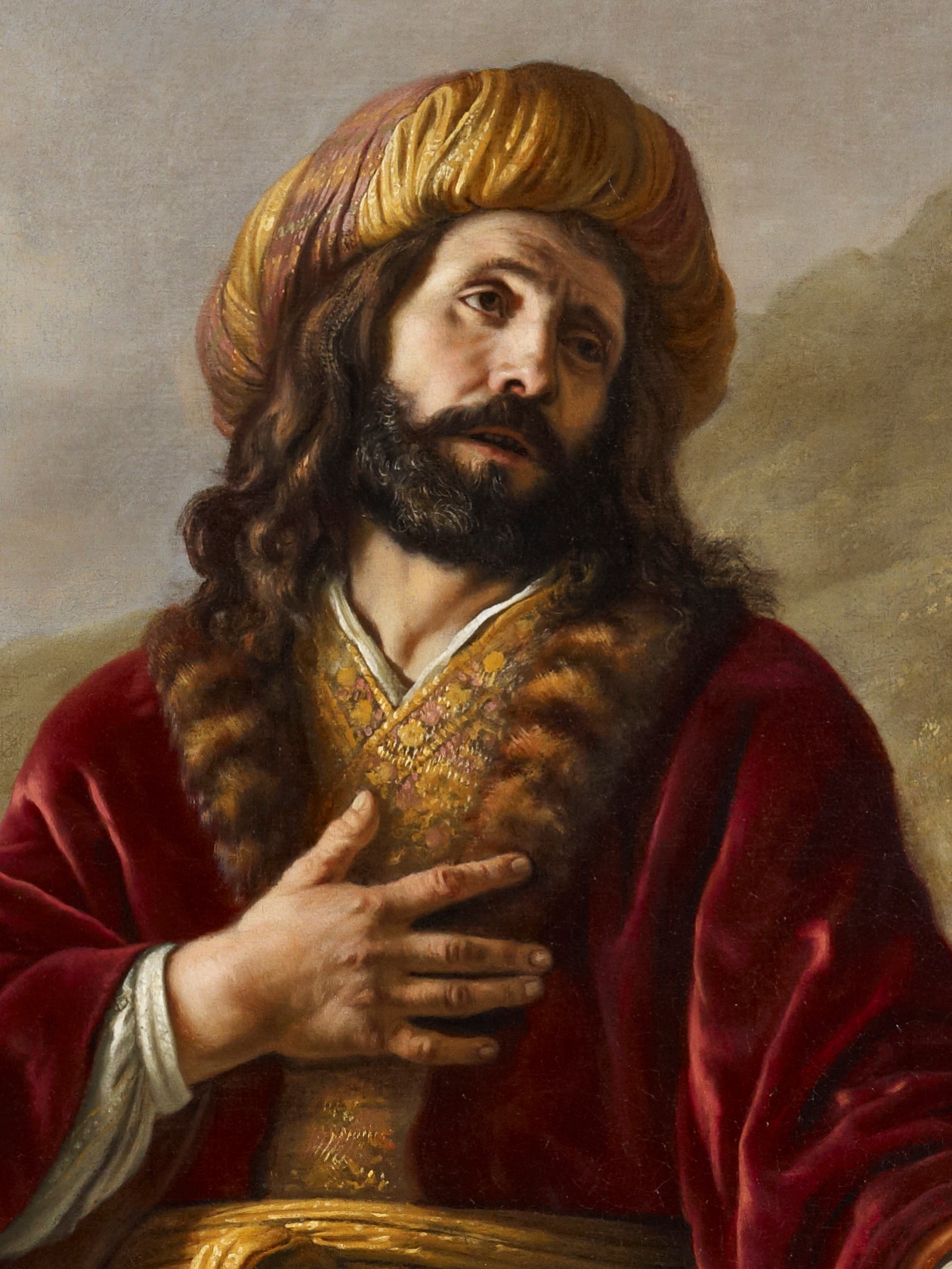
Israel, Yaʿaqōv
Israelites
Ladder, Wrestling Figure
About Jacob
Jacob, a pivotal figure in the Abrahamic religions, is revered as the third Hebrew patriarch and the progenitor of the twelve tribes of Israel. His life, primarily chronicled in the Book of Genesis, is a narrative of divine encounters, familial strife, and the establishment of a lineage that would shape religious and cultural history.
Life and Historical Context
Born the son of Isaac and Rebecca, Jacob was the fraternal twin brother of Esau. The biblical account describes Jacob as acquiring Esau's birthright and, through deception with his mother's aid, receiving Isaac's patriarchal blessing. This act led to a rift with Esau and prompted Jacob's flight to Haran, where he served his uncle Laban for twenty years. During his time in Haran, Jacob married Laban's daughters, Leah and Rachel, and fathered twelve sons and one daughter, Dinah. These children would become the ancestors of the twelve tribes of Israel.
A significant event in Jacob's life was his wrestling match with a divine being by the Jabbok River, after which he was renamed Israel, meaning 'one who has prevailed with God.' This encounter is seen as a profound spiritual transformation and the source of his new identity and the name of his descendants.
Jacob later migrated with his family to Egypt during a severe drought, largely due to the influence of his son Joseph, who had risen to prominence there. He died in Egypt at the age of 147 and is traditionally said to be buried in the Cave of Machpelah in Hebron.
Significance and Legacy
Jacob's legacy is immense as the patriarch from whom the nation of Israel derived its name and identity. His story explores themes of divine providence, human fallibility, and the consequences of actions. The narrative of his life, particularly his wrestling with the divine and his transformation into Israel, has had a lasting impact on Jewish theology and practice, and his lineage continues to be a central focus in Judaism, Christianity, and Islam. While archaeological evidence for his existence remains elusive, his narrative holds immense historical and spiritual weight within the traditions that venerate him.
Source: Wikipedia ↗
Frequently Asked Questions
Who was Jacob?
Jacob was the third Hebrew patriarch in Judaism and a significant figure in Abrahamic religions. He is the son of Isaac and Rebecca, and the grandfather of the twelve tribes of Israel.
What is Jacob most remembered for?
Jacob is remembered for his wrestling match with a divine being, which resulted in him being renamed Israel, meaning 'one who has prevailed with God'. He is also known for deceiving his father to receive the patriarchal blessing meant for his older twin brother, Esau.
Who were Jacob's wives and children?
Jacob had two wives, Leah and Rachel, and two concubines, Bilhah and Zilpah. Through them, he fathered twelve sons (Reuben, Simeon, Levi, Judah, Dan, Naphtali, Gad, Asher, Issachar, Zebulun, Joseph, and Benjamin) and one daughter, Dinah.
What is the significance of the name Israel?
The name Israel was given to Jacob after he wrestled with a divine being and prevailed. This name became the eponymous ancestor of the Israelites, signifying the collective identity of his descendants.
What is the historicity of Jacob?
Scholars hold mixed views on Jacob's historicity, with archaeology offering no direct evidence of his existence. Some scholarship suggests the narratives are late literary compositions rather than historical accounts.
Where is Jacob buried?
According to the Book of Genesis, Jacob died in Egypt at the age of 147 and was supposed to have been buried in the Cave of Machpelah in Hebron.
Related Saints
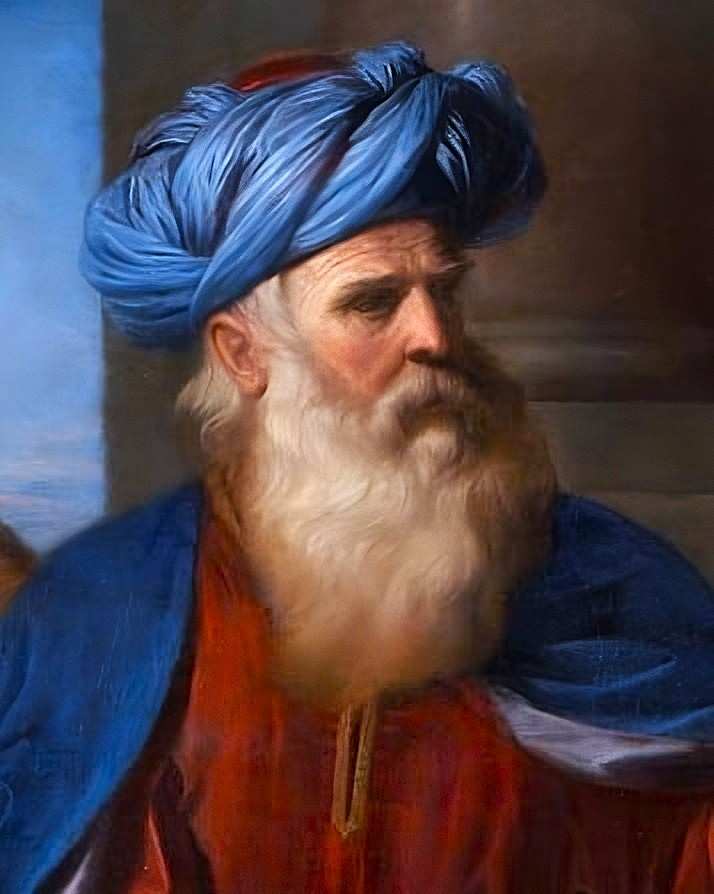
Abraham
Abraham is a foundational patriarch in Judaism, Christianity, and Islam, revered as the ancestor of the Jewish and Arab peoples. His story, primarily found in the Book of Genesis, emphasizes God's promises of progeny and land, and his unwavering faith and obedience to divine commands. He is remembered for his covenant with God, his role in establishing the lineage of Isaac and Ishmael, and his willingness to sacrifice his son Isaac, an act that solidified his status as a model of faith.
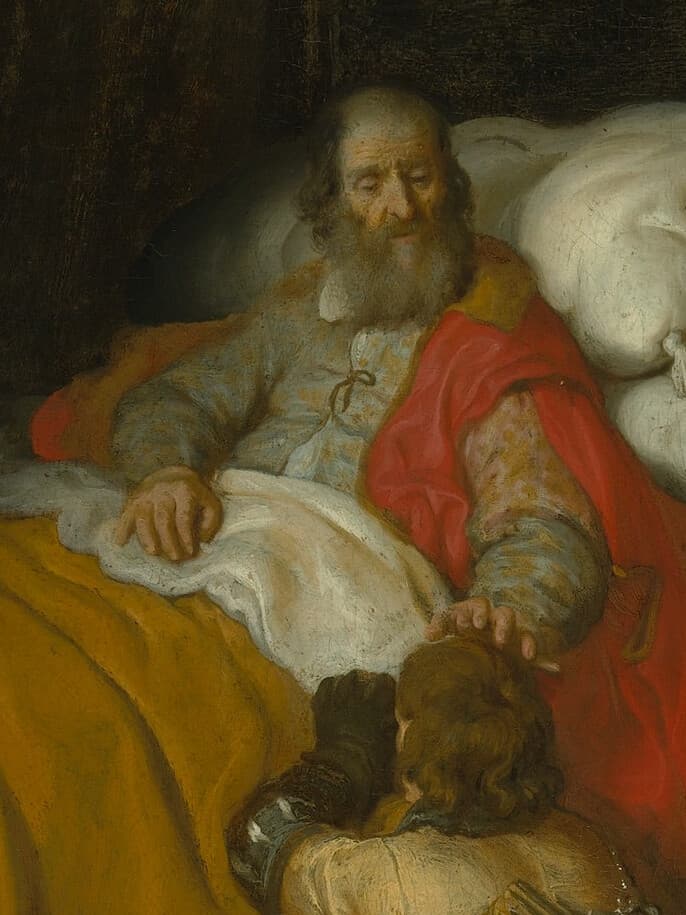
Isaac
Isaac is a central patriarchal figure in Judaism, Christianity, and Islam, revered as the son of Abraham and Sarah and the father of Jacob. He is chiefly remembered for his near-sacrifice by his father, an event seen as a supreme test of faith and a prefiguration of Christ's sacrifice in Christian tradition. Isaac's name, meaning "he will laugh," reflects the disbelief and subsequent joy of his elderly parents upon learning of his promised birth.
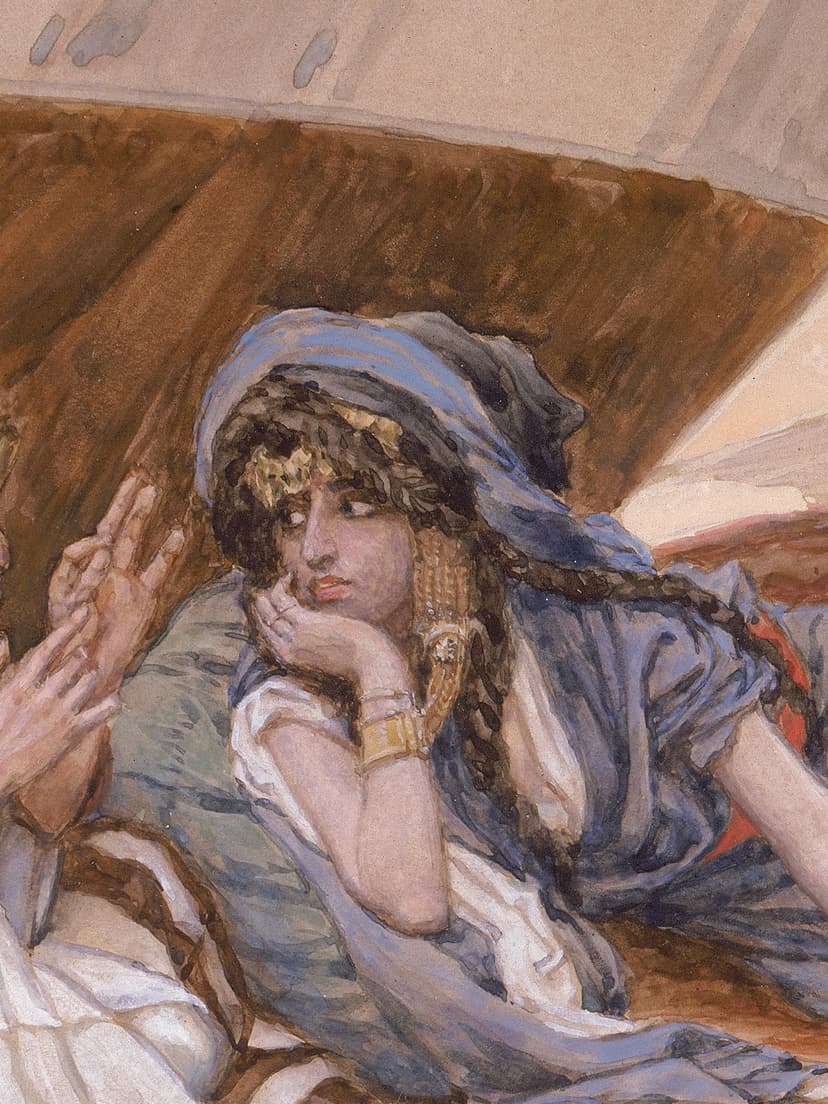
Sarah
Sarah was a pivotal matriarch and prophet in Abrahamic religions, revered as the wife of Abraham and mother of Isaac. She is remembered for her piety, hospitality, and beauty, and plays a significant role in the biblical narratives of God's covenant with Abraham. Her life story is foundational to the lineage of the Israelites and is interpreted allegorically in Christian theology.