
Whithorn Priory
Whithorn Priory was a significant medieval Scottish monastery, also functioning as the cathedral for the Diocese of Galloway. Founded in the mid-12th century, it initially housed Augustinian canons before transitioning to Premonstratensian canons, known as the White Canons. The priory was a renowned pilgrimage site due to its association with Saint Ninian, attracting royal visitors and substantial offerings, which contributed to its wealth prior to its dissolution during the Scottish Reformation.
Key Facts
- ›Founded around the middle of the 12th century by Fergus, Lord of Galloway.
- ›Initially served as a monastery for Augustinian canons, later replaced by Premonstratensian canons.
- ›Functioned as the cathedral for the re-established Diocese of Galloway.
- ›Was a major pilgrimage destination, particularly associated with Saint Ninian.
- ›Attracted numerous royal pilgrimages and offerings, contributing to its wealth.
- ›Dissolved during the Scottish Reformation, with its property eventually vested in the Crown.
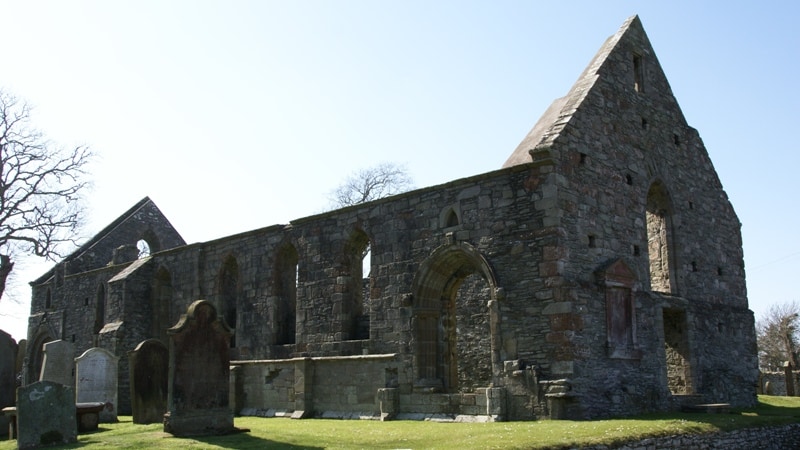
Medieval
Berfungsi Sebagai Katedral, Crypts, Site of Pilgrimage
Fergus, Lord of Galloway, Saint Ninian, Maurice, Gavin Dunbar, James Beaton, Margaret of Denmark, James Iv, Margaret Tudor, James V, Mary of Guise, Malcolm Fleming, Mary, Queen of Scots, James Vi, Thomas Sydserf, William Galloway, 3rd Marquess of Bute
- Founded By Fergus of Galloway
- Replaced By Premonstratensian Canons
- Served As Cathedral For Diocese of Galloway
- Visited By Many Scottish Sovereigns For Pilgrimage
- Dissolved During the Scottish Reformation
- Property Vested In the Crown
- Restored To the See of Galloway Under Episcopalianism
- Major Excavation and Restoration In 1886/7
About Whithorn Priory
Whithorn Priory, situated in Whithorn, Wigtownshire, Dumfries and Galloway, Scotland, was a prominent medieval religious institution that held dual significance as both a monastery and the cathedral for the Diocese of Galloway. Its origins trace back to approximately the mid-12th century, when it was established by Fergus, the Lord of Galloway, initially as a house for Augustinian canons regular. This community was later succeeded by Premonstratensian canons, colloquially known in Britain as the White Canons, around 1175.
History and Significance
The priory's role as the cathedral for the Diocese of Galloway was crucial. The canons formed the cathedral chapter, and the prior ranked second only to the bishop. This arrangement persisted for centuries, with Galloway being a suffragan see of the Archbishop of York. Whithorn Priory also gained considerable fame as a pilgrimage site, largely due to its strong association with Saint Ninian, a revered early Scottish saint. This spiritual importance drew numerous royal visitors, including Scottish monarchs like James IV and James V, who made pilgrimages to the shrine of Saint Ninian, leaving behind rich offerings that contributed significantly to the priory's wealth.
Dissolution and Later History
The monastery's opulence grew over time, but its existence as a monastic institution came to an end with the Scottish Reformation. At its dissolution, its income was estimated to be over £1000. The priory's property was eventually vested in the Crown in 1587 and later granted to the Bishop of Galloway when Episcopalianism was established in Scotland in 1606. While the priory church served as the cathedral, it underwent remodelling, particularly in the nave. Today, the surviving remains consist of the roofless nave and extensive vaulted crypts. The site underwent significant excavation and restoration in the late 19th century and is now a scheduled monument.
Source: Wikipedia ↗
Frequently Asked Questions
When was Whithorn Priory founded?
Whithorn Priory was founded around the middle of the 12th century. Its establishment occurred during the reign of King David I of Scotland.
What religious order was originally at Whithorn Priory?
The priory was initially founded for a community of Augustinian canons regular. Around 1175, these canons were replaced by Premonstratensian canons regular.
What was the significance of Whithorn Priory beyond being a monastery?
Whithorn Priory also served as the cathedral for the Diocese of Galloway. The canons of the priory formed the cathedral chapter for this diocese.
Why was Whithorn Priory a notable pilgrimage site?
Whithorn Priory was a noted place of pilgrimage due to its connection with the venerated memory of Saint Ninian. Many Scottish sovereigns visited the saint's shrine and left offerings.
What happened to Whithorn Priory after the Reformation?
Following the Scottish Reformation, the priory's property was vested in the Crown by the annexation act of 1587. It was later granted to the occupant of the See of Galloway in 1606.
What remains of Whithorn Priory today?
Today, the existing remains consist primarily of the roofless nave and extensive vaulted crypts constructed under the eastern end of the church. The complex is now a scheduled monument.
Related Monasteries
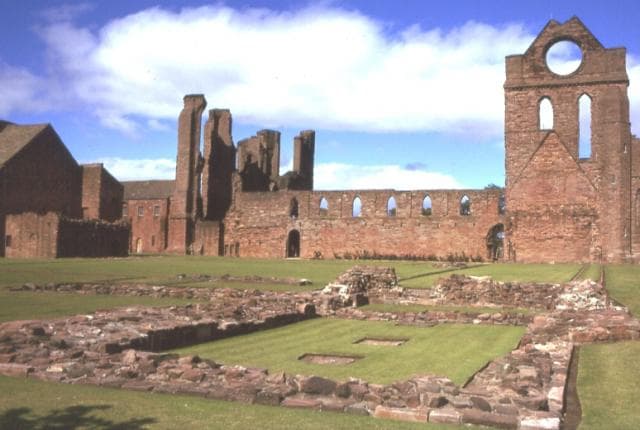
Arbroath Abbey
Arbroath Abbey, a ruined Cistercian monastery located in Arbroath, Scotland, was founded in 1178 by King William the Lion. It is renowned as the site where the Declaration of Scottish Independence was likely drafted in 1320. The Abbey, once the wealthiest in Scotland, is now managed by Historic Environment Scotland and is a popular tourist attraction, notable for its distinctive red sandstone ruins.

Dundrennan Abbey
Dundrennan Abbey was a Cistercian monastery established in 1142 in Dundrennan, Scotland. Known for its Romanesque architecture, the abbey reflects the austere Cistercian ideal and is noted for the preservation of its original forms due to its hard-weathering grey sandstone construction. Although extensively ruined, it holds historical significance as the site where Mary, Queen of Scots, spent her final night in Scotland in 1568 before fleeing.
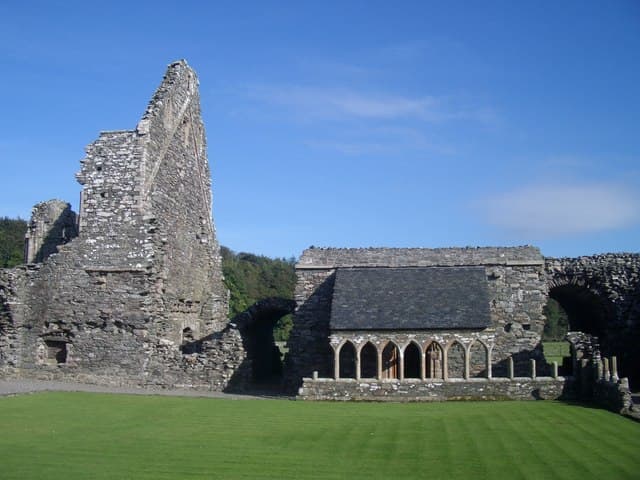
Glenluce Abbey
Glenluce Abbey was a Cistercian monastery founded around 1190 by Rolland, Lord of Galloway. After the Scottish Reformation in 1560, the abbey fell into disuse and its lands were controversially acquired by the Kennedy family. Today, the ruins of Glenluce Abbey are a scheduled monument, having undergone partial restoration.