
Whithorn Priory
Diocese of Galloway·Roman Catholic / Anglican (historically)·Scotland
Whithorn Priory was a significant medieval Scottish monastery that also functioned as the cathedral for the Diocese of Galloway. Founded in the mid-12th century, it became a renowned pilgrimage site due to its association with Saint Ninian, attracting royal visitors and accumulating considerable wealth before its dissolution during the Scottish Reformation.
Key Facts
- ›Founded around the MID-12th century by Fergus, Lord of Galloway, initially for Augustinian canons, later replaced by Premonstratensian canons.
- ›Served as the cathedral chapter for the re-established Diocese of Galloway, with the prior ranking second only to the bishop.
- ›A notable pilgrimage destination due to its connection with Saint Ninian, drawing visits from Scottish monarchs.
- ›Became opulent, with an estimated income of over £1000 at its dissolution.
- ›The visible remains today consist of a roofless nave and extensive vaulted crypts.
- ›Underwent excavation and restoration in 1886/7 by William Galloway, funded by the 3rd Marquess of Bute.
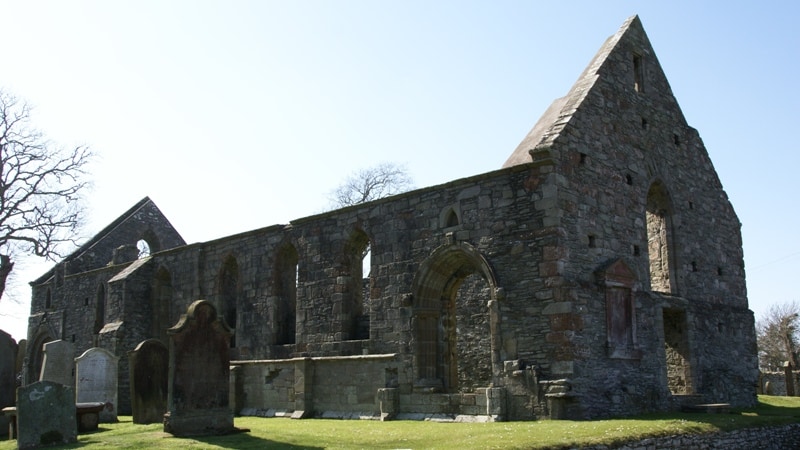
Extensive Vaulted Crypts, Site of Saint Ninian's Shrine, Former Cathedral of the Diocese of Galloway
William Galloway
About Whithorn Priory
Whithorn Priory, located in Whithorn, Wigtownshire, Dumfries and Galloway, Scotland, was a significant medieval ecclesiastical complex that served as both a monastery and the cathedral for the Diocese of Galloway. Its history is deeply intertwined with the veneration of Saint Ninian, making it a prominent pilgrimage destination for centuries.
History and Significance
The priory's origins trace back to approximately the mid-12th century, founded by Fergus, Lord of Galloway, during the reign of King David I of Scotland. Initially established for Augustinian canons regular, the community later transitioned to Premonstratensian canons around 1175. These canons formed the cathedral chapter for the re-established Diocese of Galloway, with the prior holding a rank subordinate only to the bishop. The diocese itself was re-established by Fergus around the same period, as the earlier succession of bishops had ceased in the 8th or 9th centuries. Whithorn's fame as a pilgrimage site was paramount, drawing numerous Scottish sovereigns, including Margaret of Denmark, James IV, Margaret Tudor, and James V, who left rich offerings at the shrine of Saint Ninian.
The monastery prospered, becoming opulent and amassing considerable wealth. By the time of its dissolution under the Scottish Reformation, its income was estimated to be over £1000. This prosperity led to the priory being placed under the rule of a commendatory prior in 1516. The last Catholic prior, Malcolm Fleming, was imprisoned in 1563 for celebrating Mass. In 1563, Mary, Queen of Scots, visited Whithorn from Glenluce Abbey. The priory's entire property was vested in the Crown in 1587 and later granted to the Bishop of Galloway in 1606 when Episcopalianism was re-established in Scotland.
Architecture and Remains
The priory church itself served as the cathedral, featuring a long nave without aisles, a choir of comparable length, and a lady chapel. Thomas Sydserf, Bishop of Galloway from 1635 to 1638, initiated an ambitious remodeling of the nave. By 1684, both the nave and the western tower were still intact. Today, the surviving remains consist primarily of the roofless nave and the extensive vaulted crypts beneath the eastern end of the former church.
Excavation and Restoration
A significant excavation and restoration project took place in 1886/7, led by William Galloway and financed by the 3rd Marquess of Bute. The complex is now recognized as a scheduled monument, preserving its historical and architectural importance. Notable individuals buried at Whithorn include Walter of Whithorn, Henry of Holyrood, Simon de Wedale, and Archibald Douglas, 5th Earl of Angus (whose heart was interred elsewhere).
Source: Wikipedia ↗
Frequently Asked Questions
When was Whithorn Priory founded?
Whithorn Priory was founded around the middle of the 12th century. It was established by Fergus, the Lord of Galloway, during the reign of King David I of Scotland.
What religious order was associated with Whithorn Priory?
Initially, the priory was founded for a community of Augustinian canons regular. Around 1175, these monks were replaced by Premonstratensian canons regular, also known as the White Canons.
Why was Whithorn Priory a significant pilgrimage site?
Whithorn Priory was a noted place of pilgrimage due to its strong connection with the venerated memory of Saint Ninian. Many Scottish sovereigns, including James IV and James V, made pilgrimages there and left substantial offerings.
What happened to Whithorn Priory during the Scottish Reformation?
During the Scottish Reformation, the monastery's income was estimated at over £1000. The property was vested in the Crown by an act in 1587, and it was granted to the occupant of the See of Galloway in 1606 when Episcopalianism was established in Scotland.
What remains of Whithorn Priory today?
The existing remains of Whithorn Priory consist of the roofless nave and extensive vaulted crypts that were constructed under the eastern end of the church. The nave and western tower were intact in 1684.
Related Cathedrals

Whithorn
Whithorn is a historic royal burgh in Dumfries and Galloway, Scotland, significant as the site of the first recorded Christian church in Scotland, Candida Casa, built by Saint Ninian around 397 CE. The town's historical importance is rooted in its role as a major medieval pilgrimage destination, particularly associated with Saint Ninian.
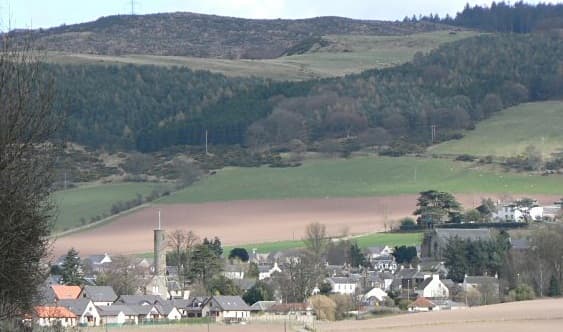
Abernethy, Perth and Kinross
Abernethy, Perth and Kinross, is a historic village in Scotland that was a significant religious and political center for the Picts. Its most prominent surviving medieval structure is the Abernethy Round Tower, one of only two such Irish-style towers remaining in Scotland, which likely served a monastic purpose. The village's strategic location near the confluence of the Rivers Earn and Tay and its historical importance are key to understanding its development.

Ardmore
Ardmore Cathedral, officially the ruins of St. Declan's Monastery, is a significant historical and architectural site in County Waterford, Ireland. Traditionally founded in the 5th century by St. Declan, it served as the seat of the Bishop of Ardmore before its diocese was merged into Lismore by the 13th century. The site features a remarkable collection of medieval structures, including a round tower, an oratory, and the remains of the cathedral itself, showcasing centuries of architectural development.