
Whithorn
Whithorn is a historic royal burgh in Dumfries and Galloway, Scotland, significant as the site of the first recorded Christian church in Scotland, Candida Casa, built by Saint Ninian around 397 CE. The town's historical importance is rooted in its role as a major medieval pilgrimage destination, particularly associated with Saint Ninian.
Key Facts
- ›Founded by Saint Ninian around 397 CE with the construction of Candida Casa, the first Christian church in Scotland.
- ›Became a significant medieval pilgrimage site, with Whithorn Priory once housing the shrine of Saint Ninian.
- ›The site of an 8th-century Anglo-Saxon monastery and the revived See of Galloway.
- ›The modern name "Whithorn" is derived from the Anglo-Saxon "Hwit Ærn" or "Hwiterne", meaning 'White House', a translation of Candida Casa.
- ›The museum at the site holds one of Scotland's largest collections of early medieval carved stones, including the 5th-century Latinus Stone.
- ›The Whithorn Crozier, a notable 12th-century artifact, was discovered at the site.

Candida Casa, Whithorn Priory Ruins, Shrine of Saint Ninian, Museum of Carved Stones, Latinus Stone, Whithorn Crozier, Saint Ninian's Chapel
Harry Stuart Goodhart Rendel
About Whithorn
Whithorn: Cradle of Christianity in Scotland
Whithorn, a historic royal burgh nestled in Dumfries and Galloway, Scotland, holds a paramount place in the nation's religious history. Its fame stems from being the site of Candida Casa, often referred to as the "White/Shining House," which stands as the first recorded Christian church in Scotland. Tradition attributes its construction to Saint Ninian around 397 CE, marking the dawn of Christianity in the region.
Historical Significance and Development
The name "Whithorn" itself is a testament to its origins, derived from the Anglo-Saxon "Hwit Ærn" or "Hwiterne," a direct translation of the Latin Candida Casa. This area later became a significant monastic center, with an Anglo-Saxon monastery established in the 8th century. It also served as the heart of the revived See of Galloway from the 12th century. For centuries, Whithorn was a major pilgrimage destination, particularly for those seeking veneration at the shrine of Saint Ninian, housed within the now ruinous late-medieval Whithorn Priory.
Archaeological Treasures and Modern Recognition
Extensive excavations at the Whithorn site have unearthed a wealth of historical artifacts and architectural remnants. The town's museum is home to one of Scotland's most significant collections of early medieval carved stones, including the historically vital 5th-century inscribed Latinus Stone, considered Scotland's earliest surviving Christian memorial. Among the notable finds is the Whithorn Crozier, an exquisite example of 12th-century craftsmanship. The nearby Isle of Whithorn, a peninsula, retains the roofless remains of the 13th-century Saint Ninian's Chapel, a landmark for medieval pilgrims arriving by sea.
Contemporary Whithorn
While the grand priory church is now a ruin, the spiritual legacy of Whithorn endures. The 19th-century parish church stands on the priory site, and the town continues to attract visitors interested in its rich history and archaeology. The site is managed by Historic Environment Scotland, preserving its heritage for future generations.
Source: Wikipedia ↗
Frequently Asked Questions
What is Whithorn famous for?
Whithorn is primarily known as the location of Candida Casa, the first recorded Christian church in Scotland, founded by Saint Ninian around 397 CE. It was also a major medieval pilgrimage destination.
What is the significance of Candida Casa?
Candida Casa, meaning 'White/Shining House', was the first Christian church in Scotland, built by Saint Ninian. The name Whithorn is a modern form of its Anglo-Saxon translation.
Is Whithorn a pilgrimage site today?
While the medieval priory church is now ruinous, the historical significance of Whithorn as a pilgrimage destination remains. The Isle of Whithorn, with the remains of Saint Ninian's Chapel, was a landing point for medieval pilgrims.
What can be seen at the Whithorn site today?
Visitors can explore the ruins of Whithorn Priory, which include the medieval nave and vaults that once held Saint Ninian's shrine. A museum on the site displays carved stones and artifacts, including the Whithorn Crozier.
When was Whithorn founded?
The town's significance began with the founding of Candida Casa by Saint Ninian around 397 CE. An Anglo-Saxon monastery was later established on the site in the 8th century.
Related Cathedrals

Ardmore
Ardmore Cathedral, officially the ruins of St. Declan's Monastery, is a significant historical and architectural site in County Waterford, Ireland. Traditionally founded in the 5th century by St. Declan, it served as the seat of the Bishop of Ardmore before its diocese was merged into Lismore by the 13th century. The site features a remarkable collection of medieval structures, including a round tower, an oratory, and the remains of the cathedral itself, showcasing centuries of architectural development.
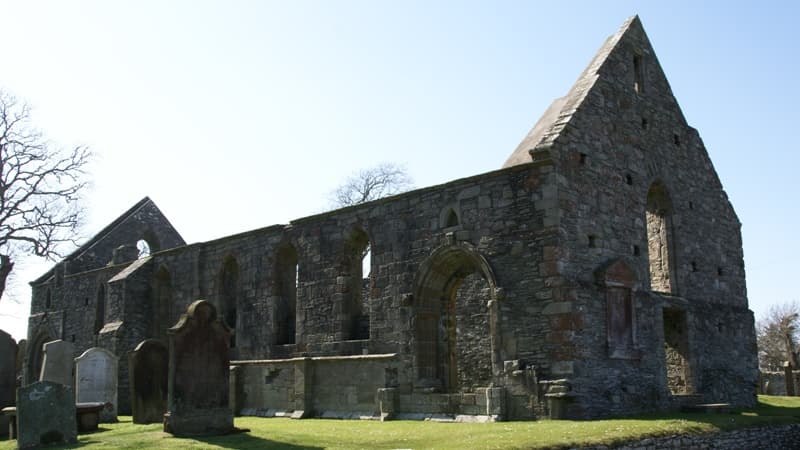
Whithorn Priory
Whithorn Priory was a significant medieval Scottish monastery that also functioned as the cathedral for the Diocese of Galloway. Founded in the mid-12th century, it became a renowned pilgrimage site due to its association with Saint Ninian, attracting royal visitors and accumulating considerable wealth before its dissolution during the Scottish Reformation.
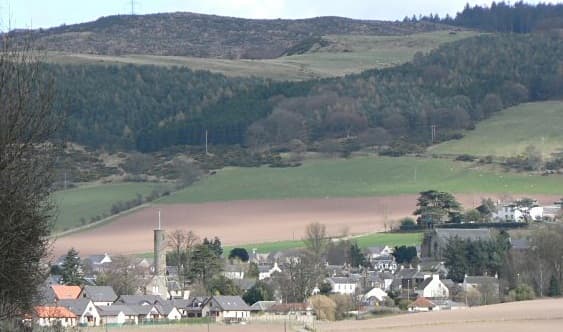
Abernethy, Perth and Kinross
Abernethy, Perth and Kinross, is a historic village in Scotland that was a significant religious and political center for the Picts. Its most prominent surviving medieval structure is the Abernethy Round Tower, one of only two such Irish-style towers remaining in Scotland, which likely served a monastic purpose. The village's strategic location near the confluence of the Rivers Earn and Tay and its historical importance are key to understanding its development.