
Abernethy, Perth and Kinross
Dunblane (historic), St Andrews, Dunkeld and Dunblane (modern Episcopal)·Church of Scotland·Scotland
Abernethy, Perth and Kinross, is a historic village in Scotland that was a significant religious and political center for the Picts. Its most prominent surviving medieval structure is the Abernethy Round Tower, one of only two such Irish-style towers remaining in Scotland, which likely served a monastic purpose. The village's strategic location near the confluence of the Rivers Earn and Tay and its historical importance are key to understanding its development.
Key Facts
- ›Abernethy was an important Pictish religious and political center.
- ›The village is home to one of Scotland's two surviving Irish-style round towers, dating from the 11th to early 12th centuries.
- ›The Treaty of Abernethy, between William the Conqueror and Malcolm III of Scotland, was concluded here in 1072.
- ›It was the site of a medieval priory of Augustinian canons and later a collegiate church.
- ›The current parish church, Kirk of St Bride, dates to the 19th century but is built on the site of a former medieval church and monastery.
- ›Abernethy was historically a burgh of barony, with its status confirmed in 1628.
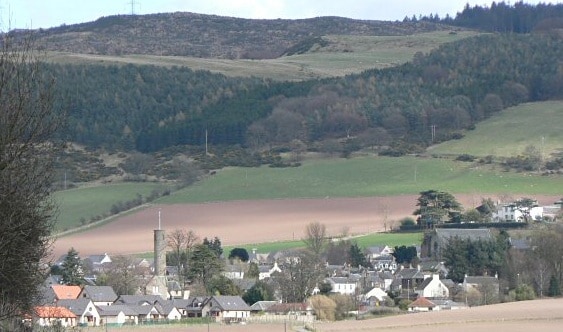
Romanesque, Medieval
- Abernethy Round Tower
- Site of Pictish Religious and Political Center
- Site of the Treaty of Abernethy
- Kirk of St Bride
- Remains of A Former Collegiate Church
11th Century, 12th Century, 19th Century
About Abernethy, Perth and Kinross
Abernethy, located in the Perth and Kinross council area of Scotland, is a village with a history stretching back to Roman times and a significant past as a religious and political center for the Picts.
History and Significance
The name Abernethy, first recorded in the 10th century, derives from the Pictish word 'aber' meaning 'river mouth,' referring to its location near the confluence of the Rivers Earn and Tay. Historically, Abernethy served as a key Pictish stronghold and a center of early Christianity. It was the site of the Treaty of Abernethy in 1072, where Malcolm III of Scotland is said to have acknowledged William the Conqueror's overlordship. The village was also home to a priory of Augustinian canons, founded in 1272, which was later suppressed in favor of a collegiate church.
Architectural Heritage
The most striking surviving medieval structure in Abernethy is its round tower. Standing 74 feet high, it is one of only two Irish-style round towers remaining in Scotland, the other being at Brechin. The tower, built in two stages and dating from the 11th to early 12th centuries, likely served a monastic purpose and is now maintained by Historic Environment Scotland. Visitors can climb to the top via a modern spiral staircase. The present-day parish church, the Kirk of St Bride, was built in the 19th century on the site of a former medieval church and monastery, incorporating elements of its historical religious significance.
Modern Abernethy
In modern times, Abernethy has transitioned from its historical roles. It was granted burgh status in the 15th century and retained instruments of local government until wide-ranging reforms in the late 20th century. The village maintains a community council and is represented by Perth and Kinross Council. Today, Abernethy is a peaceful village with a museum dedicated to its history, a primary school, and local amenities, while continuing to be an active place of Christian worship.
Source: Wikipedia ↗
Frequently Asked Questions
What is Abernethy Round Tower?
The Abernethy Round Tower is a well-preserved medieval structure, standing 74 feet high. It is one of only two Irish-style round towers remaining in Scotland and likely served a monastic purpose in its early history.
What historical significance does Abernethy hold?
Abernethy was a major religious and political center for the Picts. It was also the site of the Treaty of Abernethy in 1072, a significant agreement between Scottish and English rulers, and was home to a medieval priory and later a collegiate church.
When was Abernethy founded?
The name Abernethy is recorded from the 10th century as Aburnethige, meaning 'mouth of the river Nethy.' Evidence of early settlement, including a Bronze Age log boat and Iron Age hillfort remains, suggests human activity in the area predates this significantly.
What is the current status of Abernethy as a religious center?
Abernethy has a long Christian history, with its parish church dedicated to Saint Brigid. While it was once the seat of a Pictish bishopric, it is now part of the Church of Scotland's ecclesiastical parish of Abernethy, Dron and Arngask, and the Scottish Episcopal Church's Diocese of St Andrews, Dunkeld and Dunblane.
Related Cathedrals
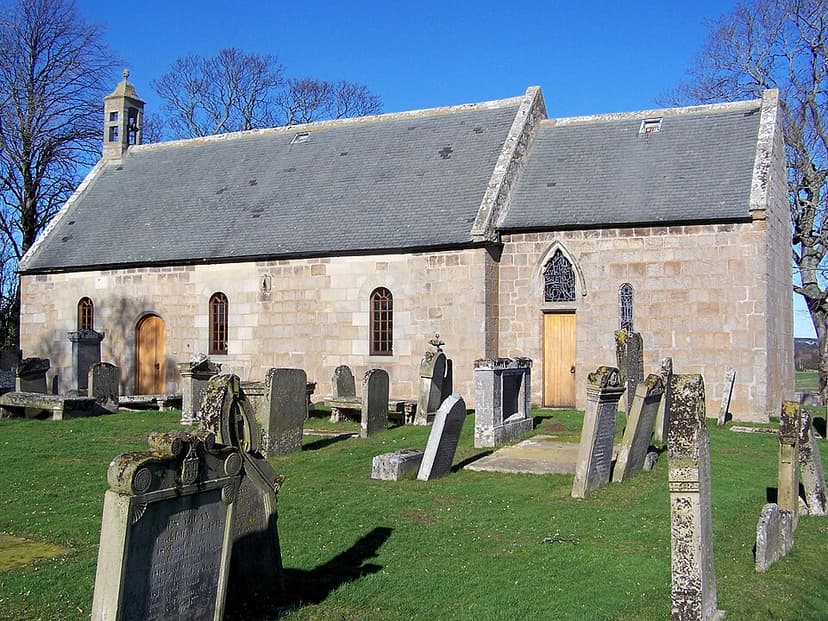
Birnie Kirk
Birnie Kirk is a rare 12th-century Norman parish church in Moray, Scotland, notable for being the first cathedral of the Bishop of Moray and one of Scotland's oldest churches in continuous use. While it served as a cathedral from 1107 to 1184, it later became a parish church. The building and its surrounding archaeological remains are a scheduled monument.
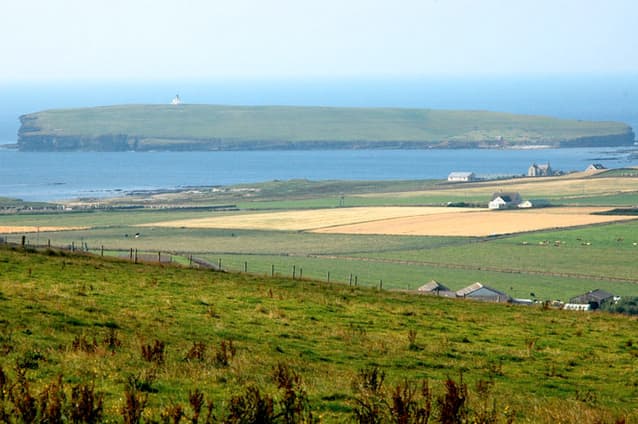
Birsay
Birsay is a parish in Orkney, Scotland, notable for its ancient monuments and historical significance as the potential site of Orkney's first cathedral. The area features prehistoric and Norse settlements on the Brough of Birsay and the ruins of the 16th-century Earl's Palace.

Abercorn
Abercorn is a village and civil parish in West Lothian, Scotland, historically significant for its 7th-century monastery which served as the seat of Bishop Trumwine, the sole bishop of the Northumbrian see of the Picts. While the monastery is long gone, the parish church partially dates from the 12th century and contains notable private aisles and mausoleums. Abercorn also held a short-lived bishopric in the 7th century and was the site of a castle from the 12th century.