
Birsay
Birsay is a parish in Orkney, Scotland, notable for its ancient monuments and historical significance as the potential site of Orkney's first cathedral. The area features prehistoric and Norse settlements on the Brough of Birsay and the ruins of the 16th-century Earl's Palace.
Key Facts
- ›The parish of Birsay is located in the north-west corner of the Mainland of Orkney, Scotland.
- ›Key ancient monuments include the prehistoric and Norse settlements on the tidal island of Brough of Birsay.
- ›The Earl's Palace, built in the late 16th century by Robert Stewart, 1st Earl of Orkney, is a significant ruined residence.
- ›St Magnus Church in Birsay is believed to be the site of Orkney's first cathedral, Christchurch, founded in the 11th-12th centuries.
- ›The seat of the diocese was later moved to St Magnus Cathedral in Kirkwall, but bishops maintained a residence in Birsay.
- ›The land in the parish is primarily used for agriculture, particularly for rearing beef cattle.
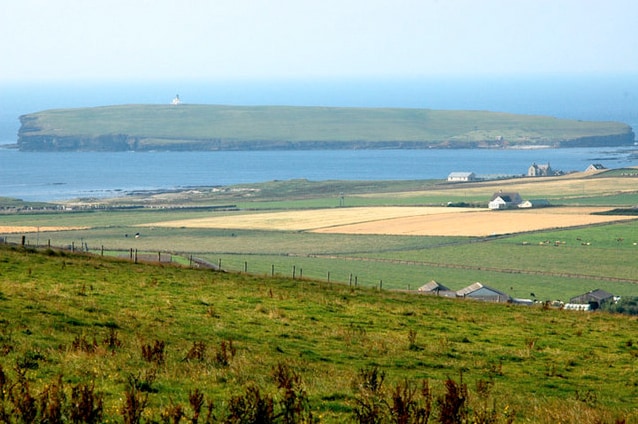
- Prehistoric and Norse Settlements On Brough of Birsay
- Ruins of the Earl's Palace
- Broch of Gurness
- St Magnus Church
- Earl's Palace Architecture With Corner Towers
16th Century, 11th-12th Century
About Birsay
Birsay is a parish situated in the northwest corner of The Mainland of Orkney, Scotland. The area is primarily characterized by its agricultural landscape, with vast grasslands dedicated to beef cattle farming. However, Birsay is perhaps more widely known for its significant ancient monuments, which draw numerous visitors, particularly during the summer months. These sites offer a glimpse into the region's rich prehistoric and Norse past.
Ancient Monuments and Historical Significance
Two key historical sites are managed by Historic Scotland and are major attractions. The first is the extensive prehistoric and Norse settlements found on the tidal island known as the Brough of Birsay. This site provides archaeological evidence of long-term human habitation and a blend of ancient cultures. The second significant monument is the ruined Earl's Palace, located on the mainland opposite the Brough, at the northern edge of the village. This palace, along with other Stewart residences, served as a primary dwelling for the Earls of Orkney.
Further evidence of prehistoric human activity can be observed on the north shore of Mainland Orkney, including the remarkably well-preserved ruins of the Broch of Gurness. These structures collectively highlight the enduring human presence and the diverse historical layers within the Birsay parish.
The Earl's Palace
The Earl's Palace is a late 16th-century structure, commissioned by Robert Stewart, the 1st Earl of Orkney. Despite its current ruined state, the palace's original layout can be discerned as four ranges surrounding an open courtyard. A distinctive architectural feature for Scotland at that time, and unprecedented in the northern parts of the country, were the small corner towers. The building has been uninhabited since the close of the 17th century. Its original grounds included walled garden enclosures, an archery range, and a bowling green, indicating a sophisticated and amenity-rich residence for its era.
St Magnus Church and Early Cathedral Site
Adjacent to the Earl's Palace stands the St Magnus Church, which serves the united parishes of Birsay and Harray. Architectural remnants embedded in the church's walls, coupled with archaeological excavations of its foundations, strongly suggest that this location was once the site of Orkney's very first cathedral, known as Christchurch. This early religious center is believed to have been established in the 11th to 12th centuries by Earl Thorfinn the Mighty, following his pilgrimage to Rome. Although the episcopal seat was relocated to St Magnus Cathedral in Kirkwall in the later 12th century, the Bishops of Orkney maintained a residence in Birsay, referred to by the Latin name Mons Bellus, well into the late medieval period. A nearby bridge is also thought to have medieval origins, further attesting to the long history of settlement and infrastructure in the area.
Source: Wikipedia ↗
Frequently Asked Questions
What are the main ancient monuments in Birsay?
The most significant ancient monuments in Birsay are the prehistoric and Norse settlements on the tidal island of Brough of Birsay and the ruins of the Earl's Palace. The Broch of Gurness is also an important prehistoric site in the area.
Who built the Earl's Palace in Birsay?
The Earl's Palace was built by Robert Stewart, 1st Earl of Orkney, who lived from 1533 to 1593. The date 1574 was formerly carved above its main entrance.
Is Birsay the site of Orkney's first cathedral?
Architectural fragments and archaeological investigations suggest that the site of St Magnus Church in Birsay was the location of Orkney's first cathedral, Christchurch. It was founded in the 11th-12th centuries by Earl Thorfinn the Mighty.
Where was the seat of the Orkney diocese moved to?
The seat of the diocese of Orkney was transferred to St Magnus Cathedral in Kirkwall during the later 12th century. However, Bishops of Orkney continued to reside in Birsay into late medieval times.
What is the primary use of land in Birsay parish?
Almost all of the land in Birsay parish is dedicated to agriculture. It is chiefly grassland used for the rearing of beef cattle.
Related Cathedrals
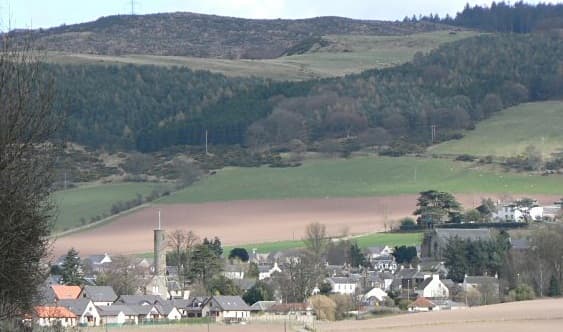
Abernethy, Perth and Kinross
Abernethy, Perth and Kinross, is a historic village in Scotland that was a significant religious and political center for the Picts. Its most prominent surviving medieval structure is the Abernethy Round Tower, one of only two such Irish-style towers remaining in Scotland, which likely served a monastic purpose. The village's strategic location near the confluence of the Rivers Earn and Tay and its historical importance are key to understanding its development.
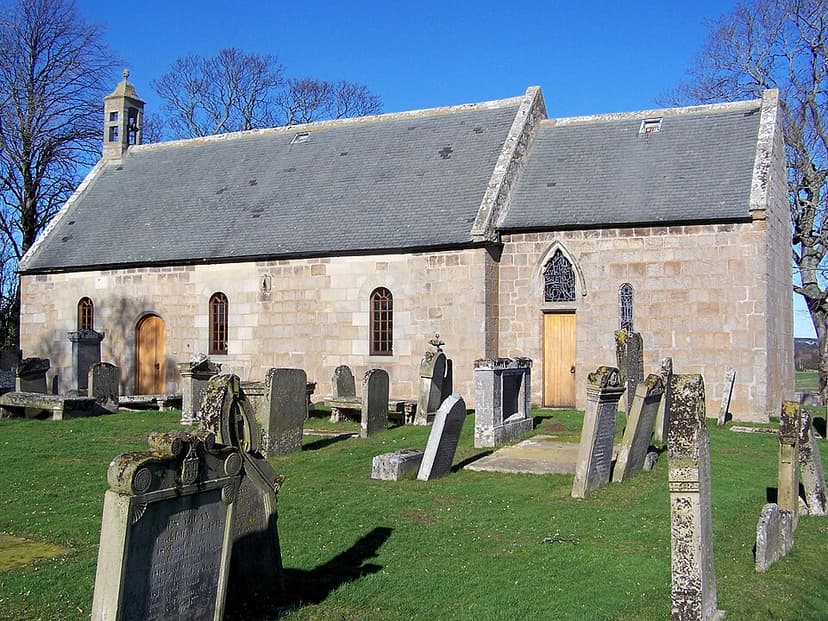
Birnie Kirk
Birnie Kirk is a rare 12th-century Norman parish church in Moray, Scotland, notable for being the first cathedral of the Bishop of Moray and one of Scotland's oldest churches in continuous use. While it served as a cathedral from 1107 to 1184, it later became a parish church. The building and its surrounding archaeological remains are a scheduled monument.

Abercorn
Abercorn is a village and civil parish in West Lothian, Scotland, historically significant for its 7th-century monastery which served as the seat of Bishop Trumwine, the sole bishop of the Northumbrian see of the Picts. While the monastery is long gone, the parish church partially dates from the 12th century and contains notable private aisles and mausoleums. Abercorn also held a short-lived bishopric in the 7th century and was the site of a castle from the 12th century.