
Dundrennan Abbey
Dundrennan Abbey was a Cistercian monastery established in 1142 in Dundrennan, Scotland. Known for its Romanesque architecture, the abbey reflects the austere Cistercian ideal and is noted for the preservation of its original forms due to its hard-weathering grey sandstone construction. Although extensively ruined, it holds historical significance as the site where Mary, Queen of Scots, spent her final night in Scotland in 1568 before fleeing.
Key Facts
- ›Founded in 1142 by Fergus of Galloway and monks from Rievaulx Abbey.
- ›Architectural style is primarily Romanesque, reflecting Cistercian ideals.
- ›Constructed from hard-weathering grey sandstone, preserving architectural detail.
- ›Mary, Queen of Scots, spent her last night in Scotland at the abbey in 1568.
- ›Became Crown property in 1587 after the Scottish Reformation and later fell into ruin.
- ›Maintained today by Historic Environment Scotland as a scheduled monument.

Romanesque
- Purity and Restraint of Architecture
- Well-Preserved Original Architectural Forms and Mouldings
- Site Where Mary, Queen of Scots, Spent Her Final Night In Scotland
Fergus of Galloway, King David I of Scotland, Mary, Queen of Scots
- Founded In 1142
- Mary, Queen of Scots, Spent Her Final Night In Scotland Here In 1568
- Passed To the Crown In 1587 Following the Scottish Reformation
About Dundrennan Abbey
Dundrennan Abbey, situated in Dundrennan, Scotland, near Kirkcudbright, was a significant Cistercian monastery established in 1142. Its founding was a joint effort by Fergus of Galloway and King David I of Scotland, with the assistance of monks from Rievaulx Abbey. The abbey is renowned for its Romanesque architectural style, which exemplifies the Cistercian ideal of purity and restraint. Constructed from exceptionally hard-weathering grey sandstone, its original architectural forms and mouldings remain remarkably well-preserved, despite the site being extensively ruined today, with the transepts being the most substantial surviving elements.
Historical Significance
Dundrennan Abbey holds a poignant place in Scottish history as the location where Mary, Queen of Scots, spent her final night in Scotland in 1568. Following the defeat at the Battle of Langside, she sought refuge at the abbey before crossing the Solway Firth to Workington, subsequently being imprisoned by the English. The abbey's monastic life concluded following the Scottish Reformation in 1587, after which the lands were transferred to the Crown. The site subsequently fell into disuse and ruin, even being utilized for housing livestock, before its preservation as a scheduled monument by Historic Environment Scotland.
Architectural and Archaeological Insights
The architectural character of Dundrennan Abbey is a key aspect of its heritage. The Romanesque design, coupled with the durable sandstone, allows for a clear appreciation of its original structure and decorative elements. Archaeological excavations conducted in the 1990s in the cloister area uncovered remains of monastic buildings such as a warming house, a novice's day room, a great drain, and a latrine block. These findings have helped to establish a building sequence for the abbey, spanning from the late 12th century through to the late 16th century, providing valuable insights into its development and use over centuries.
Source: Wikipedia ↗
Frequently Asked Questions
When was Dundrennan Abbey founded?
Dundrennan Abbey was founded in 1142. The establishment was a collaborative effort by Fergus of Galloway and King David I of Scotland, with monks arriving from Rievaulx Abbey.
What is the architectural style of Dundrennan Abbey?
The abbey is built in the Romanesque architectural style. Its design is characterized by purity and restraint, embodying the austere ideals of the Cistercian order.
What is the historical significance of Dundrennan Abbey?
Dundrennan Abbey is historically significant as the place where Mary, Queen of Scots, spent her final night in Scotland in 1568. This occurred after the Battle of Langside, before she crossed to England.
What is the current status of Dundrennan Abbey?
Dundrennan Abbey is now extensively ruined, with the transepts being the main surviving parts. Historic Environment Scotland maintains the site as a scheduled monument.
Who was involved in the founding of Dundrennan Abbey?
The abbey was founded by Fergus of Galloway and King David I of Scotland. Monks from Rievaulx Abbey were also instrumental in its establishment.
Related Monasteries
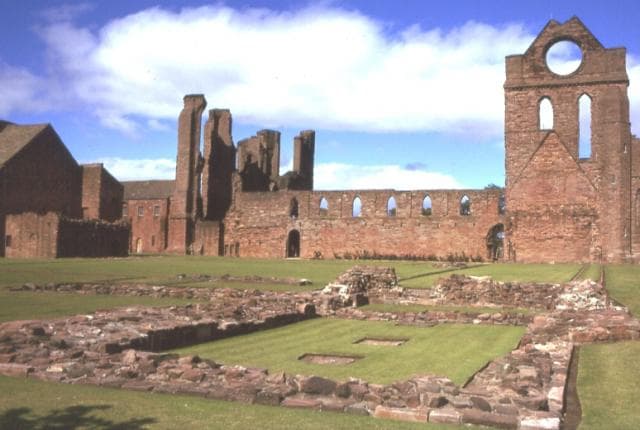
Arbroath Abbey
Arbroath Abbey, a ruined Cistercian monastery located in Arbroath, Scotland, was founded in 1178 by King William the Lion. It is renowned as the site where the Declaration of Scottish Independence was likely drafted in 1320. The Abbey, once the wealthiest in Scotland, is now managed by Historic Environment Scotland and is a popular tourist attraction, notable for its distinctive red sandstone ruins.
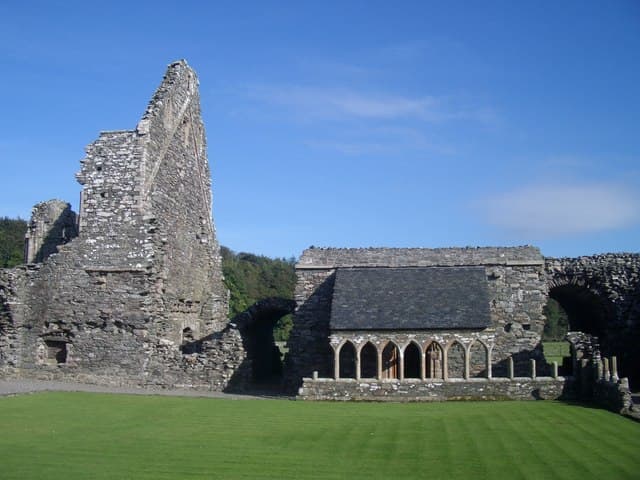
Glenluce Abbey
Glenluce Abbey was a Cistercian monastery founded around 1190 by Rolland, Lord of Galloway. After the Scottish Reformation in 1560, the abbey fell into disuse and its lands were controversially acquired by the Kennedy family. Today, the ruins of Glenluce Abbey are a scheduled monument, having undergone partial restoration.

Jedburgh Abbey
Jedburgh Abbey is a ruined Augustinian abbey located in the Scottish Borders. Founded in the 12th century, it was dedicated to the Virgin Mary and grew to significant stature, with its abbot even invited to Scottish Parliaments. The abbey endured numerous attacks and destructions throughout its history, especially during periods of conflict between Scotland and England, before its end with the Scottish Reformation in 1560. Today, it is a scheduled monument managed by Historic Environment Scotland and a popular tourist attraction.