
Arbroath Abbey
Arbroath Abbey, a ruined Cistercian monastery located in Arbroath, Scotland, was founded in 1178 by King William the Lion. It is renowned as the site where the Declaration of Scottish Independence was likely drafted in 1320. The Abbey, once the wealthiest in Scotland, is now managed by Historic Environment Scotland and is a popular tourist attraction, notable for its distinctive red sandstone ruins.
Key Facts
- ›Founded in 1178 by King William the Lion for Tironensian Benedictine monks.
- ›Consecrated in 1197 and dedicated to Saint Thomas Becket.
- ›Famous as the likely drafting site of the 1320 Declaration of Scottish Independence.
- ›Once the wealthiest monastery in Scotland.
- ›Ruined after the Reformation, with stones used for local buildings until preservation efforts began in 1815.
- ›The Stone of Destiny was found on the site of the Abbey's altar in 1951.

Early English, Late Norman, Transitional
- Red Sandstone Ruins
- Site of the Declaration of Arbroath Drafting
- Abbot's House
- Impressive Gatehouse
- the 'Round O'
- Visitor Centre With Reconstruction Model and Displays
King William the Lion, Saint Thomas Becket, Abbot Bernard, Cardinal David Beaton, James V
- Founding of the Abbey
- Consecration of the Abbey
- Burial of King William the Lion
- Drafting of the Declaration of Scottish Independence
- Visit By James V
- Fall Into Ruin After the Reformation
- Stone Raiding For Local Buildings
- Stone of Destiny Found On Altar Site
- Historical Re-Enactment of Declaration Signing
About Arbroath Abbey
Arbroath Abbey, situated in the Scottish town of Arbroath, stands as a significant historical and architectural ruin. Founded in 1178 by King William the Lion for a community of Tironensian Benedictine monks from Kelso Abbey, it was consecrated in 1197 and dedicated to Saint Thomas Becket. The Abbey was King William the Lion's sole personal foundation, and he was interred before its high altar in 1214. It quickly became the wealthiest monastery in Scotland, endowed with considerable income and privileges, including the right to hold markets and build a harbour.
History and Significance
The Abbey's most enduring fame stems from its association with the Declaration of Scottish Independence in 1320. This pivotal document, asserting Scotland's sovereignty, is believed to have been drafted within its walls by Abbot Bernard, who also served as Chancellor of Scotland under King Robert I. The Abbey's fortunes declined significantly following the Reformation, leading to its ruin and the repurposing of its stones for local construction until preservation efforts commenced in 1815. A notable event occurred on Christmas Day 1950 when the Stone of Destiny was stolen from Westminster Abbey and subsequently found on the site of Arbroath Abbey's altar in April 1951.
Architectural Features and Current Status
Constructed over sixty years using local red sandstone, Arbroath Abbey largely presents a coherent 'Early English' architectural design, though it incorporates late Norman or transitional elements. The cruciform church was substantial, measuring 276 feet in length. Today, visitors can explore the remains of the sacristy, southern transept, parts of the choir, presbytery, nave, and western towers. The western doorway, with its round-arched processional entrance, is a notable feature. The distinctive round window in the south transept, known locally as the 'Round O', once served as a beacon for mariners and gives Arbroath's inhabitants their nickname, 'Reid Lichties'. The impressive gatehouse and the well-preserved Abbot's House, dating from the 13th to 16th centuries, are key surviving structures of the monastic complex. Managed by Historic Environment Scotland, the Abbey is open to the public and hosts historical re-enactments commemorating the Declaration of Arbroath, with an annual event held on April 6th.
Source: Wikipedia ↗
Frequently Asked Questions
When was Arbroath Abbey founded?
Arbroath Abbey was founded in 1178 by King William the Lion. It was consecrated in 1197.
What is Arbroath Abbey most famous for?
The Abbey is most famous for its association with the 1320 Declaration of Scottish Independence, which is believed to have been drafted by Abbot Bernard. It was also King William the Lion's only personal foundation.
What is the current status of Arbroath Abbey?
Arbroath Abbey fell into ruin after the Reformation, and its stones were used for local buildings. Preservation efforts began in the 19th century, and it is now cared for by Historic Environment Scotland and is open to the public as a historic site.
What architectural style is Arbroath Abbey?
The Abbey was built using local red sandstone over about sixty years, giving an impression of a single coherent 'Early English' architectural design. It also features elements of late Norman or transitional work, particularly in its round-arched processional doorway.
Are there any special events held at Arbroath Abbey?
Since 1947, a major historical re-enactment commemorating the Declaration of Arbroath has been held within the Abbey ruins. A special event marking the signing is also held annually on April 6th, featuring a street procession and theatre.
What is the 'Round O' at Arbroath Abbey?
The 'Round O' is the distinctive round window high in the south transept of Arbroath Abbey. It was originally lit at night as a beacon for mariners, and this tradition gives the inhabitants of Arbroath the colloquial name 'Reid Lichties'.
Related Monasteries

Lincluden Priory
Lincluden Priory, also known as Lincluden Collegiate Church, is a ruined religious house in Scotland founded around 1160. Initially established as a nunnery, it was later transformed into a college with a provost and canons by Archibald the Grim. The site is notable for its association with the Douglas family and holds the tomb of Princess Margaret, Countess of Douglas.
Restenneth Priory
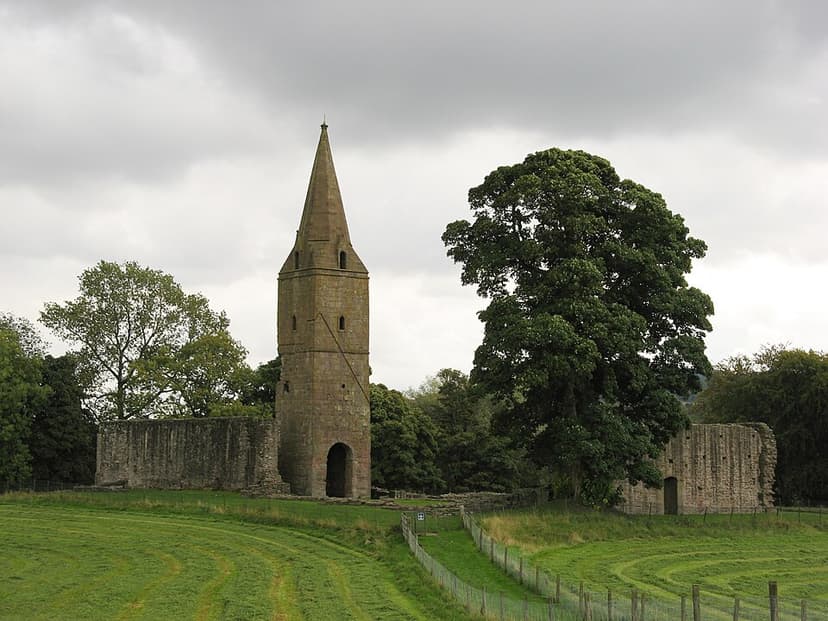
Restenneth Priory was an Augustinian monastic house founded by Jedburgh Abbey in 1153 under the patronage of King Malcolm IV of Scotland. While literary evidence for its earliest history is scarce, archaeological findings suggest a monastic presence from very early times, with speculation linking it to an early Pictish church. The priory was consistently small and dependent on its mother-house, eventually being secularized in 1606 and now existing primarily as ruins, with its tower remaining.
Lindores Abbey
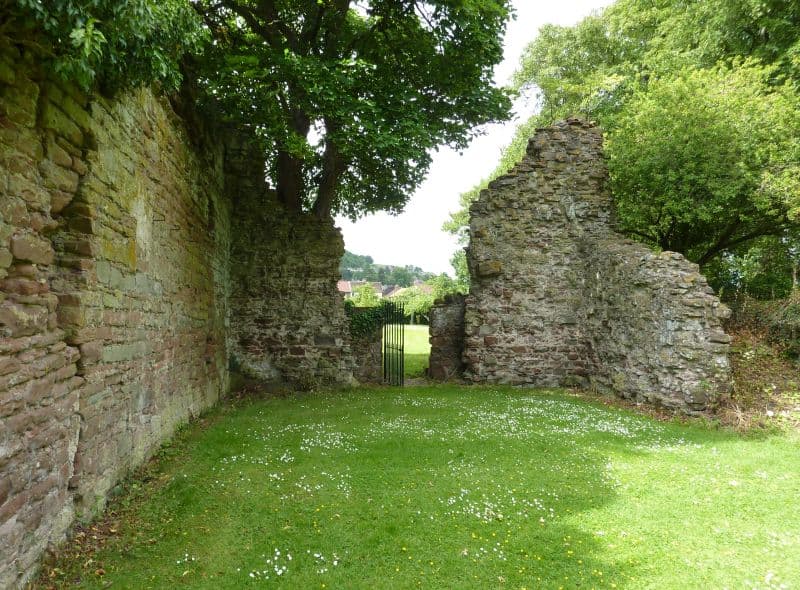
Lindores Abbey was a Tironensian monastery founded in 1191 near Newburgh, Fife, Scotland. Once a significant religious and royal site, it was largely destroyed during the Reformation in the 16th century. Today, it exists as a ruin, with ongoing archaeological investigations revealing new insights into its history, including evidence of early whisky production.