
Lincluden Priory
Lincluden Priory, also known as Lincluden Collegiate Church, is a ruined religious house in Scotland founded around 1160. Initially established as a nunnery, it was later transformed into a college with a provost and canons by Archibald the Grim. The site is notable for its association with the Douglas family and holds the tomb of Princess Margaret, Countess of Douglas.
Key Facts
- ›Founded circa 1160 by Uchtred of Galloway, initially as a nunnery.
- ›Transformed into a collegiate church with a provost and twelve canons by Archibald the Grim in the late 14th century.
- ›Houses the tomb of Princess Margaret, Countess of Douglas, daughter of Robert III of Scotland.
- ›Survived the Reformation but the last Mass was celebrated on Christmas Day 1585.
- ›The ruins are protected as a scheduled monument by Historic Environment Scotland.

- Tomb of Princess Margaret, Countess of Douglas
- Armorial Carvings
Lincluden Abbey, Lincluden Collegiate Church
Uchtred of Galloway, Gille Brigte, Archibald the Grim, Archibald Douglas, 4th Earl of Douglas, Princess Margaret, Countess of Douglas, Robert Iii of Scotland, Henry Iv of England, Lord Maxwell, Robert Douglas, Thomas Pennant, Robert Burns, Robert Louis Stevenson
- Foundation of the Priory
- Dismissal of Nuns and Establishment of A College By Archibald the Grim
- Henry Iv of England's Protection Order For the College of Lincluden
- Last Mass Celebrated
- Abandonment of Domestic Ranges As A Tower House
- Ruins Cleaned Up and Fenced Off By Capt Maxwell of Terregles
- Ruins Taken Into State Care
- Effigy of Princess Margaret Removed For Conservation
About Lincluden Priory
Lincluden Priory, also known by its later designation Lincluden Collegiate Church, is a significant ruined religious establishment located in Dumfries, Scotland. Situated at the confluence of Cluden Water and the River Nith, the site's history traces back to its foundation as a nunnery circa 1160 by Uchtred of Galloway. This marked a departure from the earlier monastic traditions in Galloway, which primarily consisted of houses for monks.
Foundation and Transformation
The priory's establishment was a venture by Uchtred during a period of considerable political turbulence in Galloway, marked by complex relationships with his brother, the King of Scots, and the King of England. Initially, the religieuses were likely Cluniac sisters, later supplemented by local novices.
A pivotal transformation occurred in the late 14th century when Archibald the Grim, Lord of Galloway and 3rd Earl of Douglas, assumed control. He dismissed the nuns, alleging they had broken their vows, and established a new College comprising a Provost and twelve Canons. This change reoriented the religious house's purpose and administration.
Douglas Patronage and Later History
The Douglas family extensively patronized Lincluden, investing significantly in the adornment of its church, evidenced by numerous armorial carvings still visible in the ruins. A key figure associated with the site is Princess Margaret, Countess of Douglas, daughter of Robert III of Scotland and wife of Archibald Douglas, 4th Earl of Douglas. Her tomb is a notable feature within the priory ruins. The buildings managed to survive the iconoclasm of the Reformation in 1560. The last Mass was celebrated on Christmas Day 1585, and the last provost, Robert Douglas, departed around 1590, after which ownership passed to the Maxwells of Terregles.
The domestic ranges of the collegiate church were later converted into a tower house, which fell into disuse by the late 17th century. The ruins have experienced periods of neglect and vandalism, including damage to Princess Margaret's effigy, which was removed for conservation in 1999 and replaced with a replica. The ruins were taken into state care in 1922 and remain protected as a scheduled monument.
Literary and Historical Associations
Lincluden has inspired literary figures, most notably the poet Robert Burns, who visited the site and was moved to write the song "The Minstrel of Lincluden" in 1794, capturing the melancholic beauty of the ruins. Robert Louis Stevenson also visited the priory with his father in 1873.
Notable burials at Lincluden include Uchtred of Galloway, Archibald the Grim, and Princess Margaret, Countess of Douglas. The site continues to attract interest as a historical and romantic ruin.
Source: Wikipedia ↗
Frequently Asked Questions
When was Lincluden Priory founded?
Lincluden Priory was founded circa 1160. It was established by Uchtred of Galloway as a nunnery.
What was the transformation of Lincluden Priory?
In the late 14th century, Archibald the Grim dismissed the nuns and established a College consisting of a Provost and twelve Canons. This significantly altered the nature of the religious house.
Are there any notable burials at Lincluden Priory?
Yes, prominent burials include Uchtred of Galloway, the founder; Archibald the Grim; and Princess Margaret, Countess of Douglas. Her tomb, with fine armorial carvings, is still extant within the ruins.
What is the current status of Lincluden Priory?
Lincluden Priory is now a ruined religious house. The remaining ruins are protected as a scheduled monument and were taken into state care in 1922.
Is Lincluden Priory open to the public?
The ruins of Lincluden Priory are accessible to the public as a scheduled monument. They were cleaned up and fenced off in 1882, and a caretaker was installed on site.
Related Monasteries
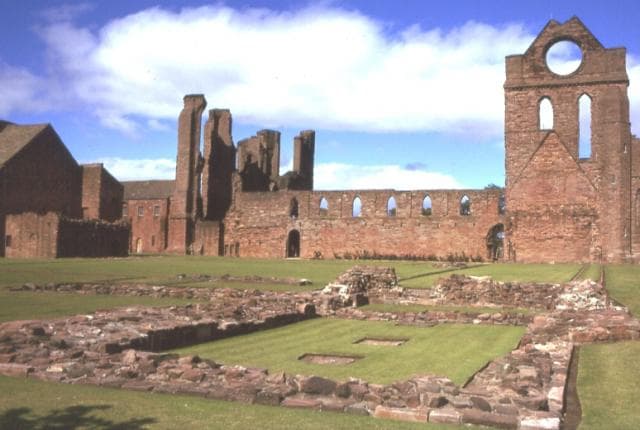
Arbroath Abbey
Arbroath Abbey, a ruined Cistercian monastery located in Arbroath, Scotland, was founded in 1178 by King William the Lion. It is renowned as the site where the Declaration of Scottish Independence was likely drafted in 1320. The Abbey, once the wealthiest in Scotland, is now managed by Historic Environment Scotland and is a popular tourist attraction, notable for its distinctive red sandstone ruins.

Dundrennan Abbey
Dundrennan Abbey was a Cistercian monastery established in 1142 in Dundrennan, Scotland. Known for its Romanesque architecture, the abbey reflects the austere Cistercian ideal and is noted for the preservation of its original forms due to its hard-weathering grey sandstone construction. Although extensively ruined, it holds historical significance as the site where Mary, Queen of Scots, spent her final night in Scotland in 1568 before fleeing.
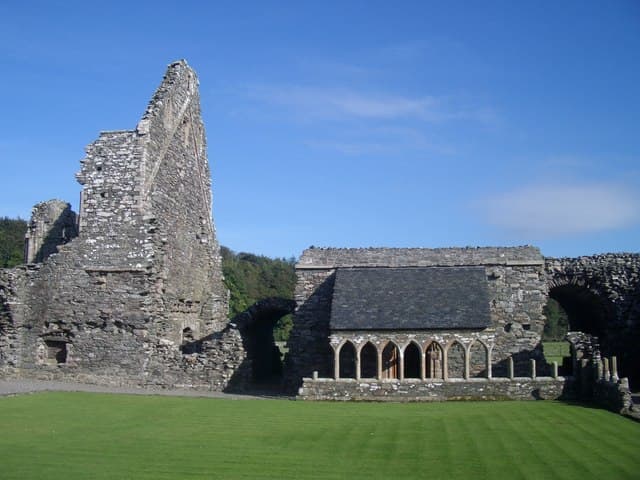
Glenluce Abbey
Glenluce Abbey was a Cistercian monastery founded around 1190 by Rolland, Lord of Galloway. After the Scottish Reformation in 1560, the abbey fell into disuse and its lands were controversially acquired by the Kennedy family. Today, the ruins of Glenluce Abbey are a scheduled monument, having undergone partial restoration.