
Restenneth Priory
Restenneth Priory was an Augustinian monastic house founded by Jedburgh Abbey in 1153 under the patronage of King Malcolm IV of Scotland. While literary evidence for its earliest history is scarce, archaeological findings suggest a monastic presence from very early times, with speculation linking it to an early Pictish church. The priory was consistently small and dependent on its mother-house, eventually being secularized in 1606 and now existing primarily as ruins, with its tower remaining.
Key Facts
- ›Founded in 1153 by Jedburgh Abbey with royal patronage from King Malcolm IV of Scotland.
- ›Always a small Augustinian priory, dependent on its mother-house.
- ›Speculated to be a site of an even earlier Pictish church built in 710.
- ›Secularized in 1606 and converted into a lordship.
- ›Most of the priory is now in ruins, with the tower being the main surviving structure.
- ›The site was excavated in 1883 by William Galloway and Dr. John Stuart.
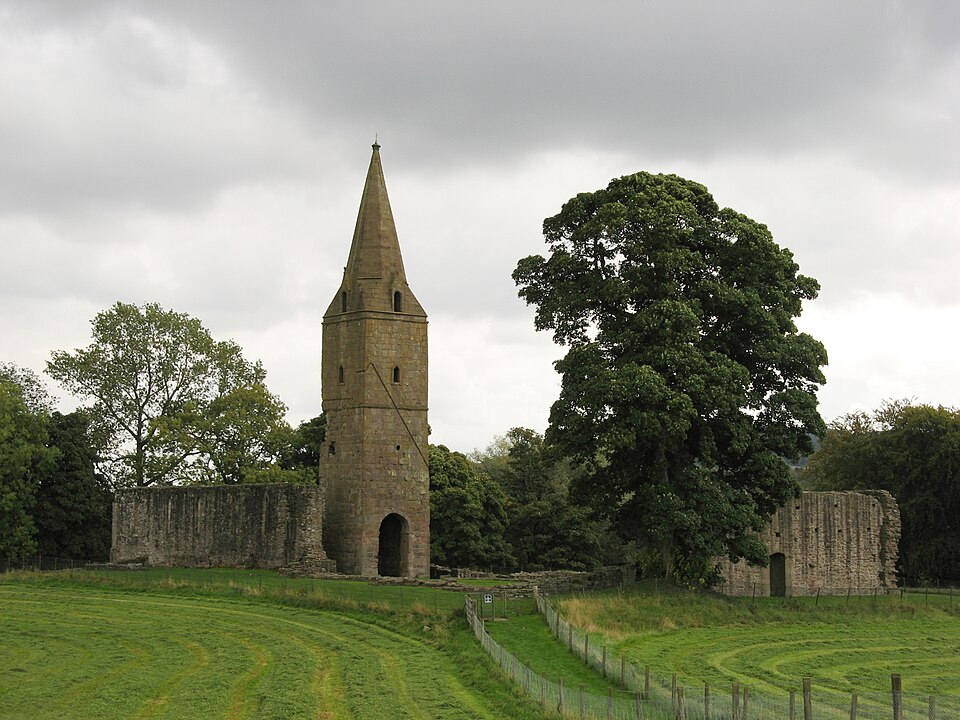
Tower, Choir
King Malcolm Iv of Scotland, King James Iv of Scotland, George Dempster of Dunnichen, John Bruce
Founded In 1153, Secularized In 1606, Excavated In 1883
About Restenneth Priory
Restenneth Priory was a monastic institution of Augustinian canons, established in 1153 under the patronage of King Malcolm IV of Scotland. It was founded by Jedburgh Abbey, and while historical records for its earliest period are limited, archaeological evidence strongly suggests a monastic presence at the site from very early times. There is even speculation that Restenneth might have been the location of a Pictish church dedicated to St Peter, built in 710 for King Nechtán mac Der Ilei.
History and Development
Throughout its history, Restenneth Priory remained a relatively small and dependent house, closely tied to its mother-house in Jedburgh. By 1501, its community consisted of only two canons, and its annual income was modest. Attempts were made in the early 16th century to incorporate Restenneth into the Royal Chapel or the archbishopric of St Andrews, but these did not materialize. The priory's monastic life effectively ended in 1606 when it was converted into a secular lordship for Thomas Erskine, Viscount Fentoun.
Following the Reformation, the site saw various owners, including George Dempster of Dunnichen, who designated part of the choir as a family burial site. Historical accounts also suggest that John Bruce, the youngest son of Robert I and twin brother of David II, was buried at the priory around 1327.
Site and Legacy
Archaeological excavations were conducted at Restenneth in 1883 by William Galloway and Dr. John Stuart. Today, the priory exists predominantly in ruins, with only the tower remaining intact. The site is recognized as a scheduled monument. Located just outside the town of Forfar, Restenneth Priory shares an access road with the Angus Archives. Visitors can reach the priory via a short path, where the surrounding fields and the medieval architecture are the primary visual elements, with the modern town and roads obscured.
Source: Wikipedia ↗
Frequently Asked Questions
When was Restenneth Priory founded?
Restenneth Priory was founded in 1153. Archaeological evidence suggests a monastic presence at the site from very early times, possibly even dating back to a Pictish church built in 710.
What religious order was Restenneth Priory part of?
Restenneth Priory was a monastic house of Augustinian canons.
What is the current state of Restenneth Priory?
Today, all of Restenneth Priory except for the tower is in ruins. The site is a scheduled monument and is located just outside Forfar.
Is Restenneth Priory still an active monastery?
No, Restenneth Priory is not an active monastery. It was secularized in 1606 and turned into a lordship, and the majority of its structures are now ruins.
Who were some notable figures associated with Restenneth Priory?
Notable figures include King Malcolm IV of Scotland, who patronized its founding, and King James IV of Scotland, who suggested its incorporation into the archbishopric of St Andrews. George Dempster of Dunnichen, who used part of the choir as a burial site, is also associated with the priory after the Reformation. There is also a report of John Bruce, son of Robert I, being buried there around 1327.
Related Monasteries
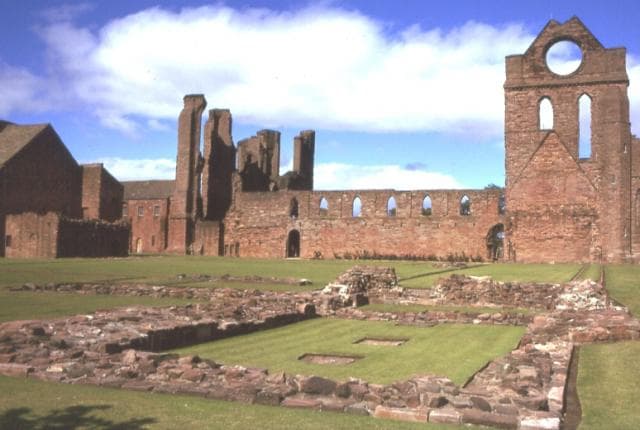
Arbroath Abbey
Arbroath Abbey, a ruined Cistercian monastery located in Arbroath, Scotland, was founded in 1178 by King William the Lion. It is renowned as the site where the Declaration of Scottish Independence was likely drafted in 1320. The Abbey, once the wealthiest in Scotland, is now managed by Historic Environment Scotland and is a popular tourist attraction, notable for its distinctive red sandstone ruins.

Dundrennan Abbey
Dundrennan Abbey was a Cistercian monastery established in 1142 in Dundrennan, Scotland. Known for its Romanesque architecture, the abbey reflects the austere Cistercian ideal and is noted for the preservation of its original forms due to its hard-weathering grey sandstone construction. Although extensively ruined, it holds historical significance as the site where Mary, Queen of Scots, spent her final night in Scotland in 1568 before fleeing.
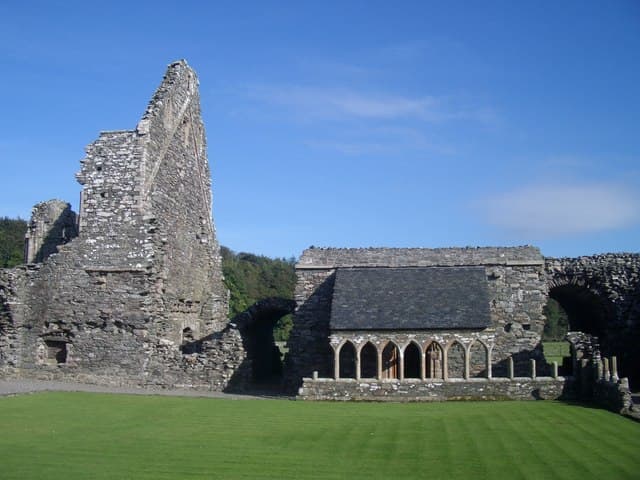
Glenluce Abbey
Glenluce Abbey was a Cistercian monastery founded around 1190 by Rolland, Lord of Galloway. After the Scottish Reformation in 1560, the abbey fell into disuse and its lands were controversially acquired by the Kennedy family. Today, the ruins of Glenluce Abbey are a scheduled monument, having undergone partial restoration.