
St Andrews
St Andrews·Roman Catholic (historically), now Church of Scotland (as a ruin)·Scotland
St Andrews Cathedral, a ruined Gothic structure in Fife, Scotland, was once the largest church in the country and the ecclesiastical capital of Scotland. Despite its current state, it remains a significant historical site, drawing visitors interested in its religious and architectural past. The town of St Andrews itself is globally recognized as the "home of golf" and hosts one of the oldest universities in the English-speaking world.
Key Facts
- ›The cathedral's origins trace back to a monastery established in the MID-eighth century, which housed relics of Saint Andrew.
- ›Construction of the present cathedral began in 1160 and was completed and consecrated in 1318.
- ›It was the principal church in Scotland and a major pilgrimage destination in medieval Europe.
- ›The cathedral fell into decay following the Scottish Reformation in 1559.
- ›Today, St Andrews Cathedral exists as a ruin and is protected as a scheduled monument.
- ›The site includes the remains of St Rule's Church, which predates the cathedral and served as an earlier religious center.
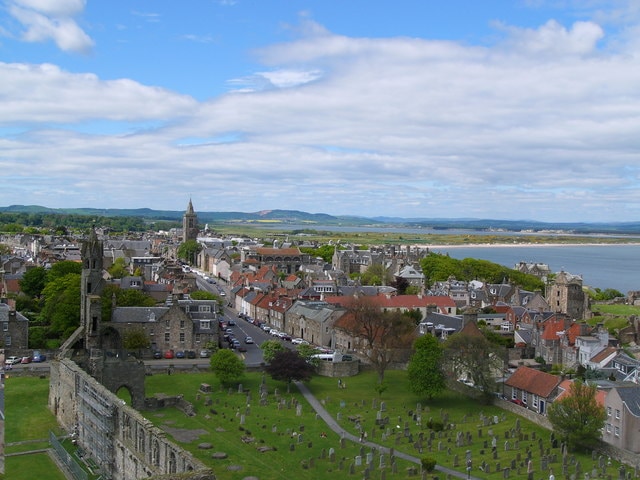
Ruined Gothic Architecture, Remains of St Rule's Church, Site of Historical Pilgrimage, Association With Relics of Saint Andrew
About St Andrews
St Andrews Cathedral
St Andrews Cathedral, located in the coastal town of St Andrews in Fife, Scotland, stands as a poignant ruin of what was once the largest church in Scotland and the nation's ecclesiastical capital. The site's religious significance dates back to the mid-eighth century with the establishment of a monastery that housed relics of Saint Andrew the Apostle. This early foundation laid the groundwork for the grandeur that would follow.
History and Construction
The construction of the present cathedral commenced in 1160 under Bishop Arnold and was a monumental undertaking that spanned over a century. It was finally completed and consecrated in 1318 by Bishop William de Lamberton, with King Robert the Bruce in attendance. During its active years, St Andrews Cathedral was a paramount destination for pilgrims from across Scotland and Europe, drawn by the relics of Saint Andrew and the promise of blessings and cures. This influx of pilgrims fueled the town's growth and established it as a cosmopolitan center with considerable economic and political influence.
Decline and Legacy
The cathedral's prominence waned significantly following the Scottish Reformation in 1559, and it subsequently fell into decay. The Wars of the Three Kingdoms further contributed to its decline, leading to its abandonment and eventual ruin. Despite its current state, the ruins of St Andrews Cathedral, along with the adjacent St Rule's Church, are protected as a scheduled monument. They continue to attract visitors who come to explore the remains of this once-magnificent Gothic structure, offering a glimpse into Scotland's rich religious and architectural past. The town of St Andrews itself is also globally renowned as the "home of golf" and is home to the historic University of St Andrews.
Source: Wikipedia ↗
Frequently Asked Questions
When was St Andrews Cathedral built?
Construction of the cathedral began in 1160 under Bishop Arnold. It was completed and consecrated in 1318 by Bishop William de Lamberton.
Why is St Andrews Cathedral in ruins?
The cathedral, once Scotland's largest building, suffered significant decay after the Scottish Reformation in 1559 and the subsequent Wars of the Three Kingdoms. This led to its abandonment and eventual ruin.
What was the significance of St Andrews Cathedral?
St Andrews Cathedral was the largest church in Scotland and served as the ecclesiastical capital of the country. It was also a major center for pilgrimage in medieval Scotland and Europe.
What is St Andrews known for besides the cathedral?
The town of St Andrews is globally recognized as the "home of golf" due to the Royal and Ancient Golf Club and the Old Course. It is also home to the University of St Andrews, the third oldest university in the English-speaking world.
Is St Andrews Cathedral still an active place of worship?
No, St Andrews Cathedral is now a ruin and is no longer an active place of worship. It is managed as a historical site.
Related Cathedrals

Glasgow Cathedral
Glasgow Cathedral is a historic parish church of the Church of Scotland, serving as the mother church of the Archdiocese of Glasgow and the province of Glasgow from the 12th century until the Scottish Reformation. It is the oldest cathedral in mainland Scotland and the oldest building in Glasgow, notable for surviving the Reformation largely intact. The cathedral is dedicated to Saint Mungo, the city's patron saint, whose tomb is located within the Lower Church.

St Andrews Cathedral
St Andrews Cathedral is a ruined cathedral in St Andrews, Fife, Scotland, founded in 1158. It served as the principal center of the Medieval Catholic Church in Scotland and was the seat of the Archdiocese of St Andrews. Following its destruction during the 16th-century Scottish Reformation, it fell into disuse and ruin.

Iona Abbey
Iona Abbey is a historic religious site located on the island of Iona, off the west coast of Scotland. Founded by Saint Columba in 563 AD, it became a pivotal center for the spread of Christianity throughout Scotland and Western Europe. The abbey church, significantly rebuilt in the 15th century by the Lords of the Isles, is now a spiritual home for the ecumenical Iona Community and remains a popular site for Christian pilgrimage.