
Glasgow Cathedral
Glasgow Cathedral is a historic parish church of the Church of Scotland, serving as the mother church of the Archdiocese of Glasgow and the province of Glasgow from the 12th century until the Scottish Reformation. It is the oldest cathedral in mainland Scotland and the oldest building in Glasgow, notable for surviving the Reformation largely intact. The cathedral is dedicated to Saint Mungo, the city's patron saint, whose tomb is located within the Lower Church.
Key Facts
- ›The first stone cathedral was consecrated in 1136, with the present structure dedicated in 1197, though much of it dates from 13th-century rebuilding.
- ›It is dedicated to Saint Mungo (Kentigern), the patron saint of Glasgow, whose tomb is a focal point in the Lower Church.
- ›After the Reformation, the cathedral was divided to accommodate three Church of Scotland congregations and underwent restoration in the 19th century.
- ›Glasgow Cathedral has been Crown property since 1587 and is now managed by Historic Environment Scotland.
- ›The University of Glasgow held its first classes in the cathedral's chapter house following its foundation in 1451.
- ›It is one of only two medieval cathedrals in Scotland (along with St Magnus Cathedral, Orkney) to have survived the Reformation in a largely intact state.

Tomb of Saint Mungo, Lower Church, Chapter House, Blackadder Aisle, Medieval Stonework, Father Willis Organ
About Glasgow Cathedral
Glasgow Cathedral: A Historical and Spiritual Heart of Scotland
Glasgow Cathedral, known historically as the cathedral church of the Archbishop of Glasgow, stands as a paramount example of Scotland's medieval ecclesiastical architecture. It served as the mother church of the Archdiocese of Glasgow and the province of Glasgow from the 12th century until the Scottish Reformation in the 16th century. Today, it functions as a parish church of the Church of Scotland and holds the distinction of being the oldest cathedral in mainland Scotland and the oldest building in the city of Glasgow. Alongside St Magnus Cathedral in Orkney, it is one of the few medieval cathedrals to have survived the Reformation largely intact, a testament to its enduring significance.
History and Construction
The history of Glasgow Cathedral is deeply intertwined with the life of Saint Mungo (Kentigern), the city's patron saint, whose tomb lies at the heart of the cathedral's Lower Church. The first stone cathedral was consecrated in 1136, though the present structure, consecrated in 1197, largely dates from significant rebuilding efforts throughout the 13th century. Construction continued over many decades, incorporating elements like the central tower and spire, a bell-tower, and a south-west tower. The cathedral precinct, known as the chanonry, was extensive, containing various ecclesiastical buildings. The University of Glasgow, founded in 1451, even held its initial classes within the cathedral's chapter house, underscoring its central role in the city's development.
The Reformation and Beyond
The Scottish Reformation brought about profound changes, with Catholic furnishings being removed and the building eventually being divided to accommodate three separate Church of Scotland congregations. Despite suffering some damage and neglect, a renewed appreciation for its medieval architecture in the 19th century led to restoration efforts. By 1835, two of the congregations had moved, allowing for a significant restoration that aimed to return the cathedral to something closer to its former glory. In 1857, the entire building passed into the care of the state and is now managed by Historic Environment Scotland. The cathedral continues to be an active place of worship, hosting regular services and significant events, including royal visits and memorial services.
Source: Wikipedia ↗
Frequently Asked Questions
Who is Glasgow Cathedral dedicated to?
Glasgow Cathedral is dedicated to Saint Mungo, also known as Kentigern, who is the patron saint of Glasgow. His tomb is a significant feature within the cathedral's Lower Church, making it a site of medieval pilgrimage.
When was the first stone cathedral consecrated?
The first stone cathedral at Glasgow was consecrated in 1136 in the presence of King David I. Fragments of this earlier building have been discovered beneath the current structure.
What happened to Glasgow Cathedral after the Reformation?
Following the Scottish Reformation in the 16th century, Glasgow Cathedral was internally partitioned to serve three separate Church of Scotland congregations. Its Catholic furnishings were removed, and it underwent significant repairs and modifications for Presbyterian worship.
Who is responsible for the upkeep of Glasgow Cathedral today?
Glasgow Cathedral has been Crown property since 1587 and passed into the care of the state in 1857. Today, its management and preservation are the responsibility of Historic Environment Scotland.
What is the significance of the Lower Church?
The Lower Church is significant as it houses the tomb of Saint Mungo, the patron saint of Glasgow. This tomb was an important medieval pilgrimage site and is centrally located within this part of the cathedral.
Did the University of Glasgow have any connection to the cathedral?
Yes, the University of Glasgow, founded in 1451, held its first classes within the chapter house of Glasgow Cathedral. The Bishops of Glasgow also served as Chancellors of the university.
Related Cathedrals

St Andrew's Cathedral, Glasgow
The Metropolitan Cathedral Church of Saint Andrew, commonly known as St Andrew's Cathedral, is the principal Roman Catholic cathedral in Glasgow, Scotland. It serves as the mother church for the Archdiocese of Glasgow and is the seat of the Archbishop. The cathedral, designed in the Neo-Gothic style, was built to accommodate the growing Catholic population in the early 19th century.

St Magnus, Kirkwall
St Magnus Cathedral in Kirkwall, Orkney, is Scotland's oldest and the United Kingdom's most northerly cathedral. Originally a Roman Catholic cathedral founded in 1137, it is a significant example of Romanesque architecture with subsequent Gothic additions. It is now a parish church of the Church of Scotland and is owned by Orkney Islands Council.
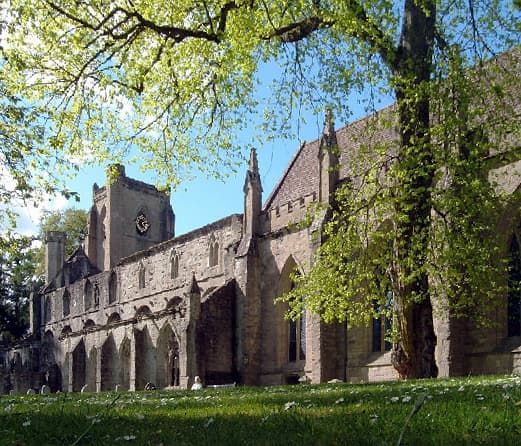
Dunkeld Cathedral
Dunkeld Cathedral is a historic Church of Scotland place of worship situated on the north bank of the River Tay in Dunkeld, Scotland. While no longer formally a cathedral with bishops, it retains the name and stands on the site of a former Culdee monastery, showcasing a blend of Gothic and Norman architectural elements. The cathedral is a significant historical site, believed to have once housed relics of Saint Columba, and is still an active parish church.