
Dunkeld Cathedral
Dunkeld Cathedral is a historic Church of Scotland place of worship situated on the north bank of the River Tay in Dunkeld, Scotland. While no longer formally a cathedral with bishops, it retains the name and stands on the site of a former Culdee monastery, showcasing a blend of Gothic and Norman architectural elements. The cathedral is a significant historical site, believed to have once housed relics of Saint Columba, and is still an active parish church.
Key Facts
- ›Construction of the cathedral proper began in 1260 and was completed in 1501, resulting in a MIX of architectural styles.
- ›It is built on the site of an earlier Culdee Monastery, with stones from the original structure visible in the eastern gable.
- ›Relics of Saint Columba were reputedly kept at Dunkeld until the Reformation.
- ›The cathedral is still used as the Church of Scotland parish church for Dunkeld.
- ›Notable burials within the cathedral include Alexander Stewart, 'the Wolf of Badenoch', and Charles Edward Stuart, Count Roehenstart.
- ›Dunkeld Cathedral is a Crown property managed by Historic Environment Scotland and is a scheduled monument.
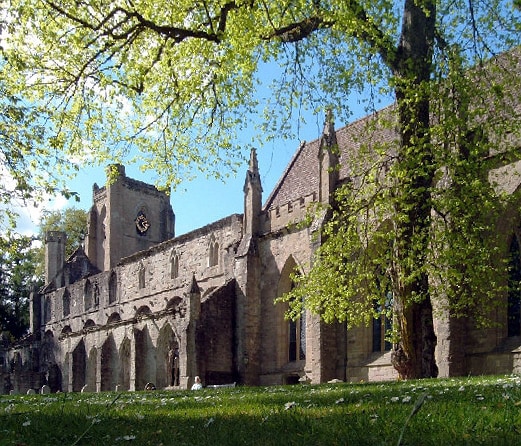
- Site of Former Culdee Monastery
- Stones From Original Monastery Visible In Eastern Gable
- Tomb and Effigy of Alexander Stewart, 'the Wolf of Badenoch'
- Chapter House Museum
About Dunkeld Cathedral
Dunkeld Cathedral is a significant historical and religious site located on the north bank of the River Tay in the town of Dunkeld, Perth and Kinross, Scotland. While it no longer functions as a formal cathedral with bishops, as per the practices of the modern Church of Scotland, it continues to bear the name and serves as the town's parish church. The structure stands on the foundations of a much older Culdee Monastery, with remnants of the original building incorporated into its fabric.
History and Architecture
The construction of the cathedral proper, built primarily from grey sandstone, began in 1260 and concluded in 1501. This extended period of building resulted in a fascinating architectural blend, featuring intermingled Gothic and Norman elements. The eastern gable notably contains stones from the earlier monastery, which dates back to the sixth or early seventh century. This early monastery, founded after an expedition by Saint Columba, was initially a simple collection of huts before being developed into a more substantial structure in the ninth century, declared the centre of the faith in Alba. Relics of Saint Columba were reputedly housed here until the Reformation, after which they were moved to Ireland.
Significance and Modern Use
Partially in ruins, Dunkeld Cathedral remains in regular use and is accessible to the public. The Chapter House Museum within the cathedral grounds offers insights into its monastic and medieval past, along with local history exhibits. The site also holds historical significance related to the Battle of Dunkeld in 1689, fought around the cathedral. Today, it functions as the Church of Scotland parish church for Dunkeld, with services held regularly, though the congregation uses a smaller church during winter months. The cathedral is a Crown property, managed by Historic Environment Scotland, and is recognized as a scheduled monument. Notable burials include Alexander Stewart, Earl of Buchan, known as 'the Wolf of Badenoch,' and Charles Edward Stuart, Count Roehenstart.
Source: Wikipedia ↗
Frequently Asked Questions
Is Dunkeld Cathedral still an active church?
Yes, Dunkeld Cathedral is still used as the Church of Scotland parish church for Dunkeld. Services are held every Sunday, although the congregation uses a different church during the winter months.
What is the architectural style of Dunkeld Cathedral?
The cathedral exhibits a blend of architectural styles due to its long construction period. Gothic and Norman elements are intermingled throughout the structure.
What historical relics are associated with Dunkeld Cathedral?
Relics of Saint Columba, including his bones, were said to have been kept at Dunkeld until the Reformation. Some still believe undiscovered Columban relics may be buried on the grounds.
Who is buried at Dunkeld Cathedral?
Several notable figures are buried at Dunkeld Cathedral, including Alexander Stewart, Earl of Buchan, known as 'the Wolf of Badenoch', and Charles Edward Stuart, Count Roehenstart. Various Bishops of Dunkeld are also interred there.
What was the original purpose of the site of Dunkeld Cathedral?
The site was originally home to a Culdee Monastery dating from the sixth or early seventh century. During the ninth century, it became a more substantial cathedral and the centre of the faith in Alba.
Is Dunkeld Cathedral considered a true cathedral today?
Formally, it is not a 'cathedral' in the modern sense, as the Church of Scotland no longer has bishops or uses cathedrals. However, it is one of several former cathedrals that have retained the name.
Related Cathedrals

St Machar, Aberdeen
St Machar's Cathedral in Aberdeen, Scotland, is a historic Church of Scotland building that, while no longer a cathedral in the ecclesiastical sense, serves as a high kirk. Its origins are traced to a 6th-century foundation by St Machar, with the current structure evolving significantly from a Norman cathedral established in 1131 through medieval rebuilding and later modifications.
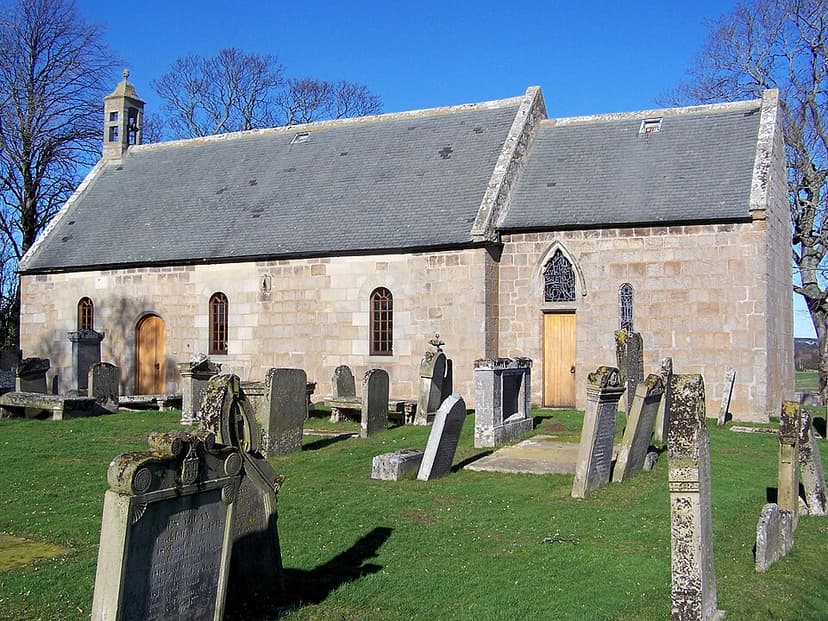
Birnie Kirk
Birnie Kirk is a rare 12th-century Norman parish church in Moray, Scotland, notable for being the first cathedral of the Bishop of Moray and one of Scotland's oldest churches in continuous use. While it served as a cathedral from 1107 to 1184, it later became a parish church. The building and its surrounding archaeological remains are a scheduled monument.

Glasgow Cathedral
Glasgow Cathedral is a historic parish church of the Church of Scotland, serving as the mother church of the Archdiocese of Glasgow and the province of Glasgow from the 12th century until the Scottish Reformation. It is the oldest cathedral in mainland Scotland and the oldest building in Glasgow, notable for surviving the Reformation largely intact. The cathedral is dedicated to Saint Mungo, the city's patron saint, whose tomb is located within the Lower Church.